 Rebecca Engel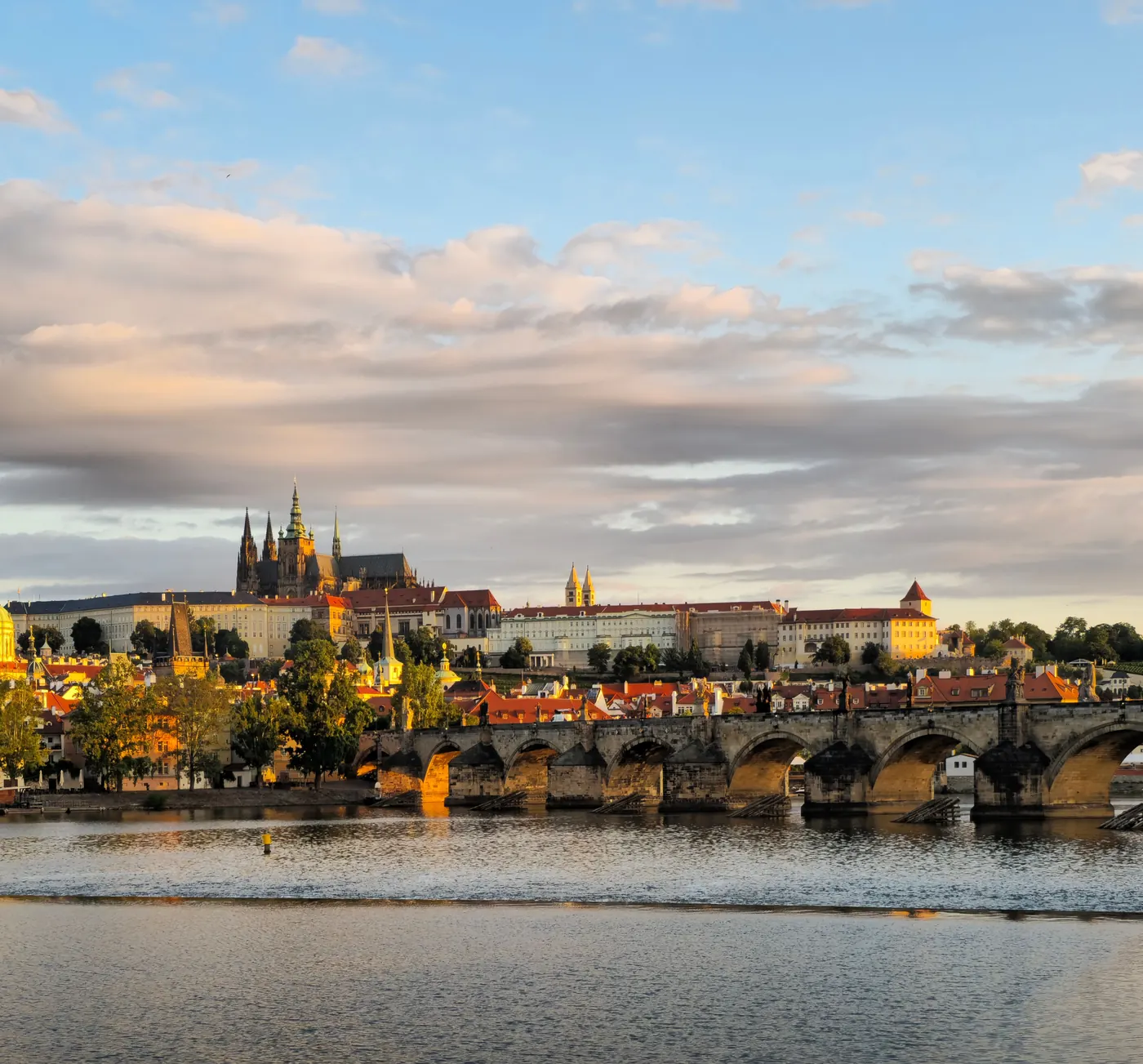
Prague is the kind of city that looks made up the first time you see it. A castle sits on the hill above the river, a stone bridge lined with statues crosses below it, and the old town on the other side is all spires, cobblestones and squares that haven’t changed much in centuries.
This Prague travel itinerary gives each of the three days its own part of the city, and it ends every one of them with a cold Czech beer somewhere with a long story behind it. Here’s a 3 day Prague itinerary that covers the castles, the bridges and the beer halls without wearing you out.
How This 3 Day Prague Itinerary Works
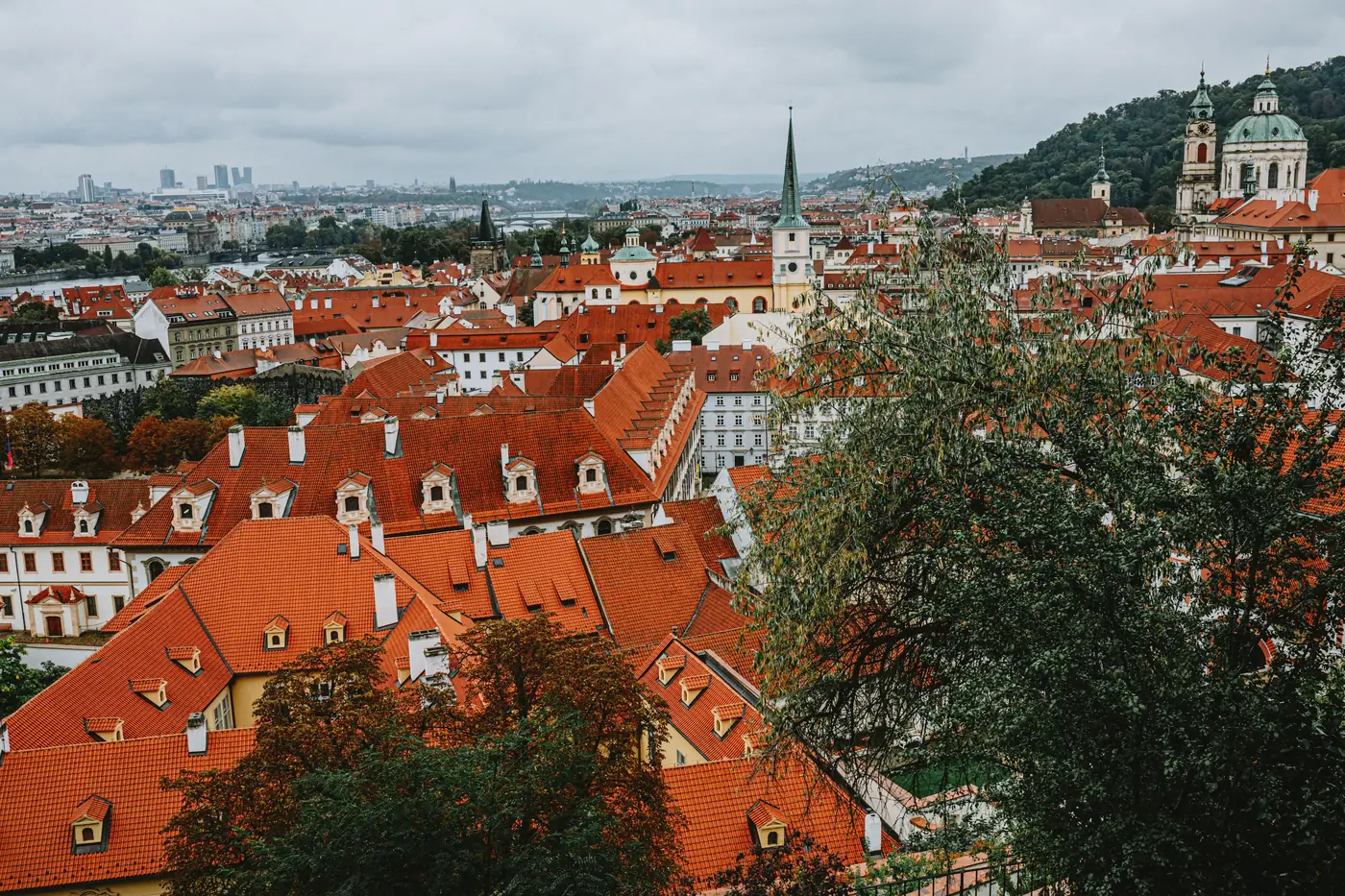
Day one stays in the Old Town and the Jewish Quarter, then heads into the New Town for dinner. Day two crosses Charles Bridge and climbs to Prague Castle before winding back down through the Lesser Town. Day three goes south to Vyšehrad, the city’s other castle, and follows the river back toward the center.
Most of the historic center is easy to walk, but the castle sits at the top of a steep hill. Tram 22 runs right up to it, so nobody has to make that climb on foot unless they want to.
Two things are worth planning around. The Jewish Museum’s sites are closed on Saturdays and Jewish holidays, so if day one lands on a Saturday, swap it with day three. Prague Castle tickets can also be bought online ahead of time, which saves standing in a line when you arrive.
The Old Town and the Lesser Town put you closest to everything on this list, and they’re the prettiest places to wake up. Vinohrady, a leafy neighborhood a few tram stops east, is quieter and cheaper, with plenty of good cafes and pubs of its own.
The Czech Republic uses the koruna, not the euro. Cards are widely accepted, but it’s worth carrying a little cash for small pubs and market stalls.
Day 1: Old Town And The Jewish Quarter
Day one stays on the flat side of the river. Everything is a short walk from Old Town Square, and the evening ends in the New Town at a brewery that has been pouring beer for more than five hundred years.
Start early if you can. The square is calm first thing in the morning and packed by lunchtime.
Morning: Old Town Square And The Astronomical Clock
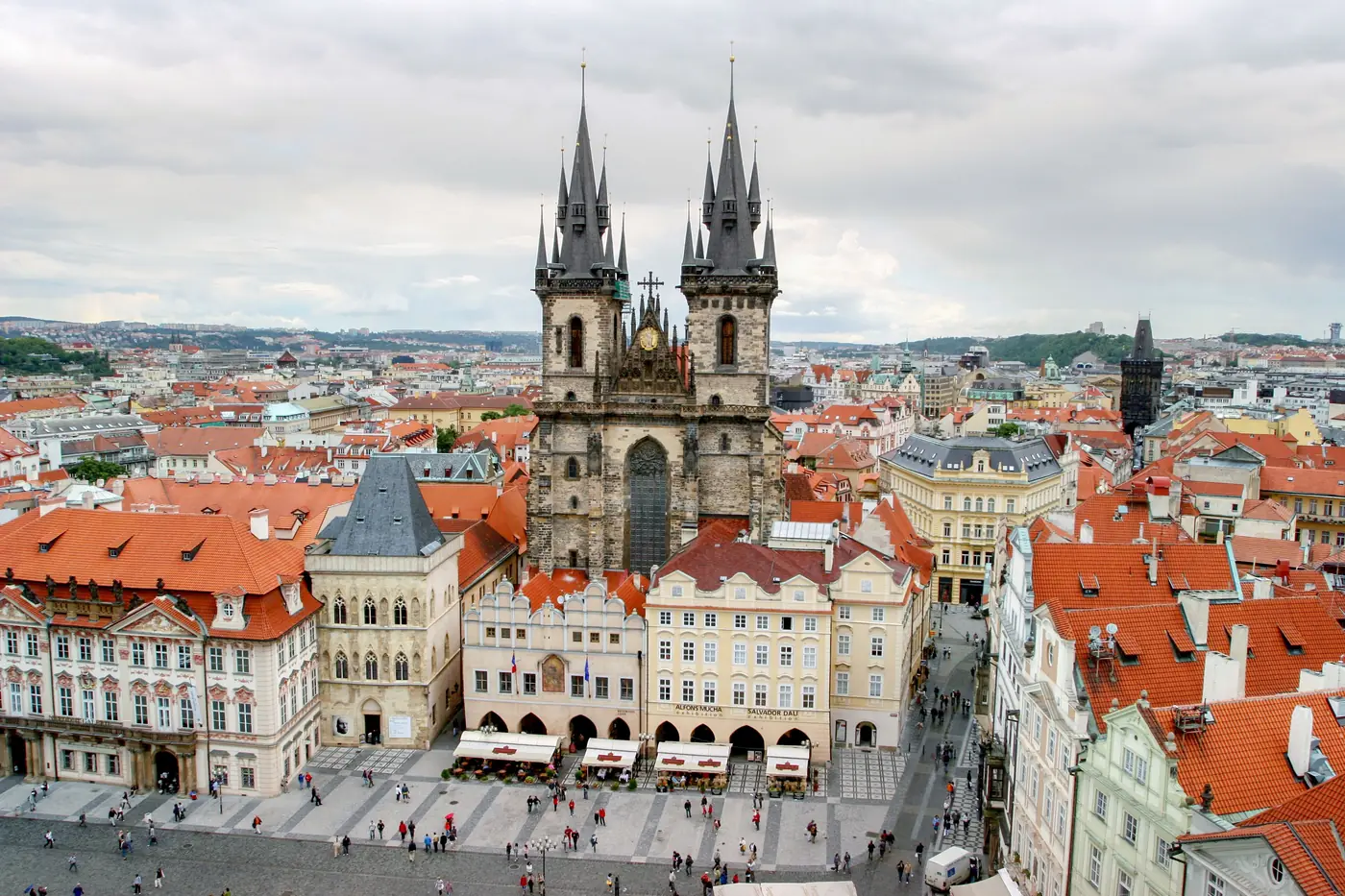
Old Town Square is the heart of the city, a huge cobbled space ringed by pastel buildings and watched over by the dark twin spires of the Týn Church. It’s one of the prettiest squares in Europe, and it’s worth seeing before the crowds fill it in.
On one side is the Old Town Hall and its famous Astronomical Clock, which has been keeping time since 1410. On the hour, little figures of the apostles parade past two windows at the top while a skeleton rings a bell below.
The show is short, and the crowd watching it is half the entertainment. For a better look at the square, head up the Old Town Hall tower, where the walkway at the top looks straight down over the red rooftops.
Midday: The Jewish Quarter
Just north of the square is Josefov, the old Jewish Quarter. Most of the neighborhood was rebuilt around 1900, but its synagogues and its crowded old cemetery survived, and together they tell the story of Jewish life in Prague over many centuries.
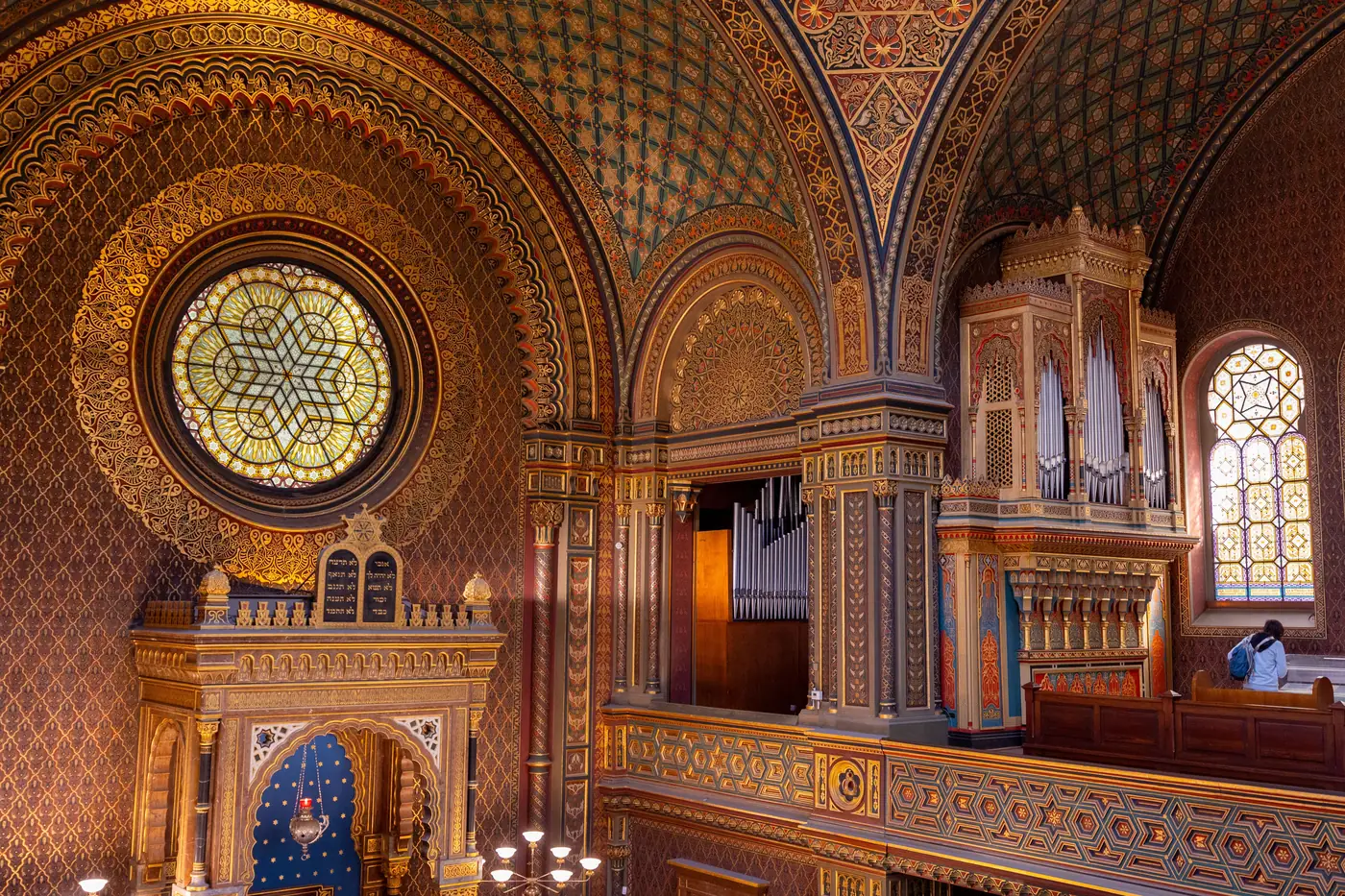
One Jewish Museum ticket covers the main synagogues and the Old Jewish Cemetery, where thousands of worn headstones lean against each other under the trees. The Spanish Synagogue is the showstopper, with a richly painted and gilded interior that looks more like a palace than a place of worship.
The Pinkas Synagogue is the most moving stop. Its walls are covered with the handwritten names of nearly eighty thousand Jews from Bohemia and Moravia who were killed in the Holocaust.
Plan on two to three hours here. The ticket is valid for three opening days, so you don’t have to see everything in one go.
Afternoon: The Powder Tower And Wenceslas Square
Walk east from Old Town Square along Celetná Street to the Powder Tower, a dark Gothic gate that once marked the edge of the Old Town. Right next to it is the Municipal House, an Art Nouveau landmark with a grand cafe inside that’s worth a coffee just for the room.
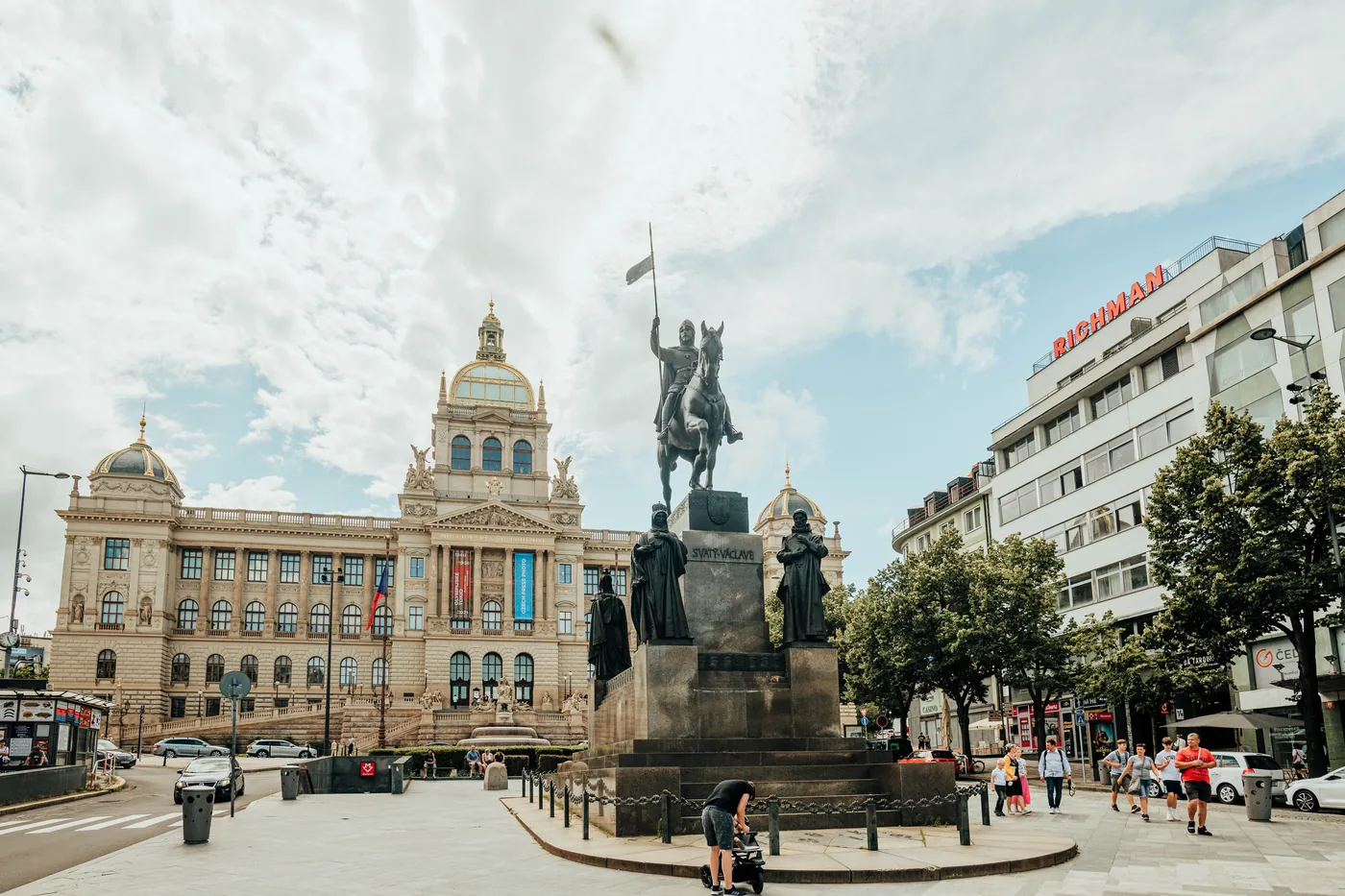
From there it’s a short walk to Wenceslas Square, which is less a square than a long, wide boulevard rising toward the National Museum. It’s where huge crowds gathered during the Velvet Revolution in 1989, and it’s still where the city turns out for its biggest moments.
It’s busier and more modern than the Old Town, with shops and hotels lining both sides, so there’s no need to linger. Wander toward the river instead and let the side streets of the New Town carry you toward dinner.
Evening: Dinner At U Fleků
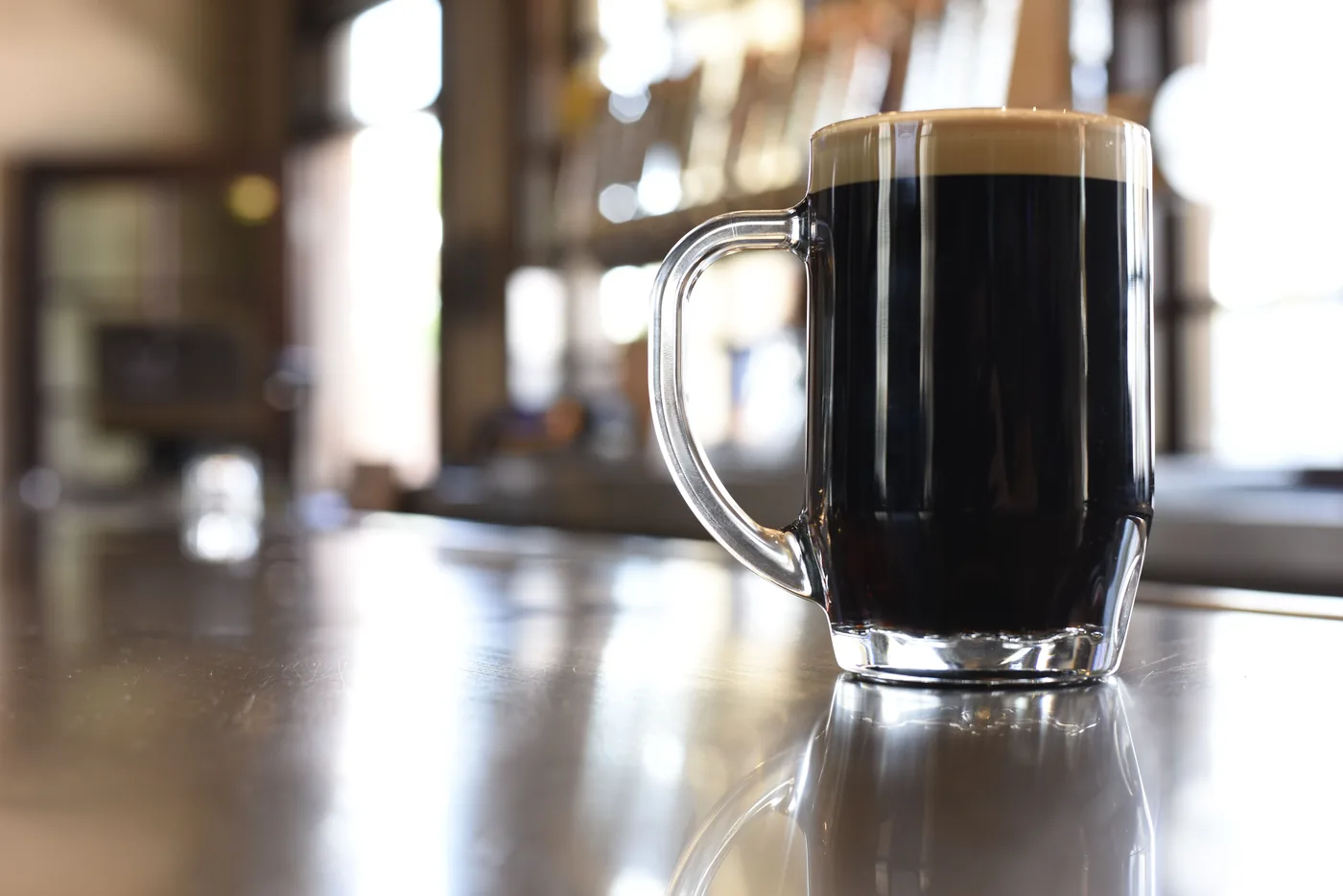
U Fleků has been brewing beer on the same spot for more than five hundred years, and it’s one of the most famous beer halls in the country. It’s a sprawling maze of wood paneled rooms plus a big garden, and it’s known for its own dark lager, brewed right there on site.
It’s also very popular with visitors, and it’s best enjoyed knowing how it works. Waiters walk around with trays of beer and set down a fresh glass when yours is nearly empty. They’ll also come around with small glasses of Becherovka, a Czech herbal liqueur, and those aren’t free, so just say no if you don’t want one.
Order something hearty to go with it. Goulash or roast pork with dumplings are the classic choices, and they’re exactly what a dark beer wants next to it.
Day 2: Charles Bridge, Prague Castle And The Lesser Town
Day two crosses the river. It starts on Charles Bridge before the crowds show up, climbs to Prague Castle, and works its way back down through gardens and the quiet lanes of the Lesser Town.
This is the biggest day of the three, so wear comfortable shoes and take the tram up the hill if your legs want a break.
Early Morning: Charles Bridge Before The Crowds
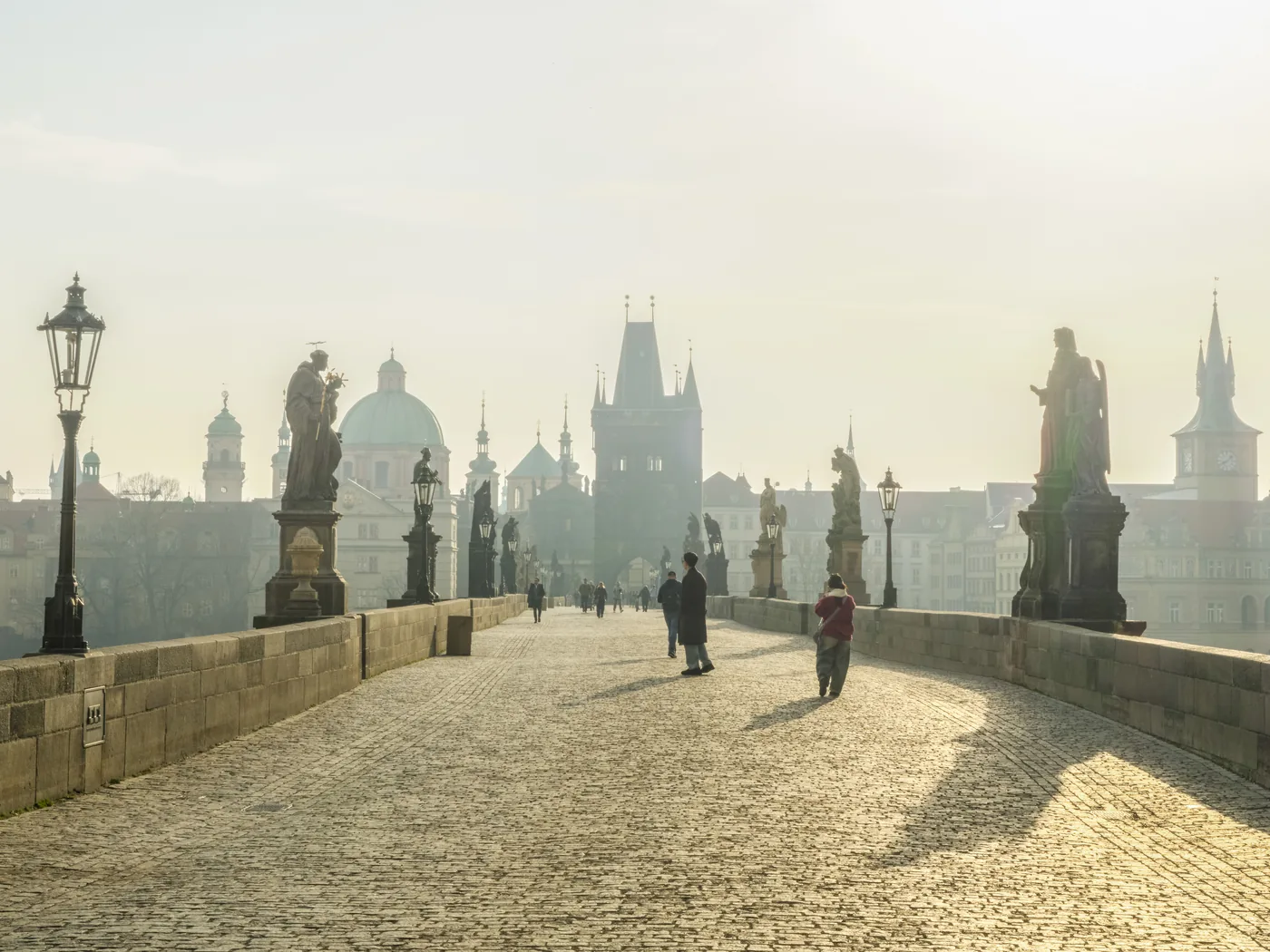
Charles Bridge is the most famous sight in Prague, and by midmorning it’s packed with tour groups, painters and souvenir sellers. Get there around sunrise or soon after and you’ll share it with far fewer people.
Work on the bridge began in 1357, and over the centuries that followed it was lined with thirty statues of saints, turning it into an outdoor gallery over the river. The Gothic towers at each end make crossing it feel like walking through a gate into another time.
Look for the bronze plaques on the statue of St. John of Nepomuk, about halfway across. People touch them for luck, and you’ll spot them by the shiny patches that thousands of hands have worn into the metal.
Come back later in the day to climb the Old Town Bridge Tower. The view straight down the bridge toward the castle is one of the best photos in the city.
Morning: Prague Castle
From the far end of the bridge, you can walk up to Prague Castle through the Lesser Town and along Nerudova Street, which takes about half an hour and gets steep near the top. Or hop on tram 22 at Malostranské náměstí and ride up to the Pražský hrad stop in a few minutes.
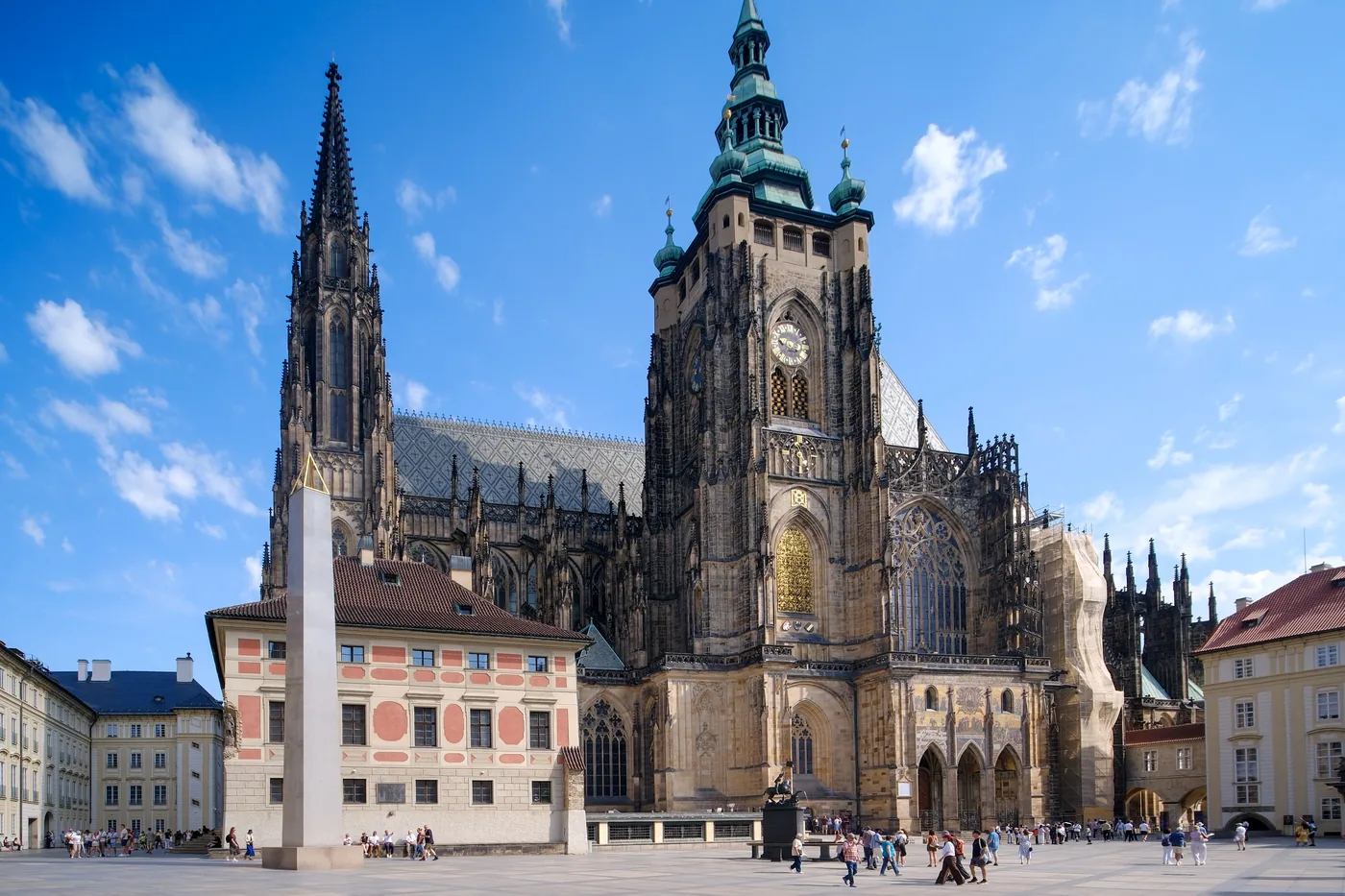
Prague Castle isn’t one building but a whole walled complex of palaces, churches, courtyards and gardens, and it’s one of the largest castle complexes in the world. The grounds are free to wander, and a single circuit ticket covers the main sights inside.
The centerpiece is St. Vitus Cathedral, a Gothic giant with stained glass windows that throw color across the floor, including one designed by Alphonse Mucha. The ticket also gets you into the Old Royal Palace, St. George’s Basilica and Golden Lane, a row of tiny, colorful houses built into the castle walls.
The historic buildings open at nine, and arriving close to opening time beats most of the tour groups. Plan on two to three hours.
Midday: Strahov Monastery
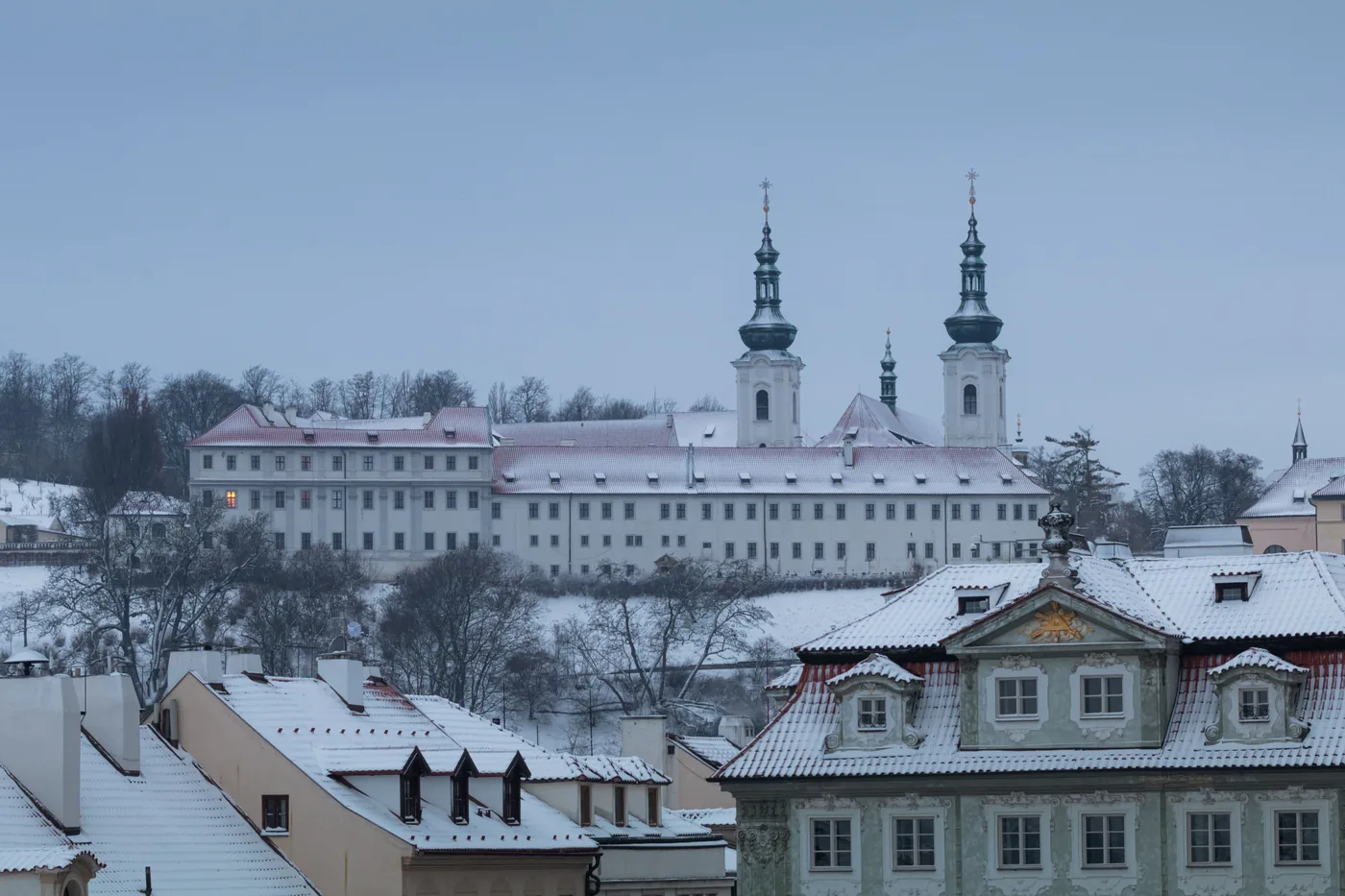
About fifteen minutes on foot from the castle is Strahov Monastery, founded in the 1100s. Its library is one of the most beautiful anywhere, with two painted halls lined floor to ceiling with old leather bound books.
Visitors look into the Theological Hall and the Philosophical Hall from the doorway rather than walking through them, but the view is still worth the stop. The library is open every day, with a lunch break from noon to one.
That works out nicely, because the monastery has its own brewery. Grab a table at the Strahov Monastery Brewery for lunch and try one of its house beers with a plate of something Czech.
Afternoon: Down Petřín Hill Into The Lesser Town
From Strahov, follow the paths down through the orchards and gardens of Petřín Hill. The walk is downhill the whole way, and the views over the city open up as you go, which beats climbing up it by a long way.
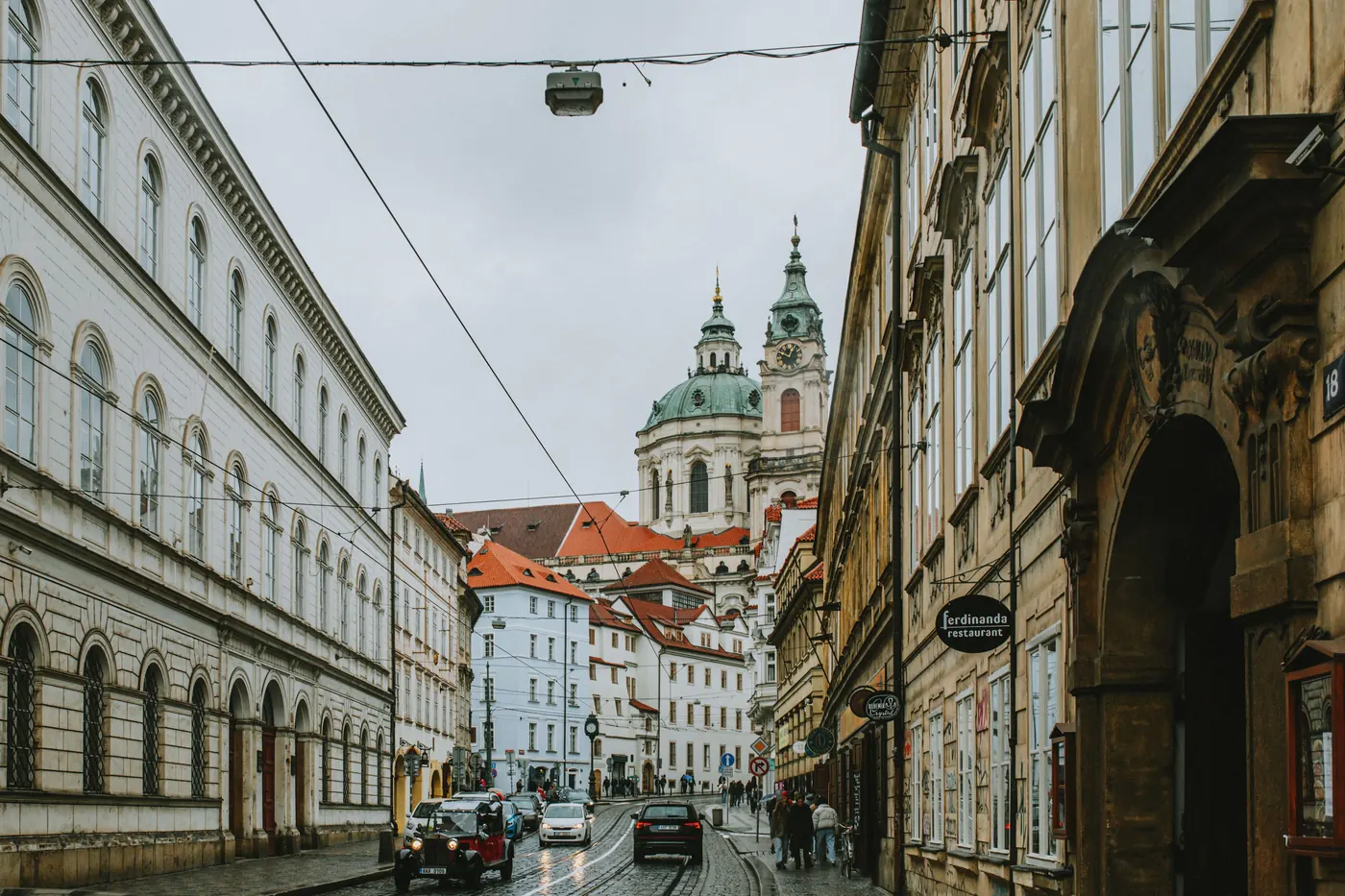
At the bottom is the Lesser Town, or Malá Strana, a neighborhood of baroque palaces, quiet courtyards and red roofs tucked below the castle. It feels calmer than the Old Town across the river, even though it’s only a bridge away.
Wander over to the Lennon Wall, a stretch of wall covered in layers of graffiti and messages that people have been adding since 1980. Then cross the little bridge onto Kampa Island, a leafy spot right on the water with lovely views back toward Charles Bridge.
Take your time here. There’s no big sight to tick off this afternoon, just a beautiful neighborhood to walk through slowly.
Evening: Sunset At Letná Beer Garden
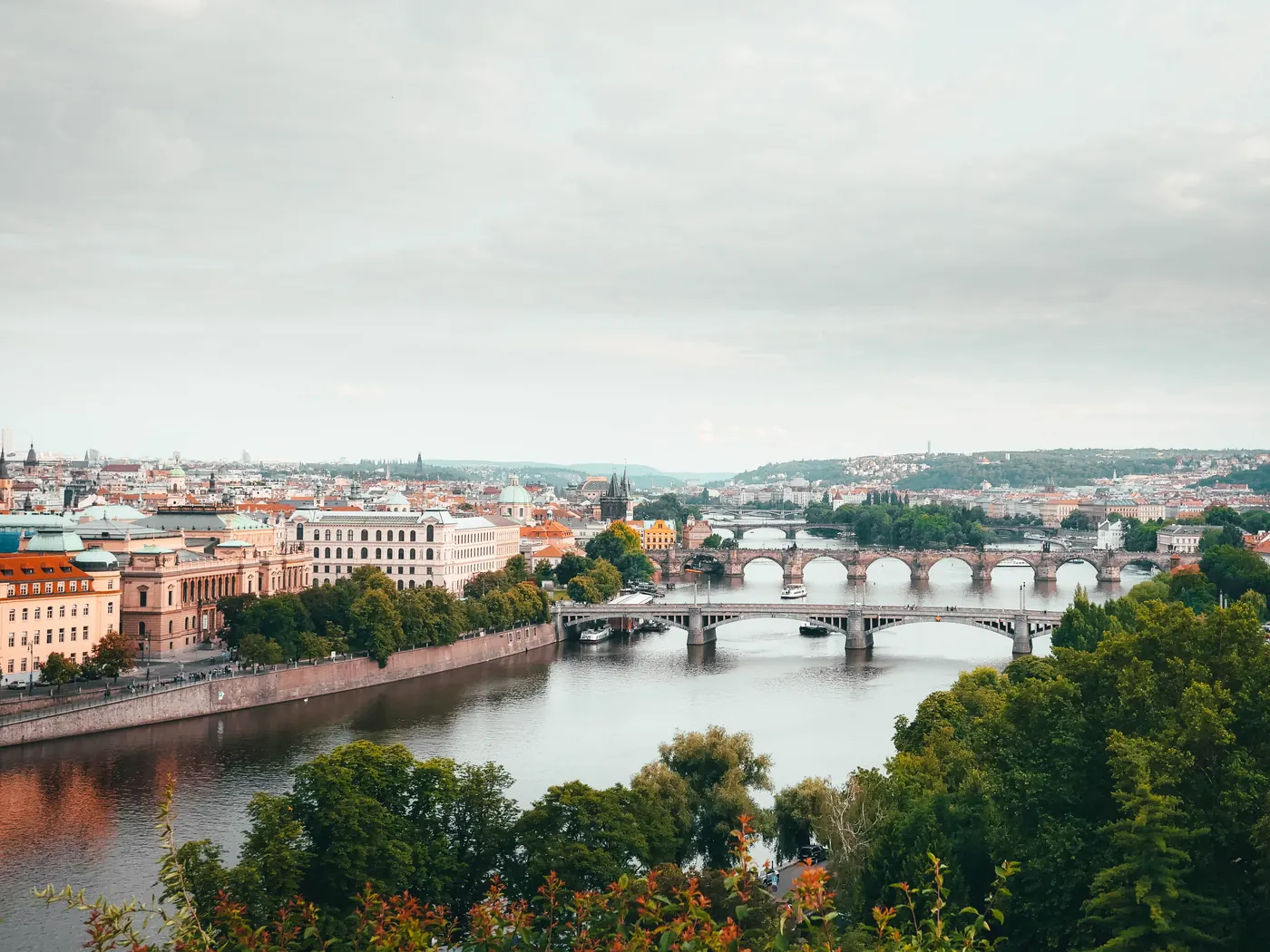
End day two at the Letná Beer Garden, up on the hill across the river from the Old Town. From the edge of the park you can see the Vltava curving below you with bridge after bridge stretching across it, which is about as good a view of Prague’s bridges as you’ll get.
It’s a simple setup, with long tables under the trees, beer from a kiosk and a crowd that’s mostly locals. Grab a drink, find a spot near the edge and stay until the lights come on across the city.
Getting there takes a short tram ride from the Lesser Town, or a steep walk up the stairs from the river.
The beer garden is open from about April to October. Outside those months, take in the view from the park and then head down into the Letná neighborhood below, which has plenty of cozy pubs to warm up in.
Day 3: Vyšehrad And The River
Day three slows down. It starts at Vyšehrad, Prague’s other castle, and follows the Vltava back north toward the center with plenty of time to sit by the water.
It’s also the easiest day to shuffle around the weather. If it rains, the river can wait and a museum or a long lunch can fill in.
Morning: Vyšehrad
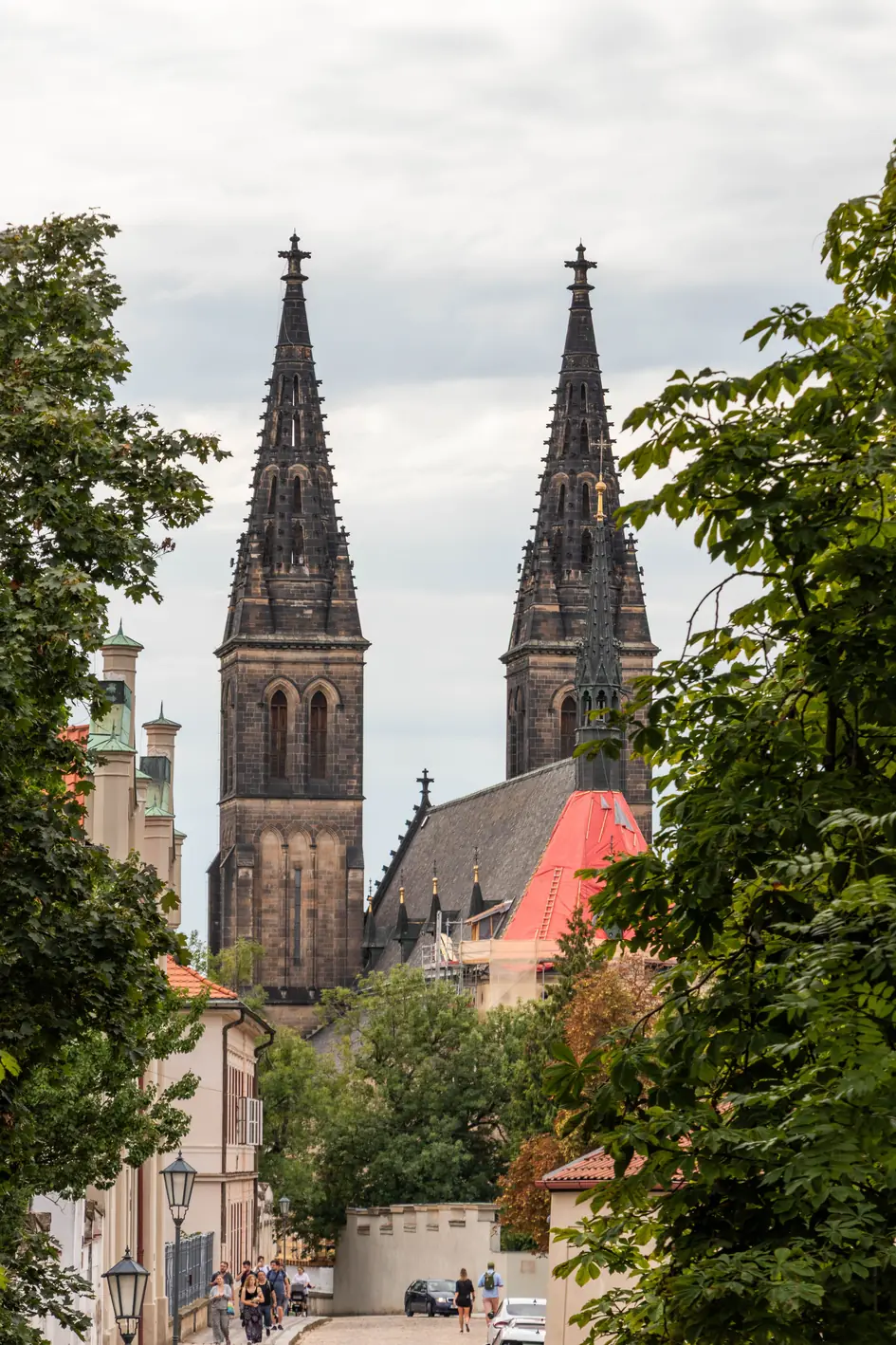
Vyšehrad is a fortress on a rocky hill above the river, and according to Czech legend it’s where Prague was born. It’s far less famous than Prague Castle, which is exactly what makes it so pleasant. The grounds are open and free, and a weekday morning up here feels more like a park than a sight.
Take the metro to Vyšehrad station on the red C line, then walk about ten minutes to the fortress. Inside you’ll find grassy ramparts, big views over the Vltava and the twin towered Basilica of St. Peter and St. Paul, with an interior covered in Art Nouveau color.
Next to the basilica is Vyšehrad Cemetery, where many of the country’s most famous people are buried, including the composers Antonín Dvořák and Bedřich Smetana and the artist Alphonse Mucha. It’s free to walk through, and the ornate graves are beautiful.
Walk the ramparts before you leave. The views up the river toward Prague Castle are some of the best in the city, and it’s far calmer than the lookouts in the center.
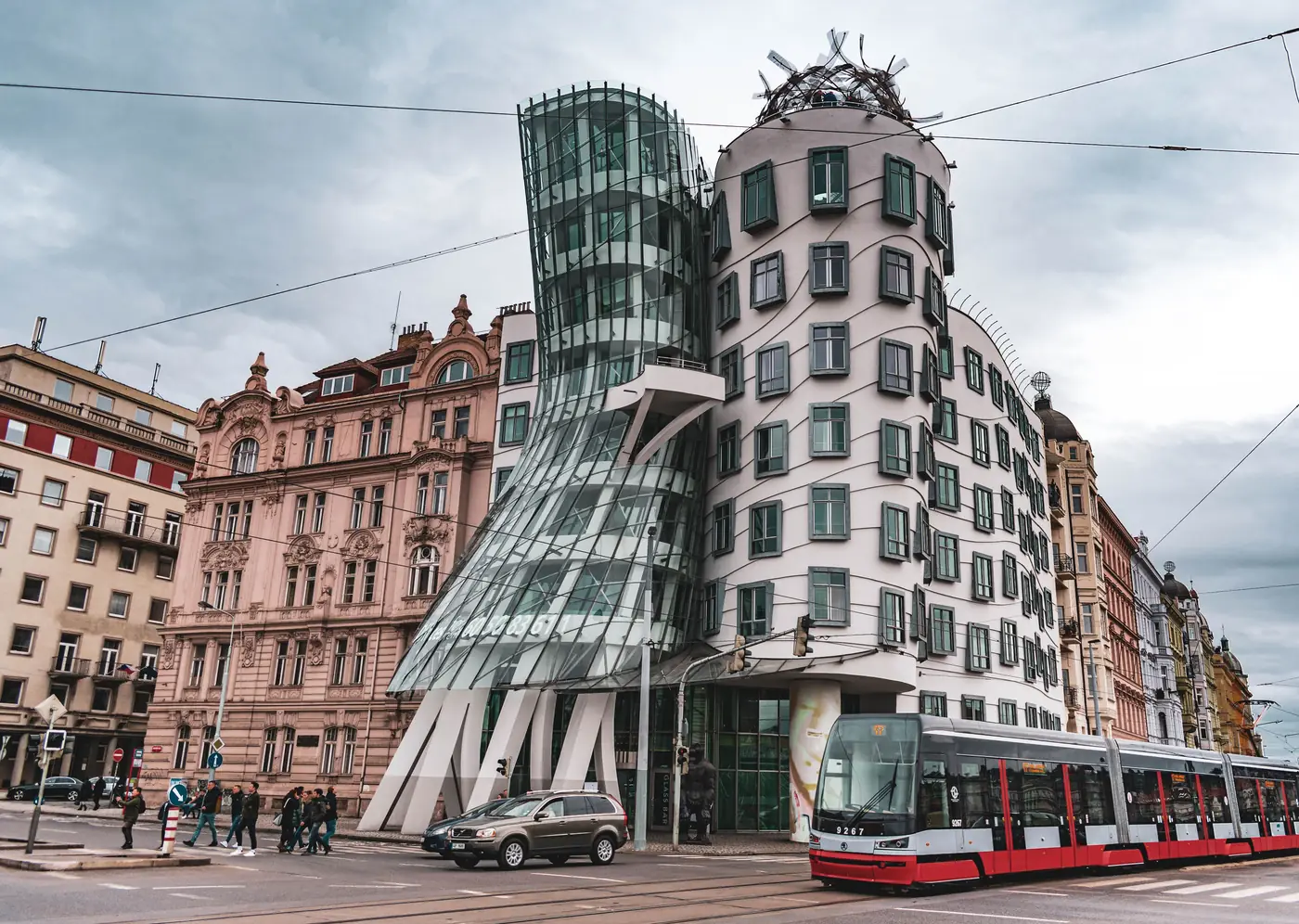
Midday: Náplavka And The Dancing House
From Vyšehrad, head down the hill to the river and walk north along Náplavka, the long riverside embankment. It’s lined with moored boats that double as bars and cafes, and on Saturday mornings a farmers market sets up along the water.
Keep going and you’ll reach the Dancing House, the curvy glass and concrete building that looks like two people dancing together. It was finished in 1996, and there’s a bar at the top with a terrace looking out over the river.
Stop for lunch anywhere along this stretch. It’s a relaxed part of town where half the city seems to sit outside on a sunny day.
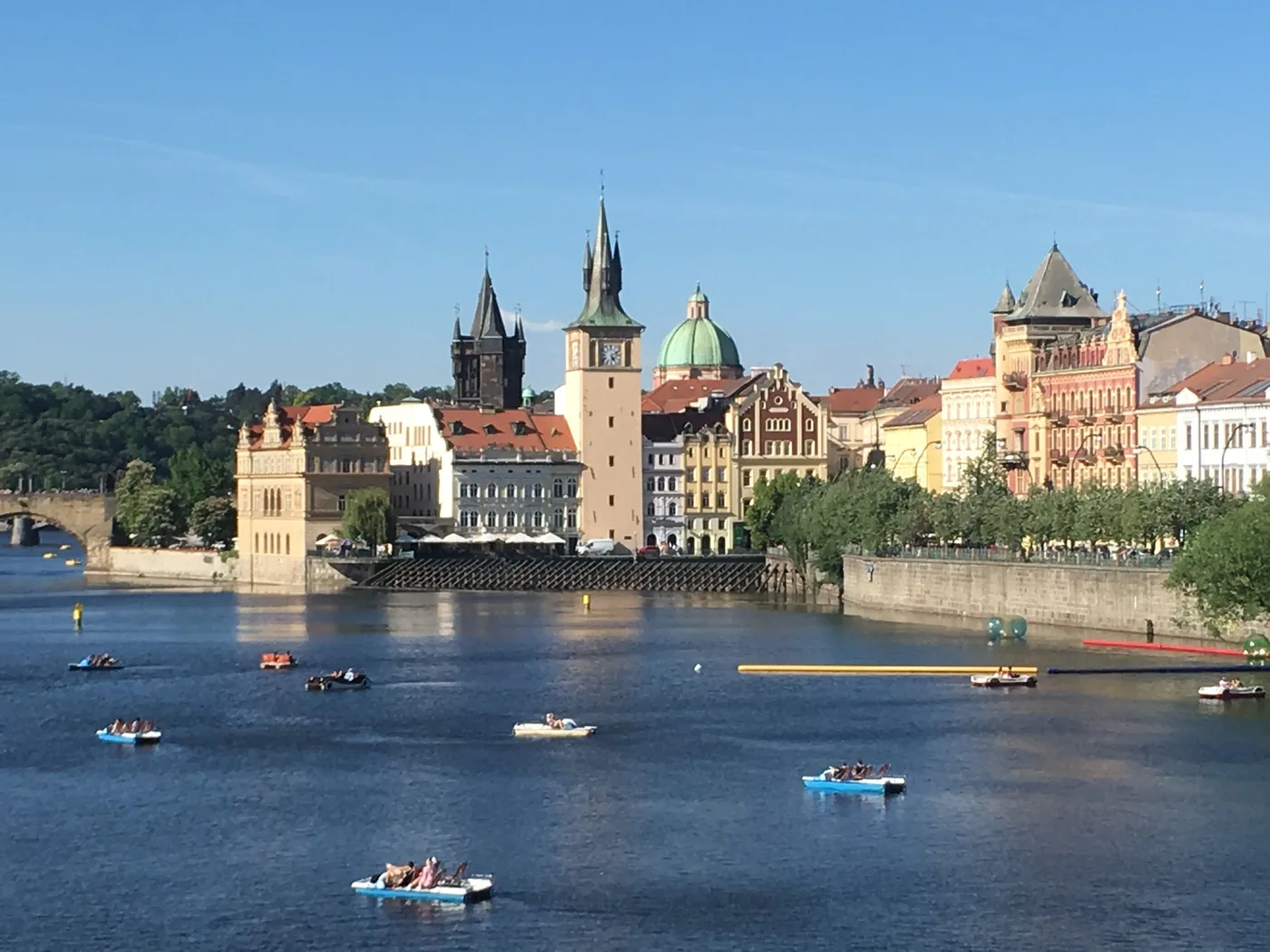
Afternoon: Out On The Vltava
A short walk past the Dancing House is Slavonic Island, where you can rent a paddle boat or a small rowboat and head out on the river yourself. Seeing the bridges and the castle from down on the water is a completely different way to look at the city.
The boats run from about April to October, weather permitting. The rest of the year, a sightseeing cruise gives you the same views without the pedaling.
Afterwards, the National Theatre is right across the road, with its gold roof shining over the river. Even if you don’t catch a performance, it’s worth walking past on your way back into town.

Evening: A Last Night At U Medvídků
Finish at U Medvídků, a brewery and beer hall a short walk from the river that traces its beer back to 1466. It’s big and lively, with long tables and a small brewery of its own tucked inside.
Order a Budvar, the classic Czech lager it’s known for, or try one of its own unfiltered beers, which are brewed the old fashioned way and aged in wooden barrels. The kitchen serves hearty Czech food, and it’s a good place to try svíčková, beef in a creamy vegetable sauce with dumplings.
It’s the right way to end three days in Prague. Raise a glass to the castles and the bridges, and start planning your way back.
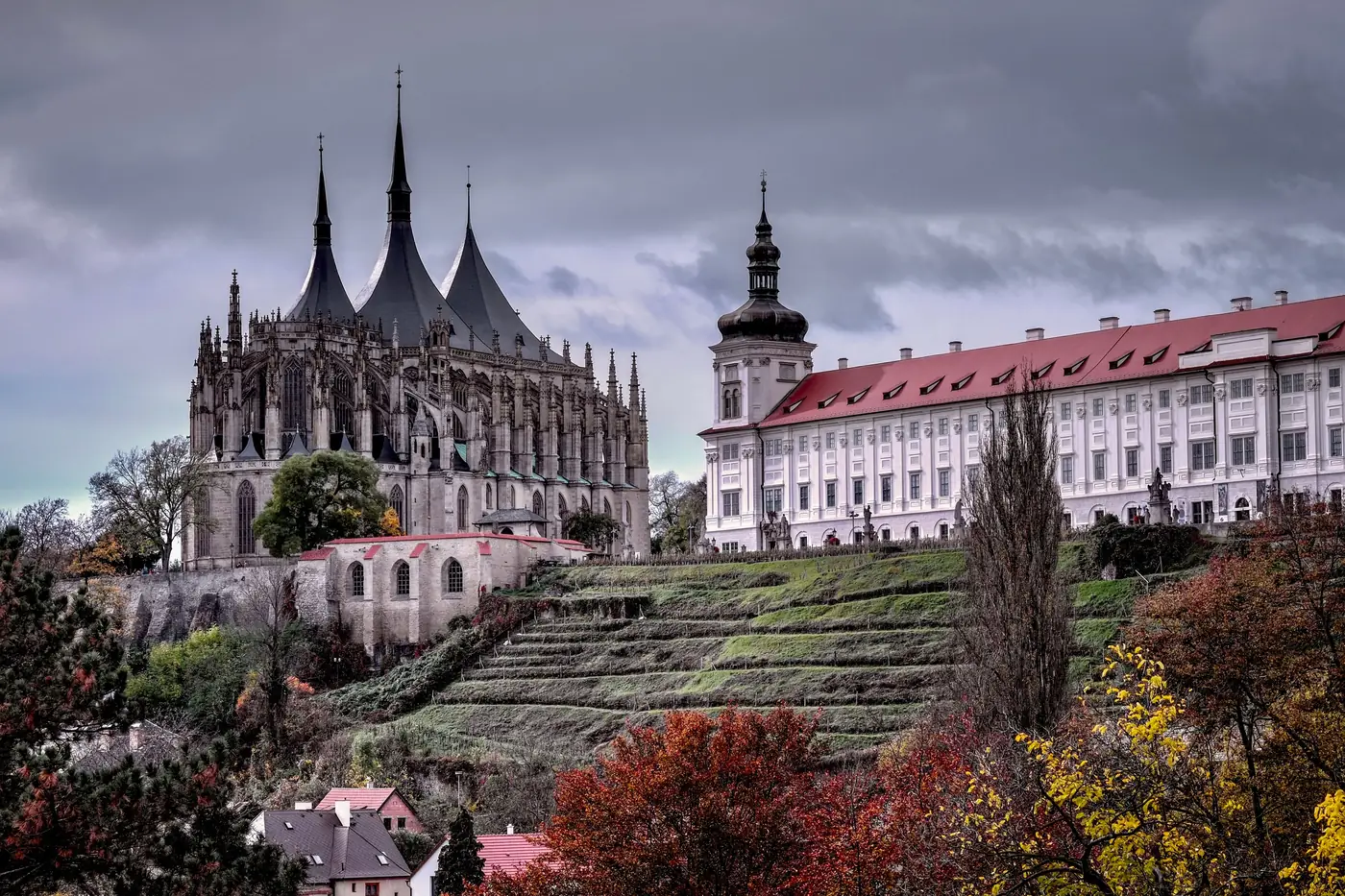
A Day Trip To Kutná Hora
If you have a fourth day, or you’d rather swap out day three, Kutná Hora is an easy trip from Prague. Direct trains from the main station take about an hour.
The town is best known for the Sedlec Ossuary, a small chapel decorated with the bones of tens of thousands of people, including a chandelier made from them. It’s strange and unforgettable, and tickets are best booked online because space inside is limited.
The ossuary is a short walk from the station, while the old town and the soaring St. Barbara’s Cathedral are further in. Take an early train, since tour groups tend to arrive from late morning onward.
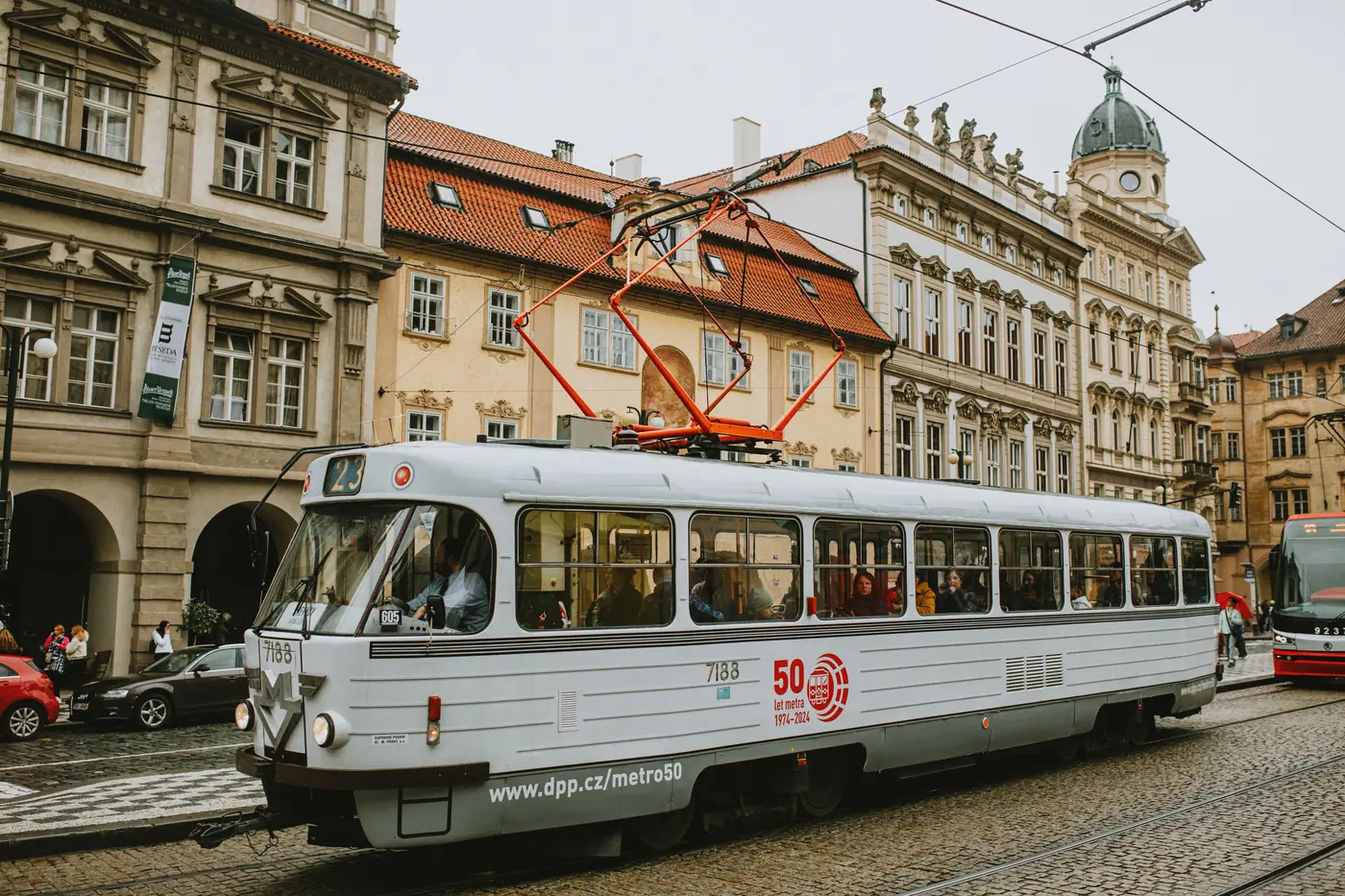
Getting Around Prague
Walking and trams will cover almost everything in this itinerary. Trams come often, and most of them let you tap a contactless bank card on the reader when you board, which is the easiest way to pay.
If you’d rather buy a pass, 24 hour and 72 hour tickets cover the trams, metro and buses, and they’re sold in the PID Lítačka app and at metro stations.
The metro is quick for longer hops, like the ride down to Vyšehrad on day three. Taxis and ride shares are easy to find too, though it’s best to book one through an app rather than hail a car on the street.
From the airport, the Airport Express bus runs into the center and city buses connect to the metro. A taxi or ride share takes around half an hour, depending on traffic.
Best Time To Visit Prague
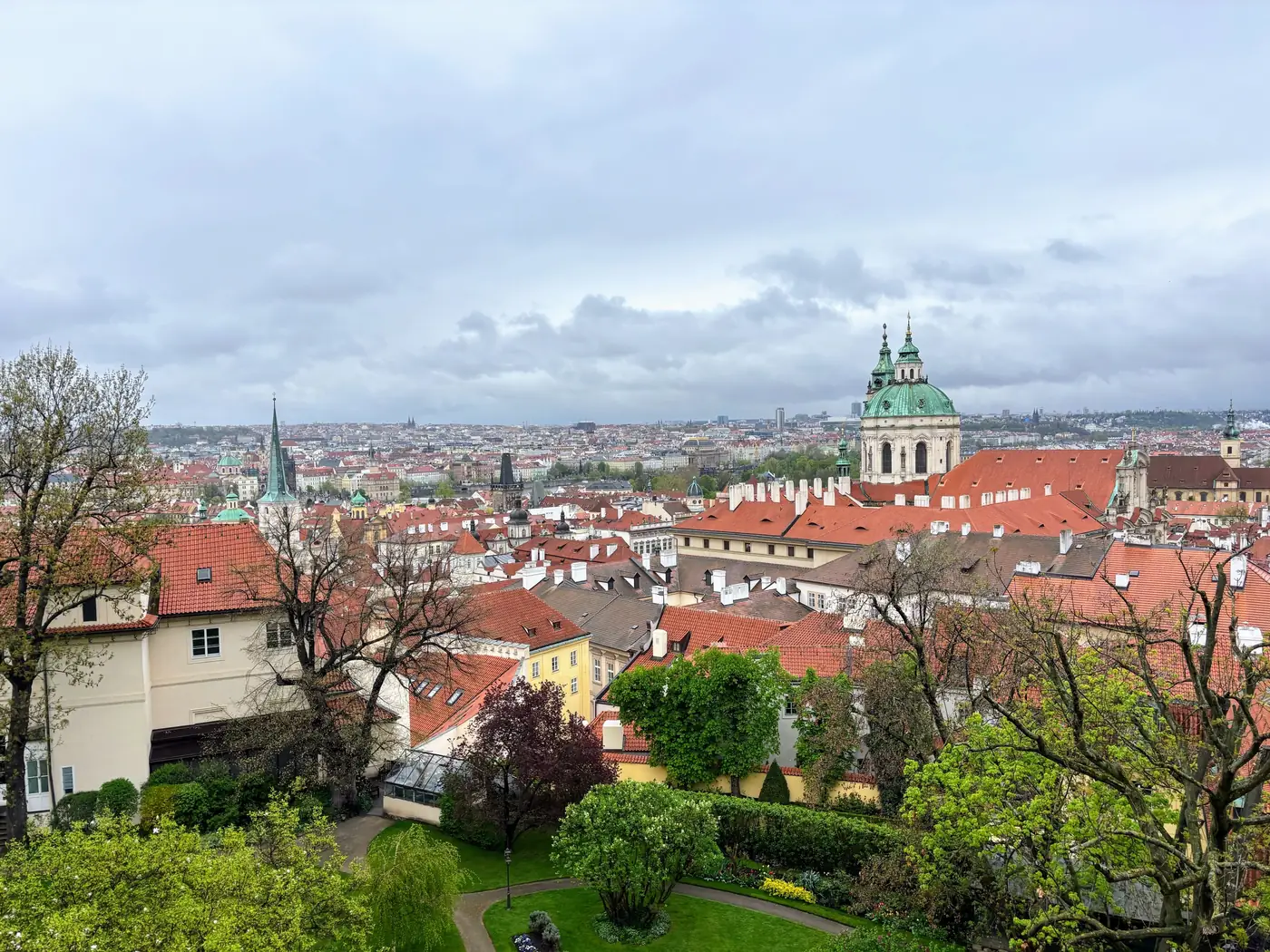
Prague, Czech Republic is beautiful all year, but late spring and early fall are the sweet spots. May, June and September bring mild weather, long evenings and beer gardens in full swing, with fewer crowds than July and August.
Summer is warm and lively but very busy, especially on Charles Bridge and around the castle. Winter is cold, but the Christmas markets make up for it, and these things to do in Prague at Christmas show just how cozy the city gets in December.
Whenever you visit, bring shoes that can handle a lot of cobblestones. They’re everywhere, and they’re hard on thin soles.
Adding More Days To Your Trip
Prague sits right in the middle of Central Europe, so it’s easy to link with other cities by train. Vienna is about four hours away, and these things to do in Vienna in winter are a good place to start if you’re traveling when it’s cold.
Budapest is around seven hours by train, and this 2 day Budapest itinerary picks up right where Prague leaves off.
If you’re stringing several cities together, this Europe packing list covers what to bring, and this roundup of the cheapest places to travel in Europe has more ideas for keeping the trip affordable.
Final Thoughts
Prague rewards a trip with a plan. Three days is enough to see Prague Castle and Vyšehrad, cross Charles Bridge before the crowds, spend a morning in the Jewish Quarter and still end every evening with a beer somewhere with centuries of history.
The trick is to start early, let the tram handle the steep parts and slow down once the sun starts to set. That’s when the city is at its best.
Follow this 3 day Prague itinerary and you’ll leave with a camera roll full of castles and bridges, and a new favorite Czech beer.