 Rebecca Engel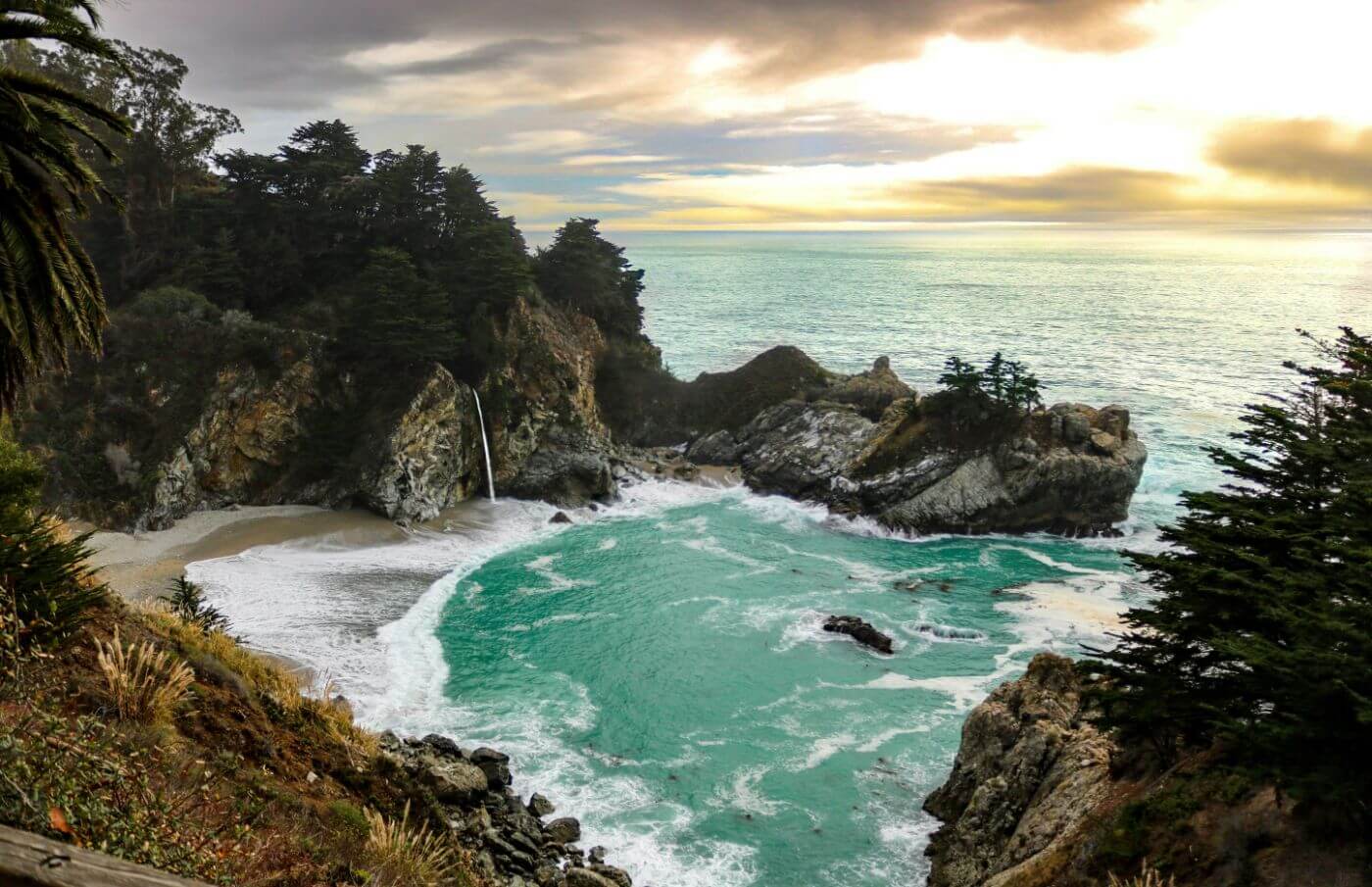
The Pacific Coast Highway is one of those drives that lives up to the hype. Cliffs drop straight into the ocean on one side, hills roll away on the other, and every few miles there’s a pullout that makes you want to stop the car and just stare. But honestly? The driving isn’t even the best part. The stops are!
1. The Golden Gate Bridge in San Francisco
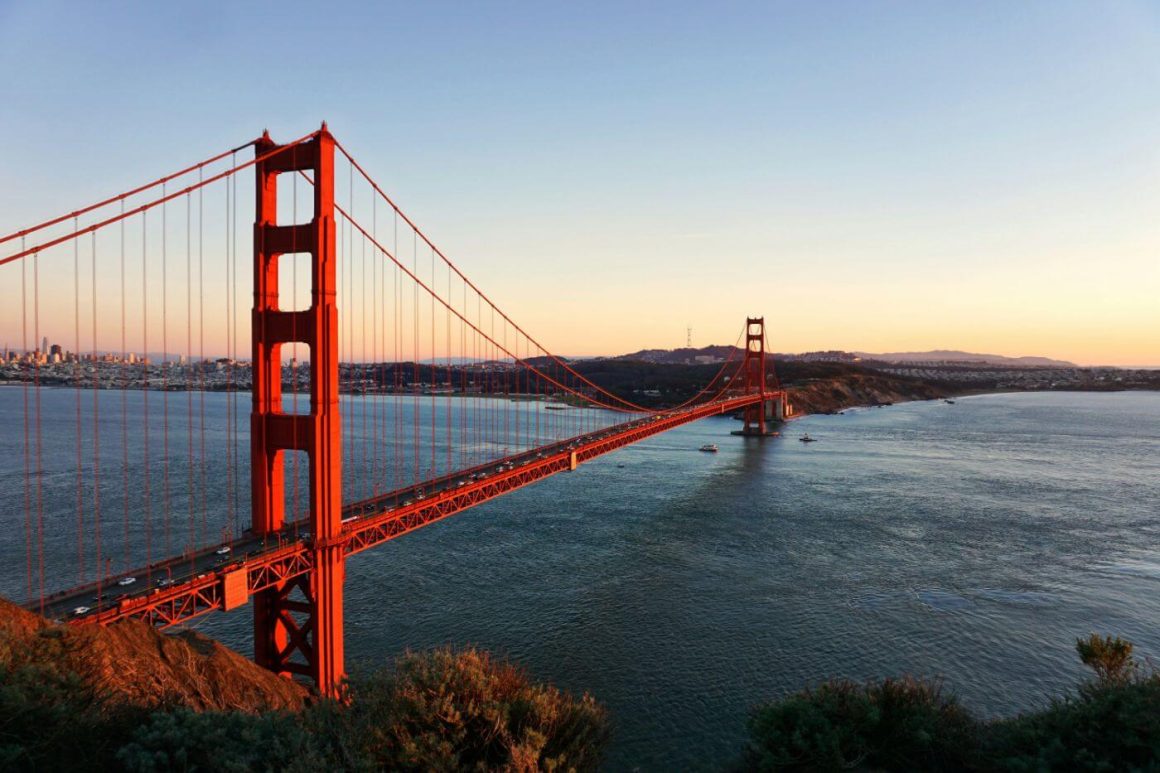
There’s no better way to start a PCH road trip than rolling across the most famous bridge in America. The Golden Gate opened in 1937 after four years of construction that everyone said was impossible. When it was finished, it was the longest and tallest suspension bridge in the world, and it held that title for almost 30 years.
That orange paint job has a name: International Orange. It wasn’t even supposed to be the final color. It started as just a primer, but everyone liked how it looked against the fog and the hills, so they kept it. The whole bridge is built to sway up to 27 feet in an earthquake or strong wind, which is kind of incredible when you think about it.
You don’t need to do everything here. The real magic comes from one great viewpoint. Battery Spencer on the Marin side gives you the classic postcard shot looking back at San Francisco. Fort Point puts you right underneath the bridge looking straight up. The Welcome Center on the city side is the easiest stop if you’re short on time.
If you want to walk it, the east sidewalk is open to pedestrians during daylight hours and it’s free. A round trip takes about 1.5 to 2 hours depending on how often you stop for photos. Parking fills up early, so try to arrive before 9 a.m. or just take a rideshare.
2. Santa Cruz
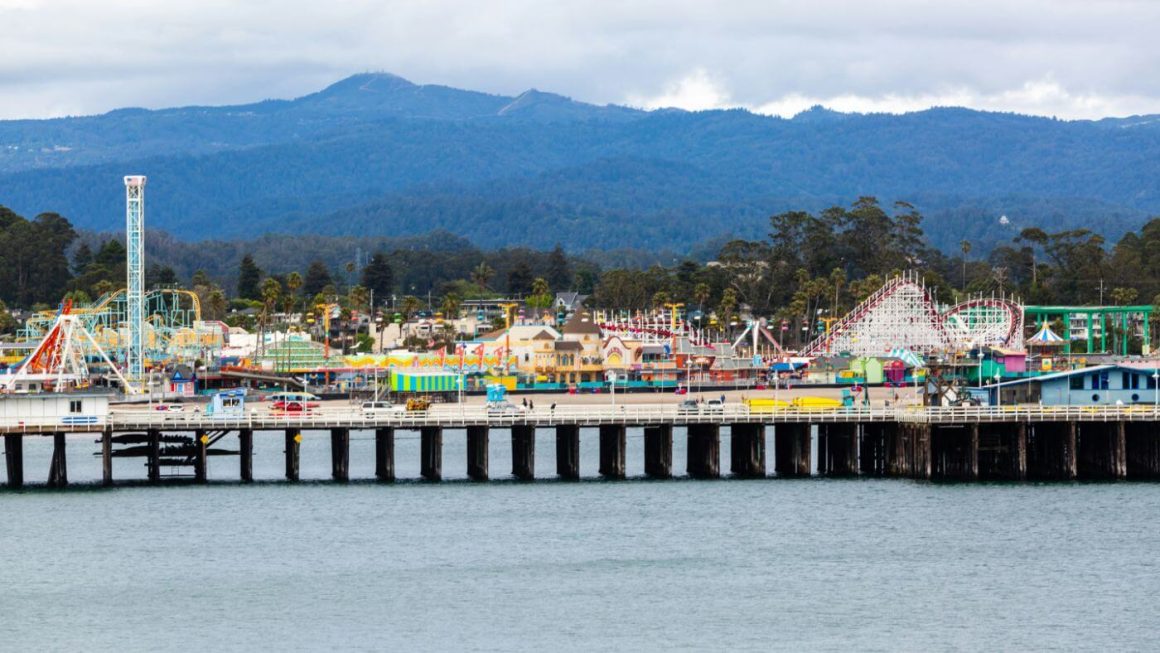
Once you’re past the Golden Gate and the bay, Santa Cruz is where the trip starts to feel like California. Old surf shops, a working pier, and an amusement park that’s been running since Teddy Roosevelt was president.
The Santa Cruz Beach Boardwalk opened in 1907 and it’s the oldest amusement park still running in California. The whole boardwalk is a historic landmark, and two of the rides are National Historic Landmarks all by themselves. The first one is the Looff Carousel from 1911, which still has real horsehair tails on its painted horses. The second is the Giant Dipper, a wooden roller coaster that opened in 1924 and has been screaming through movies like The Lost Boys and Jordan Peele’s Us ever since. It’s still scary. It’s still wonderful.
Walking onto the boardwalk is free. You only pay for ride wristbands or games, so you can wander around and soak it in without spending a dime.
Santa Cruz is also where surfing came to mainland America. Three Hawaiian princes brought redwood planks here in 1885 and showed locals how to ride waves, and the town has been a surf town ever since. Walk West Cliff Drive at sunset and you’ll see surfers riding the famous Steamer Lane break right below the lighthouse. There’s even a small surfing museum up there packed with old boards and stories.
If you want to try it yourself, beginner-friendly Cowell’s Beach sits right next to the boardwalk, and the surf shops there will rent you a soft-top board and give you a lesson.
3. Monterey and Cannery Row
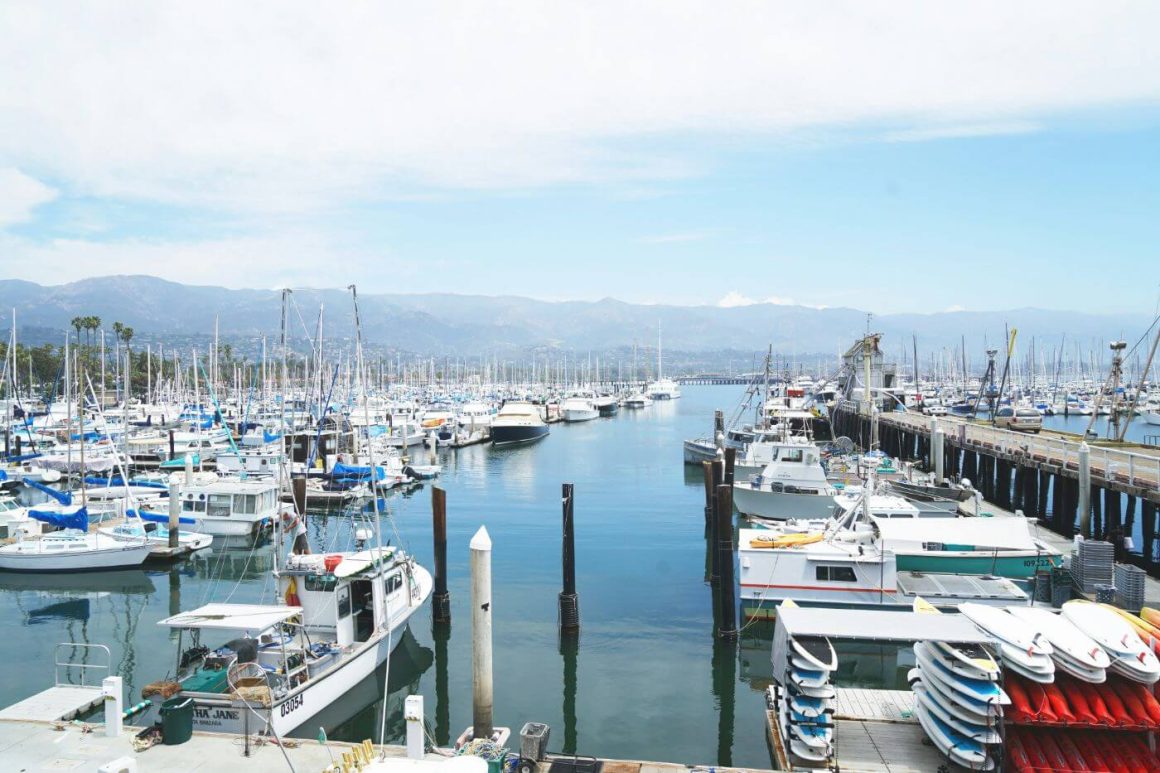
Monterey is one of those rare stops that hits on history, food, and one of the best aquariums in the world all at once.
Cannery Row used to be called Ocean View Avenue. It was renamed in 1958 in honor of John Steinbeck’s 1945 novel, which was set right here. Back in the 1940s, this street was the sardine capital of the world, with more than 30 canneries packing fish along the waterfront. Then the sardines disappeared in the 1950s, the canneries shut down one by one, and the last one closed in 1973. That last building, the Hovden Cannery, is now the home of the Monterey Bay Aquarium.
If you’ve read Cannery Row, you know about Doc. He was based on a real person named Ed Ricketts, a marine biologist who actually lived and worked on this street. His lab still stands at 800 Cannery Row. The whole approach of the Monterey Bay Aquarium, which opened in 1984 with funding from HP cofounder David Packard, is built on the philosophy Ricketts started. So in a way, Steinbeck’s fictional Doc helped shape the real aquarium that anchors the street today. Pretty cool.
Tickets to the aquarium sell out, especially on weekends and in summer, so book them online ahead of time. While you’re walking around, look for the bronze Cannery Row Monument with Steinbeck sitting on top of a pile of rocks surrounded by characters from the neighborhood’s past. Come back at dusk if you can. The sea lions start barking under the wharf and the whole place gets cinematic.
4. The 17-Mile Drive and Carmel-by-the-Sea
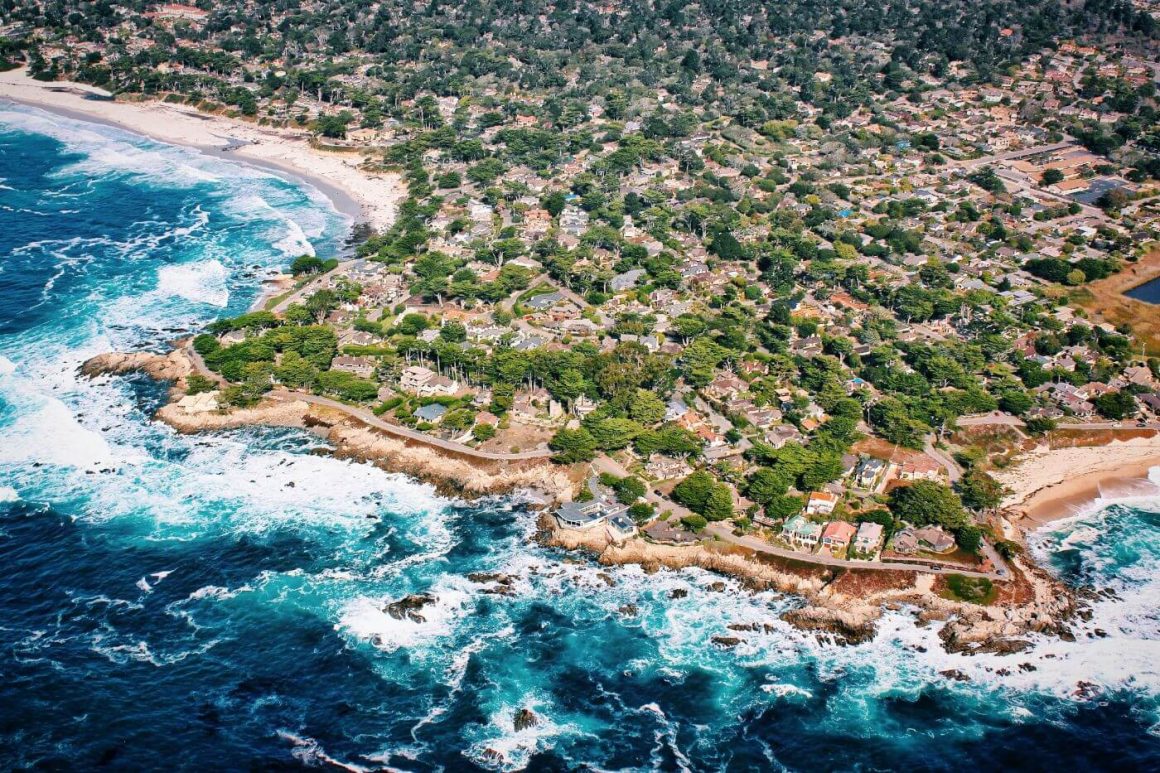
These two go together because they’re literally connected. The 17-Mile Drive runs through the gated community of Pebble Beach and dumps you right into Carmel. Together they’re the perfect mix of rugged coast and storybook town.
The 17-Mile Drive opened in 1881 as a horse-and-carriage tour for rich guests at the old Hotel Del Monte. It’s $12.50 per vehicle to enter, but you get the fee back if you spend $35 or more at any Pebble Beach restaurant.
The most famous stop is the Lone Cypress, a single tree that has been clinging to a rocky outcrop for more than 250 years. It’s the official logo of Pebble Beach and one of the most photographed trees on Earth. It lost a branch in a 2019 storm but it’s still hanging on. Fun fact: Pebble Beach is home to one of only two native Monterey Cypress forests in the world. The other one is just across Carmel Bay at Point Lobos.
Other stops worth pulling over for include Bird Rock, which is usually loud with sea lions and seabirds, and Point Joe, where ocean currents collide to make a churning patch of water called the Restless Sea. Sailors used to mistake it for the entrance to Monterey Bay, which is why a bunch of ships wrecked here in the 1800s.
When the drive spits you out into Carmel-by-the-Sea, you’re entering one of the strangest little towns in America. It’s exactly one square mile. There are no street addresses. No streetlights. No parking meters. Mail still gets delivered to the post office, not to people’s homes. High heels are technically illegal because the sidewalks are uneven, and until Clint Eastwood (yes, that Clint Eastwood, who was actually the mayor from 1986 to 1988) repealed the law, you couldn’t even eat ice cream on the sidewalk.
Walk down Ocean Avenue, get lost in the side streets, and head to Carmel Beach for sunset. The white sand crescent at the bottom of Ocean Avenue is regularly ranked among the cleanest and prettiest beaches in the country. Dogs run free here.
5. Bixby Creek Bridge in Big Sur
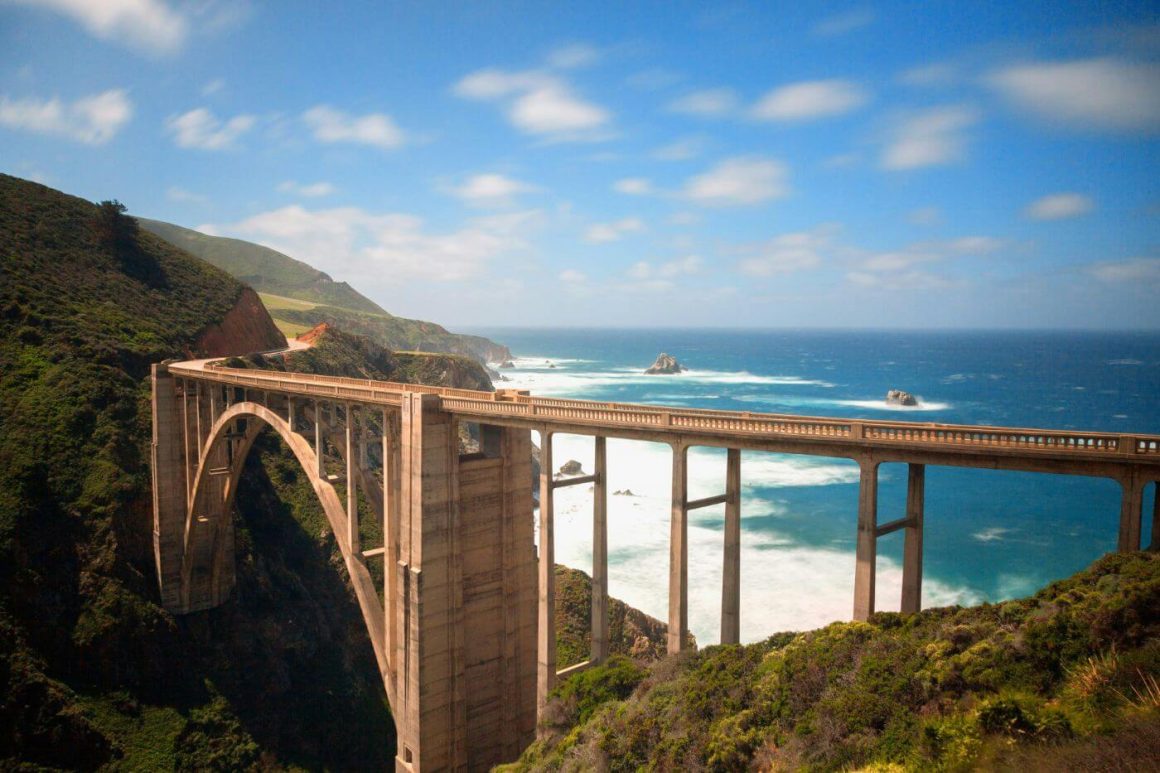
If you’ve ever seen a photo of the PCH, you’ve probably seen Bixby Bridge. It’s the curved concrete arch that car commercials, HBO’s Big Little Lies, and about a million Instagram posts have made famous.
What makes the bridge so striking is the story behind it. It was built in 1932, right in the middle of the Great Depression, and somehow finished in just over a year and under budget at about $200,000. That’s roughly $3.7 million in today’s money. When it opened, it was the highest single-span arch bridge in the world. Workers hauled 45,000 sacks of cement across the canyon using a cable system suspended 300 feet above the creek. Before the bridge existed, people living in Big Sur were basically cut off all winter because the old inland road could take three days to drive.
The bridge is named after Charles Henry Bixby, a New York lumber baron who arrived in Monterey in 1868 and happened to be a cousin of President James K. Polk.
For photos, the safest and easiest spot is the pullout on the north end of the bridge, on the west side of Highway 1. If you want a more dramatic view that includes the bridge in its full coastal setting, drive a mile south to Hurricane Point. Golden hour is the best light, and spring brings green hills and wildflowers that make the photos pop.
A few important rules. Don’t stop on the bridge itself. There’s no sidewalk and traffic moves fast. Don’t try to climb down the cliffs to get a different angle, because rescue crews have had to pull people back up more than once. And don’t park along Old Coast Road right next to the bridge, because it’s now a No Parking Zone with citations.
6. McWay Falls in Big Sur
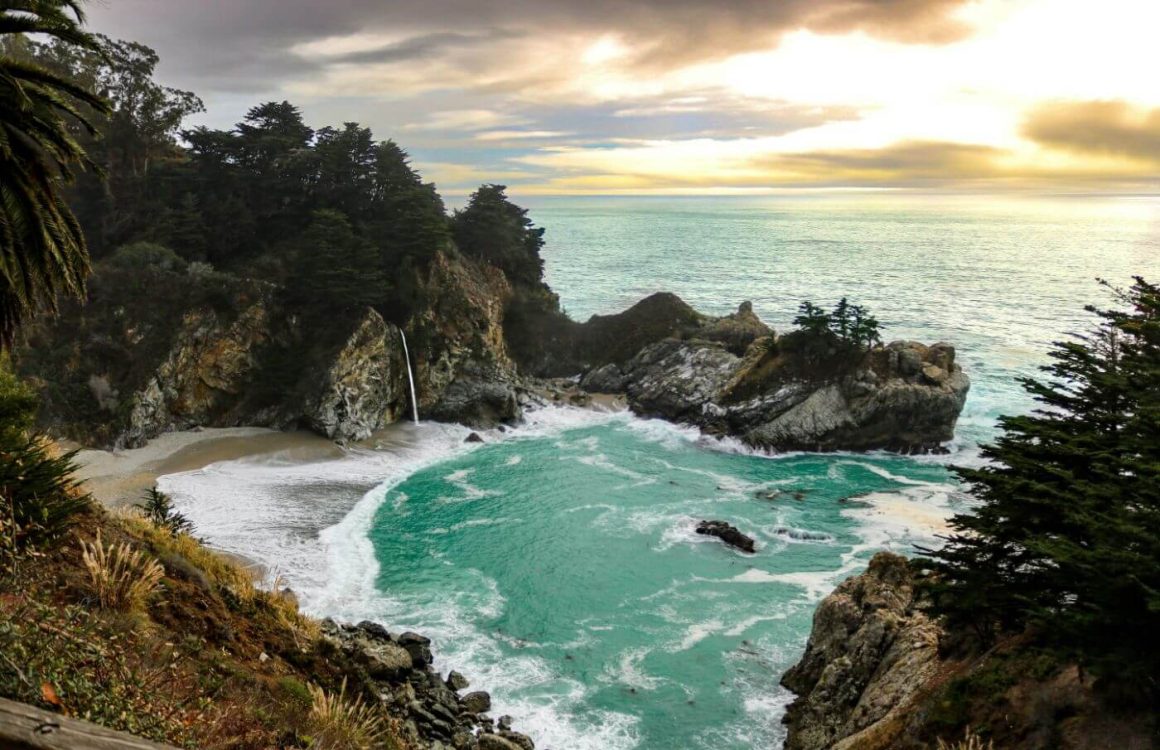
This is the one that doesn’t look real in photos. An 80-foot waterfall pours straight off a granite cliff and onto a pristine sandy beach in a cove with turquoise water. There are only two waterfalls in California that drop onto a beach like this, and McWay is the famous one.
The falls are inside Julia Pfeiffer Burns State Park, about 37 miles south of Carmel. The sandy beach below the waterfall didn’t even exist before 1983. A landslide that year dumped sand into the cove, and now the water lands on the beach at low tide and pours straight into the ocean at high tide.
The viewing platform you stand on is actually built on the foundation of a long-gone mansion called the Waterfall House. It belonged to a wealthy East Coast couple named Lathrop and Hélène Brown. After Lathrop died, Hélène gave the whole 1,600-acre property to California in 1961 on one condition: the park had to be named after her friend Julia Pfeiffer Burns, a tough Big Sur rancher she admired. The mansion was torn down in 1966. Only the foundation and a few palm trees are left.
Heads up for 2026: the main Overlook Trail to McWay Falls is closed for a long retaining wall repair that’s expected to last into 2026. For now, the only view is from a small pullout on the side of Highway 1. Always check with California State Parks for the current status before you drive out.
When the trail is open, it’s a flat 0.6-mile round trip and probably the easiest hike for the biggest payoff anywhere in California. Parking inside the park is $10. Whatever you do, don’t try to get down to the beach. It’s strictly off limits, and people who have tried have been arrested or needed expensive rescues. The cliffs are dangerous.
Best light is in the afternoon when the sun hits the cove.
7. Piedras Blancas Elephant Seal Rookery
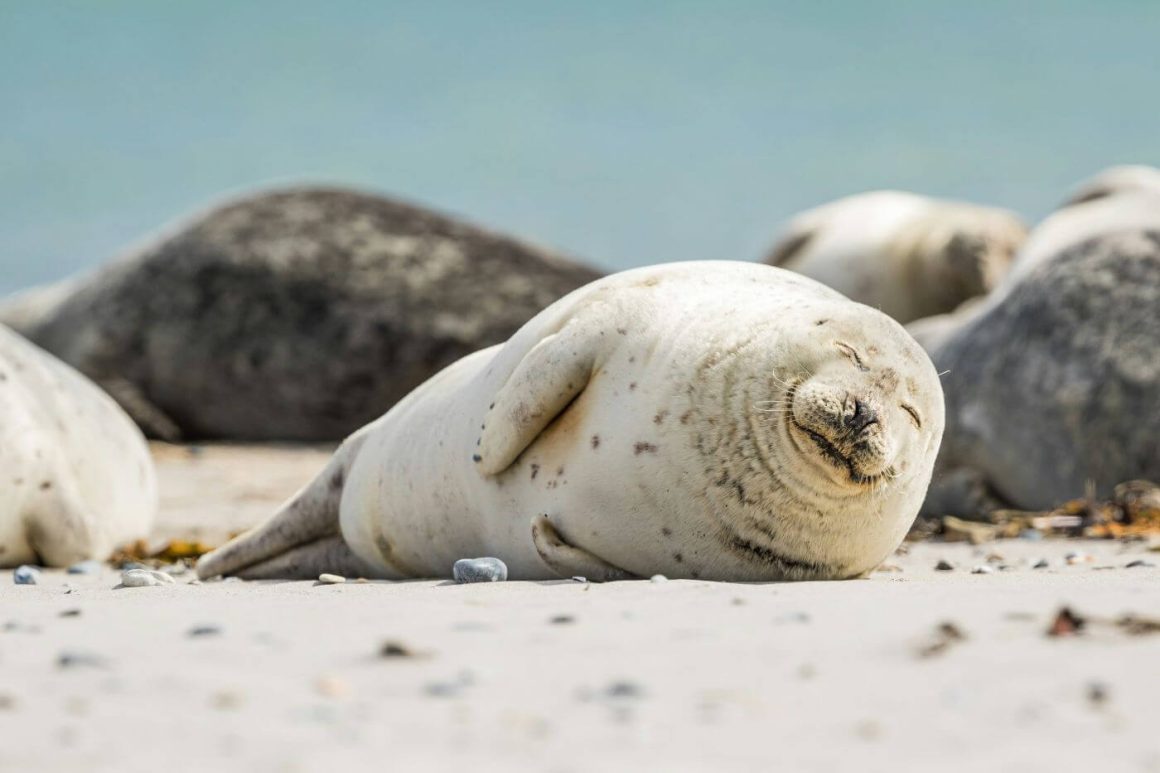
This is one of the wildest free experiences on the entire West Coast. You pull off the highway, walk maybe 20 feet, and you’re standing on a boardwalk a few yards away from thousands of wild elephant seals.
The rookery sits about 7 miles north of San Simeon and it’s open every single day, no reservations, no fees, no anything. Up to 25,000 northern elephant seals haul out along this stretch of beach every year. The males get massive. We’re talking 3,000 to 5,000 pounds and 14 to 16 feet long. That’s about the weight of a small truck. They got their name from the big trunk-like nose on the males, which they use to make loud calls during mating fights.
Here’s a great conservation story to share. Elephant seals were hunted almost to extinction by 1900 for their oil-rich blubber. The species got protected status in the 1920s, but it took decades to bounce back. The first elephant seal showed up at Piedras Blancas in 1990. The first pup was born here in 1992. Now there are tens of thousands. It’s one of the great wildlife comeback stories in America.
The best times to visit line up with three big peaks in seal activity. Late January is peak birthing and mating season, when males fight, females give birth, and pups nurse. It’s the most dramatic and most crowded time. Around the first of May is peak molting season, when the seals shed their skin and fur in huge chunks. And late October brings the fall juvenile haul-out.
Look for volunteers in royal blue jackets called Friends of the Elephant Seal. They hang out at the viewing area between 10 a.m. and 4 p.m. with binoculars and great stories. There are no restrooms right at the rookery, so plan ahead. The boardwalks are wheelchair accessible. Drones are not allowed, and please stay on the marked paths because the cliffs are actively eroding.
8. Hearst Castle in San Simeon
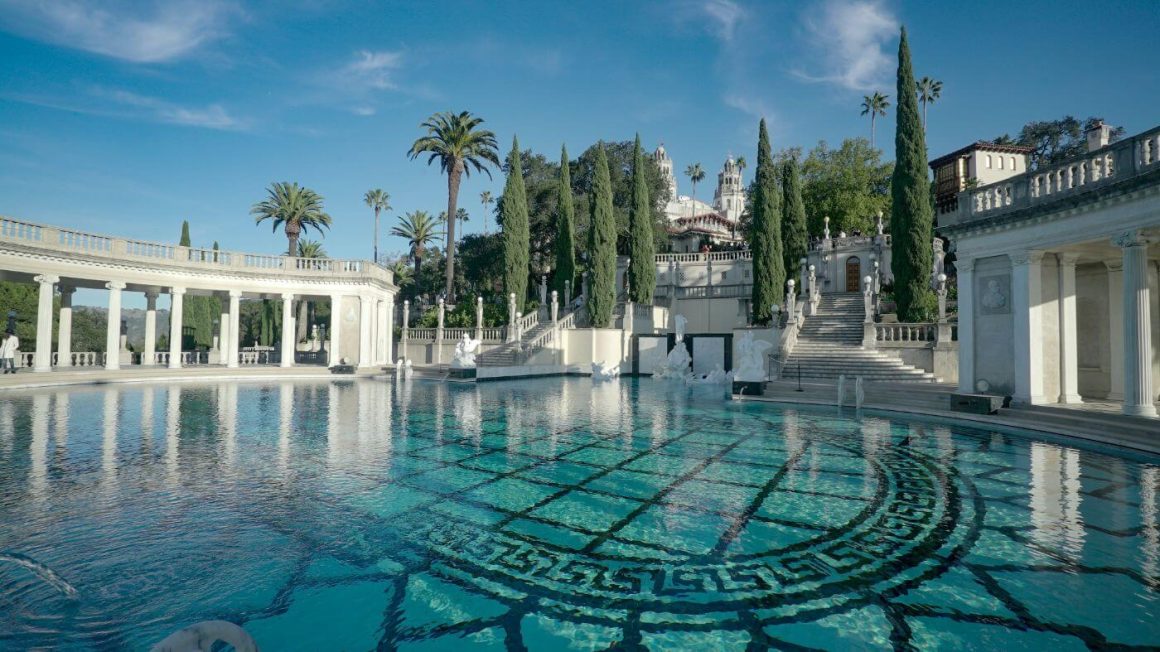
After cliffs and seals, this stop hits totally different. Hearst Castle is a hilltop estate so over the top, so wildly opulent, that nothing else on the route compares.
Newspaper tycoon William Randolph Hearst and architect Julia Morgan spent nearly 30 years building this place, from 1919 to 1947. The official name is La Cuesta Encantada, which means The Enchanted Hill. The main house has 115 rooms. There are three separate guesthouses, 8 acres of gardens, two famous pools, and an art collection that includes ancient Egyptian statues more than 3,000 years old.
If the name Hearst sounds familiar, that’s because he was the real-life inspiration for Charles Foster Kane in Citizen Kane. The castle has also appeared in plenty of movies, including Stanley Kubrick’s Spartacus. The dining hall reportedly even inspired the design of the Great Hall at Hogwarts in the Harry Potter films.
The two pools are reason enough to visit. The outdoor Neptune Pool is 104 feet long, lined with Vermont marble, and surrounded by Roman-style columns. It’s anchored by an actual ancient Roman temple facade that Hearst bought in Europe and shipped over. The indoor Roman Pool is covered floor to ceiling in mosaics made of Venetian glass and gold leaf, with marble statues of Roman gods watching from the walls.
Here’s how visiting actually works. You can’t drive up to the castle. You park at the Visitor Center off Highway 1 and take a 15-minute shuttle bus up the hill. Tours must be booked in advance at ReserveCalifornia.com because they sell out, especially in peak season.
For first-time visitors, the Grand Rooms Tour is the way to go. It’s 70 minutes long, includes about 140 steps, and covers the main rooms plus both pools. There are other daily tours (Upstairs Suites, Cottages & Kitchen, Designing the Dream) if you want to see more. In spring and fall, there are also Evening Tours where docents wear 1930s clothes and act out the era. After your tour ends, you can stay on the hilltop until closing to wander the grounds.
9. Morro Bay
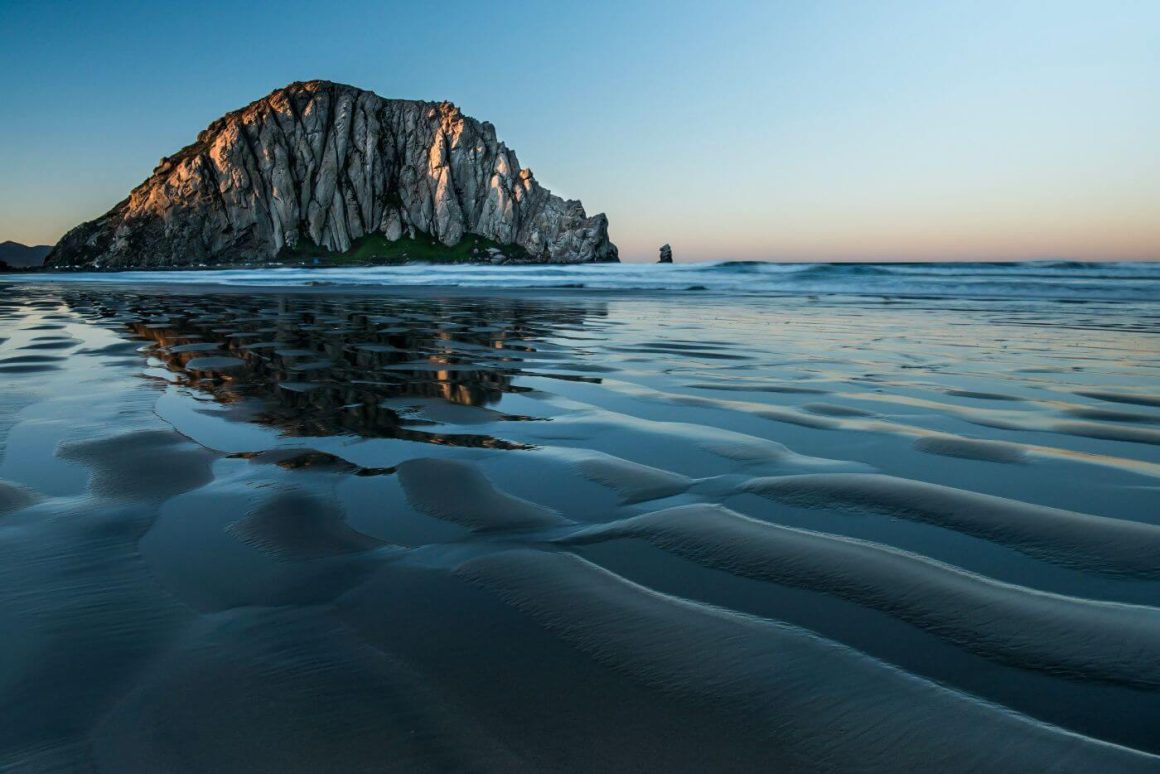
After the spectacle of Hearst Castle, Morro Bay is the chill stop. It’s a quiet fishing village, way less crowded than other places on this list, and it’s defined by one massive rock and a population of extremely cute sea otters.
Morro Rock is a 576-foot volcanic plug that rises straight out of the harbor. It’s about 23 million years old, the leftover hardened lava from an ancient extinct volcano. It’s one of nine volcanic plugs known as the Nine Sisters that stretch inland from Morro Bay to San Luis Obispo. Morro is the smallest, but because it stands alone right on the coast, it’s the most striking. Spanish explorer Juan Rodriguez Cabrillo named it El Morro back in 1542. Locals sometimes call it the Gibraltar of the Pacific.
You can drive right up to the base of the rock, but you can’t climb it. It’s a protected nesting site for peregrine falcons.
The real reason most people stop in Morro Bay is the wildlife. Sea otters float on their backs in the bay all year long, often within 20 or 30 feet of the harbor walk. The best spots to see them are near the South T-Pier, along the Embarcadero, and at the designated sea otter viewing area north of the harbor. On a good day you’ll see 20 or 30 of them at once. Pupping peaks in October through January and again in March and April, so winter and spring are especially good for cute little otter babies.
The whole area is also a top birding destination, and monarch butterflies cluster in the eucalyptus groves of Morro Bay State Park from December through March.
Things to do here are low-key in the best way. Walk the Embarcadero past the seafood shacks and taffy shops. Rent a kayak and paddle the calm bay (it’s protected from the ocean by a long sand bar, so even beginners are fine). Hike the short Black Hill trail for a sweeping view of the rock and the Nine Sisters. And eat oysters at Morro Bay Oyster Co., where you can hand-pick and shuck your own.
10. Santa Barbara
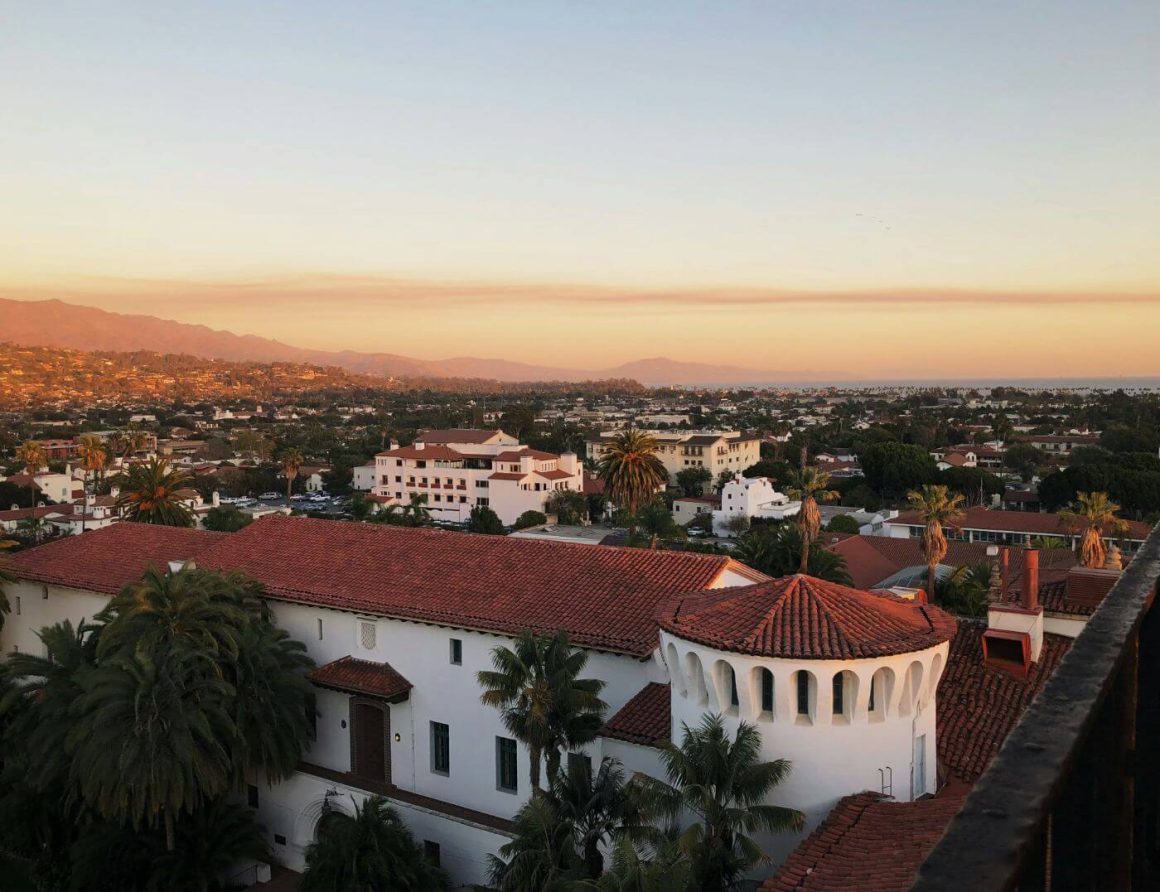
Santa Barbara is the city nicknamed the American Riviera, and once you visit, the name makes sense. White stucco buildings, red tile roofs, palm trees, mountains, beaches, and weather that feels almost too perfect.
Here’s a fun piece of history that explains why everything looks so unified. Most of the original Santa Barbara was destroyed in a 1925 earthquake. Instead of just rebuilding however, a local civic leader named Pearl Chase pushed city planners to rebuild the entire downtown in one consistent style: Spanish Colonial Revival, with whitewashed adobe walls and red tile roofs. That’s why Santa Barbara looks more cohesively Spanish than almost anywhere else in California. It’s basically a planned Mediterranean fantasy.
The architecture stops you can’t miss include the Santa Barbara County Courthouse, which has shown up on lists of the most beautiful government buildings in America. It’s free to enter and you can climb the clock tower for 360-degree views. Old Mission Santa Barbara, founded in 1786 and nicknamed the Queen of the Missions, is still an active church with gardens, a museum, and a historic cemetery. And El Presidio de Santa Bárbara State Historic Park preserves one of the last Spanish military outposts built in California, dating back to 1782.
The easiest way to see the highlights is the self-guided Red Tile Walking Tour, which covers 12 downtown blocks starting at the Courthouse.
For food and drinks, head to the Funk Zone. It’s a 13-block neighborhood between State Street and the waterfront that used to be warehouses and is now packed with tasting rooms, galleries, and restaurants. The Urban Wine Trail runs right through it with more than 20 tasting rooms in easy walking distance. If you want to go deeper, the Santa Ynez Valley wine country (yes, the one made famous by the movie Sideways) is about 45 minutes inland.
Beach picks include Butterfly Beach in Montecito, which is the celebrity favorite, plus East Beach and West Beach closer to downtown. Walk out onto Stearns Wharf, the historic deep-water pier, for great views back at the city and the mountains.
11. El Matador State Beach in Malibu
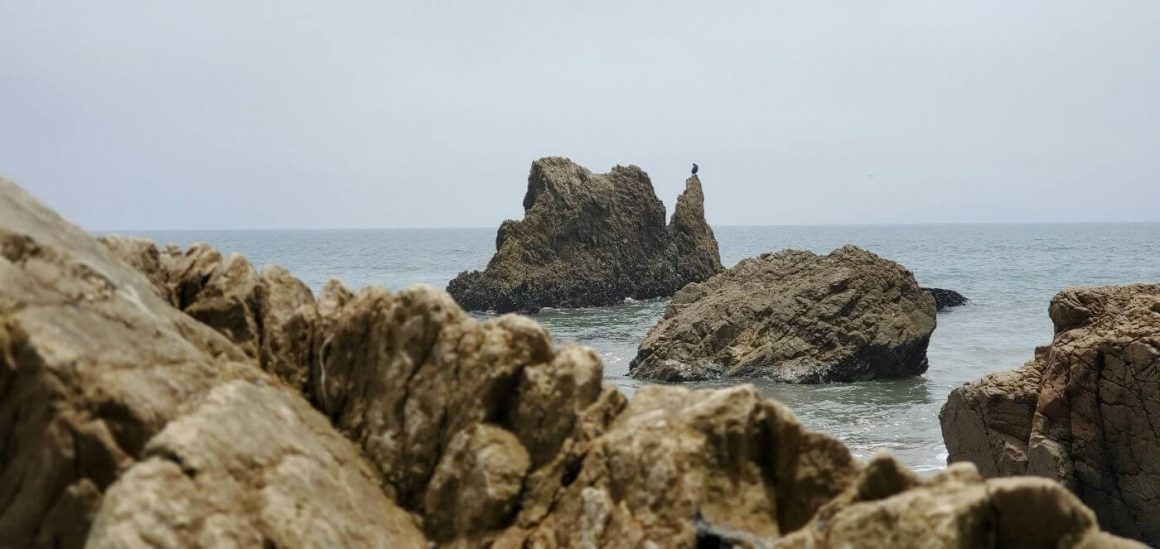
The grand finale before Los Angeles. El Matador is the most dramatic beach in Southern California, and it’s the perfect natural counterpoint to all the human-made spectacle you’ve passed on the drive.
It’s part of the Robert H. Meyer Memorial State Beaches, a small group of pocket beaches along the Malibu coast. What makes El Matador special is the geology. Massive sea stacks rise out of the sand. Sea caves carve into the cliffs. Natural arches frame the surf. Tiny hidden coves connect by walking around the rocks. At low tide, tide pools fill with sea stars, anemones, and hermit crabs.
El Matador is hands down the most photographed beach on the Malibu coast and a favorite spot for engagement shoots and fashion photographers. Even so, it feels way less crowded than the beaches closer to LA.
Two things you absolutely need to know before you go. First, check the tide chart. At high tide, some of the most beautiful caves and passages get completely flooded and become impossible (or dangerous) to walk through. Low tide unlocks the magic, so plan your visit around it. Second, the beach is at the bottom of a steep staircase down about 100 feet of bluff. The climb back up is real. Wear good shoes, and don’t expect a lot of bathrooms or amenities up at the small parking lot.
The best time of day to be here is sunset. The west-facing cove turns pink and orange, and the sea stacks throw long, dramatic shadows on the sand. Aim to be down on the beach at least 30 minutes before sunset to find your spot.
Wrapping it up
That’s the whole list. Eleven stops, hundreds of miles, and at least a few moments where you’ll probably pull over just to stand on the side of the road and look at the ocean.
A few final tips before you go. Plan on at least 3 days to do the route justice, and 4 or 5 if you want to spend real time in places like Carmel, Hearst Castle, and Santa Barbara. Always check road conditions on the Caltrans QuickMap before you drive Big Sur, because storms and slides can still close sections of Highway 1 even now that the road is fully open again. Pack layers, because Big Sur fog rolls in even in August. Bring binoculars for the otters and elephant seals. And download a tide chart app for McWay and El Matador.
Most importantly, leave time to stop at the random pullouts that aren’t on this list. Some of the best PCH memories happen in between the famous places.