 Rebecca Engel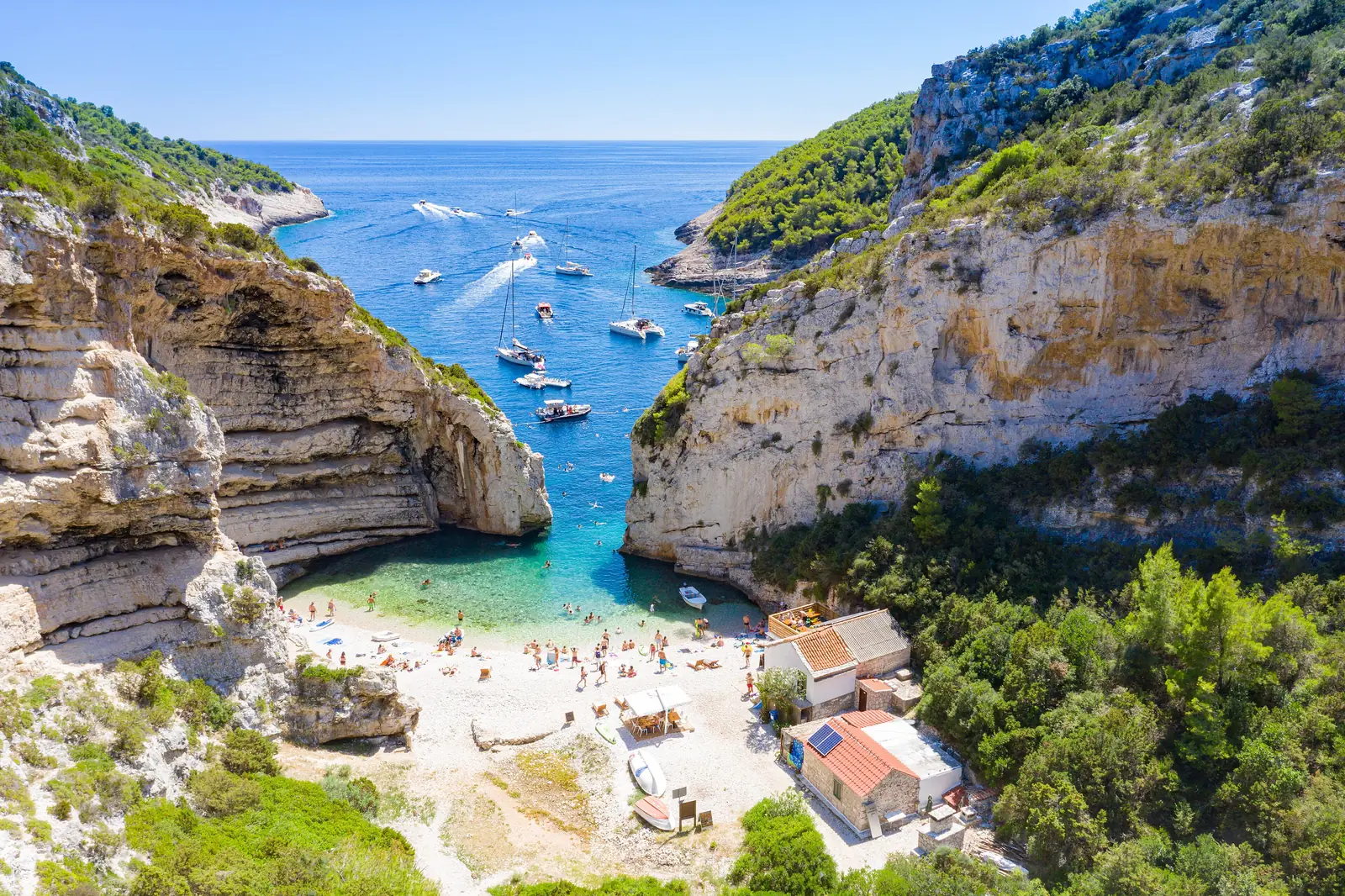
Croatia has a handful of islands that turn up on every list. Hvar gets the yachts and the beach clubs. Brac has its famous white pebble beach. Korcula sells itself as the home of Marco Polo. They’re all lovely, and they’re all packed by the middle of summer.
Then there’s Vis. It sits farther out to sea than any other inhabited Croatian island, and for most of the last century it was closed to outside visitors completely. That head start on being forgotten is exactly what makes it special. Vis stayed small, slow, and real while its neighbors filled up, and it’s still the island most people skip. Here’s why you shouldn’t.
Why Everyone Skips Vis
The simple reason is distance. Vis is about 45 nautical miles off the coast, and the ferry from Split takes a little over two hours. There’s no airport and no bridge, so you can’t just swing by on a day trip the way people do with the closer islands.
The deeper reason goes back to the Cold War. For decades Vis was a military base for the Yugoslav army, and foreigners weren’t allowed to set foot on it until 1989. While the rest of the coast was busy building hotels and marinas, Vis sat behind a closed door.
That’s the twist. All those years off limits kept the island from being paved over. There are no giant resorts and no strip of identical beach bars. What you get instead is a place that still feels like a working island, with fishing boats, old stone villages, and vineyards that have been here for centuries.
Stiniva Might Be the Most Beautiful Beach in Croatia
If Vis has one showstopper, it’s Stiniva. Two tall cliffs curl around a small pebble cove and almost meet at the water, leaving a gap just wide enough for a boat to slip through. From the inside, it feels like a hidden room carved out of the coast.
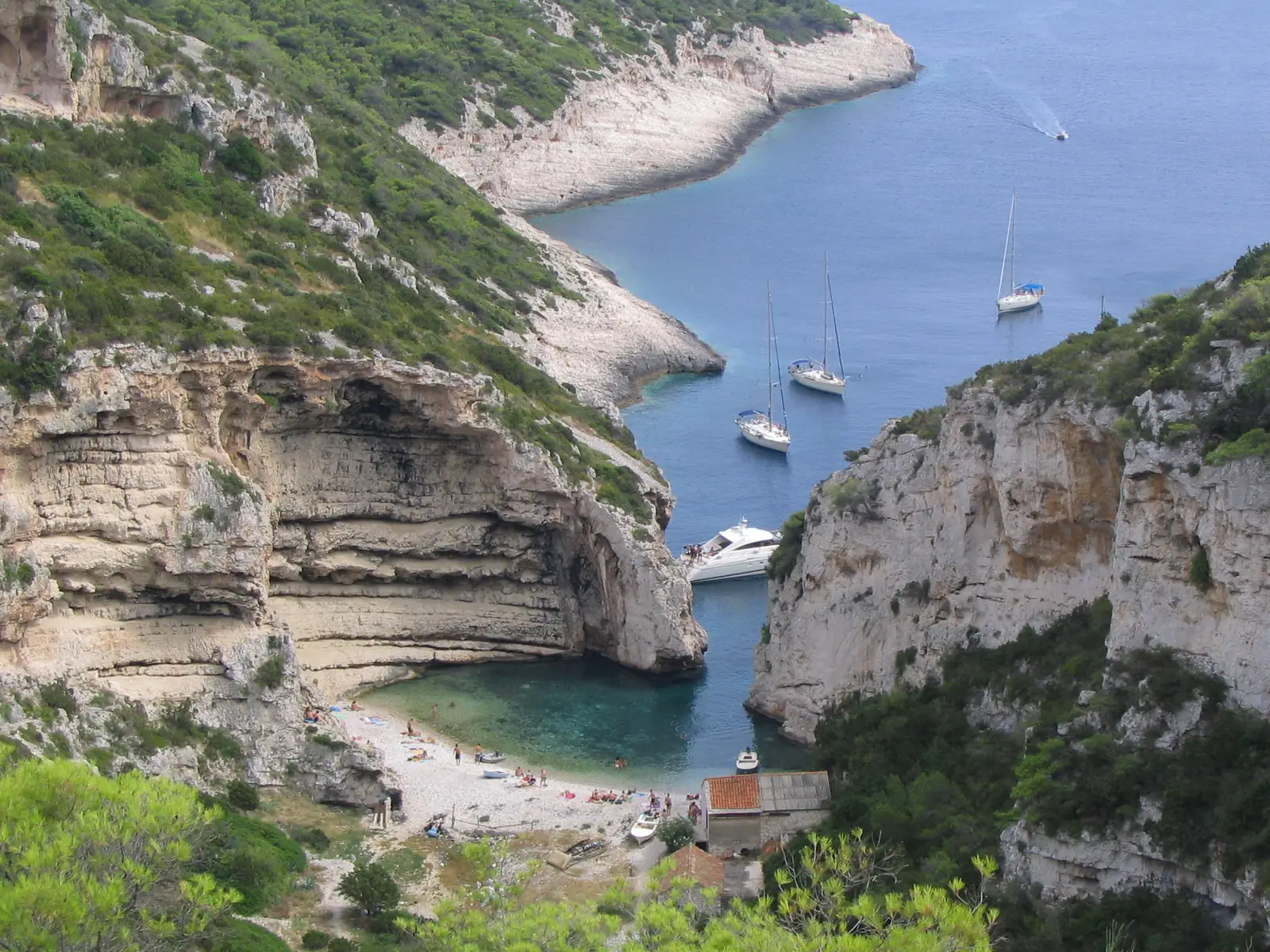
It takes some effort to reach, which is the whole point. You can hike down a steep trail from the road above, or come by boat from Komiza. Either way you earn it, and the crowds stay thin because casual visitors don’t bother making the trip.
Go early or late in the day if you can. The cove is small, and the light bouncing off the white stone and clear water is worth setting an alarm for. Stiniva regularly lands on lists of the best beaches in Europe, and once you’re standing in it you’ll understand why.
The Blue Cave Is Worth the Early Boat
A short hop from Vis is the tiny island of Bisevo, home to the Blue Cave. Around midday, sunlight slips through an underwater opening and lights the whole cave from below. The water glows a bright electric blue, and the rocks pick up a silver shine.
Boats leave from Komiza most mornings in season, and timing matters. The blue only shows up when the sun is high and the sea is calm, so the trips run on a tight window. It gets busy, so an earlier boat beats the midday rush.
While you’re out there, the same waters hide other stops like the Green Cave and quiet swimming spots most people never see. One of the best things to do in Vis is simply get on a small boat and let the coast show off.
Vis Town Feels Like the Croatia You Pictured
Vis Town wraps around a wide bay on the northern side of the island. Stone houses line the waterfront, fishing boats bob in the harbor, and the pace is slow enough that you’ll start to slow down too.
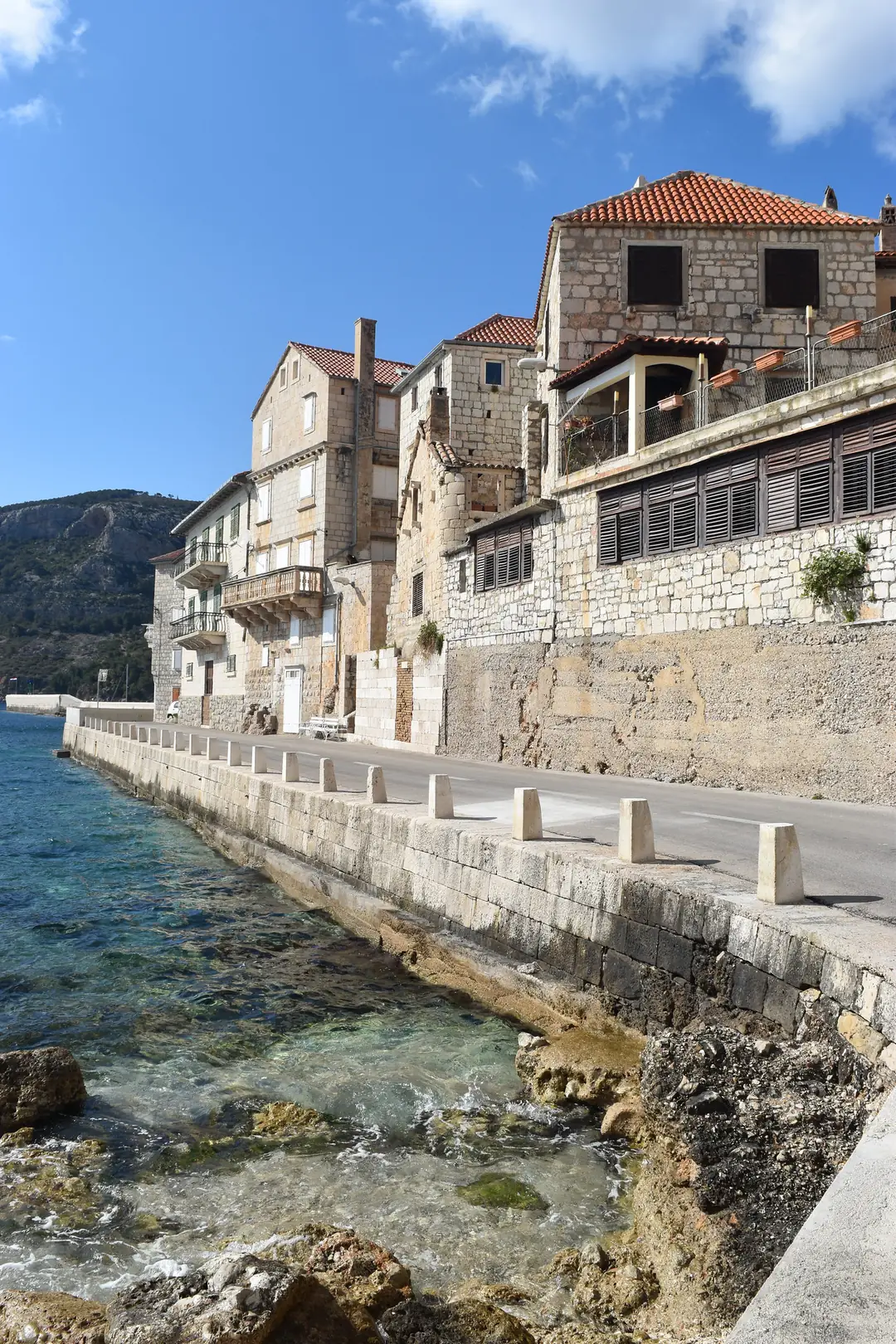
There’s real history layered in here. The Greeks founded a settlement on this spot more than two thousand years ago, and you can still find Roman remains and old churches tucked between the houses. It’s the kind of place where a walk with no plan turns up something worth stopping for.
When the sun drops, the tables along the harbor fill up and dinner stretches long. This is Croatia without the cruise crowds, and it’s a big part of why a trip to Vis stays with you.
Komiza Is a Fishing Village That Never Sold Out
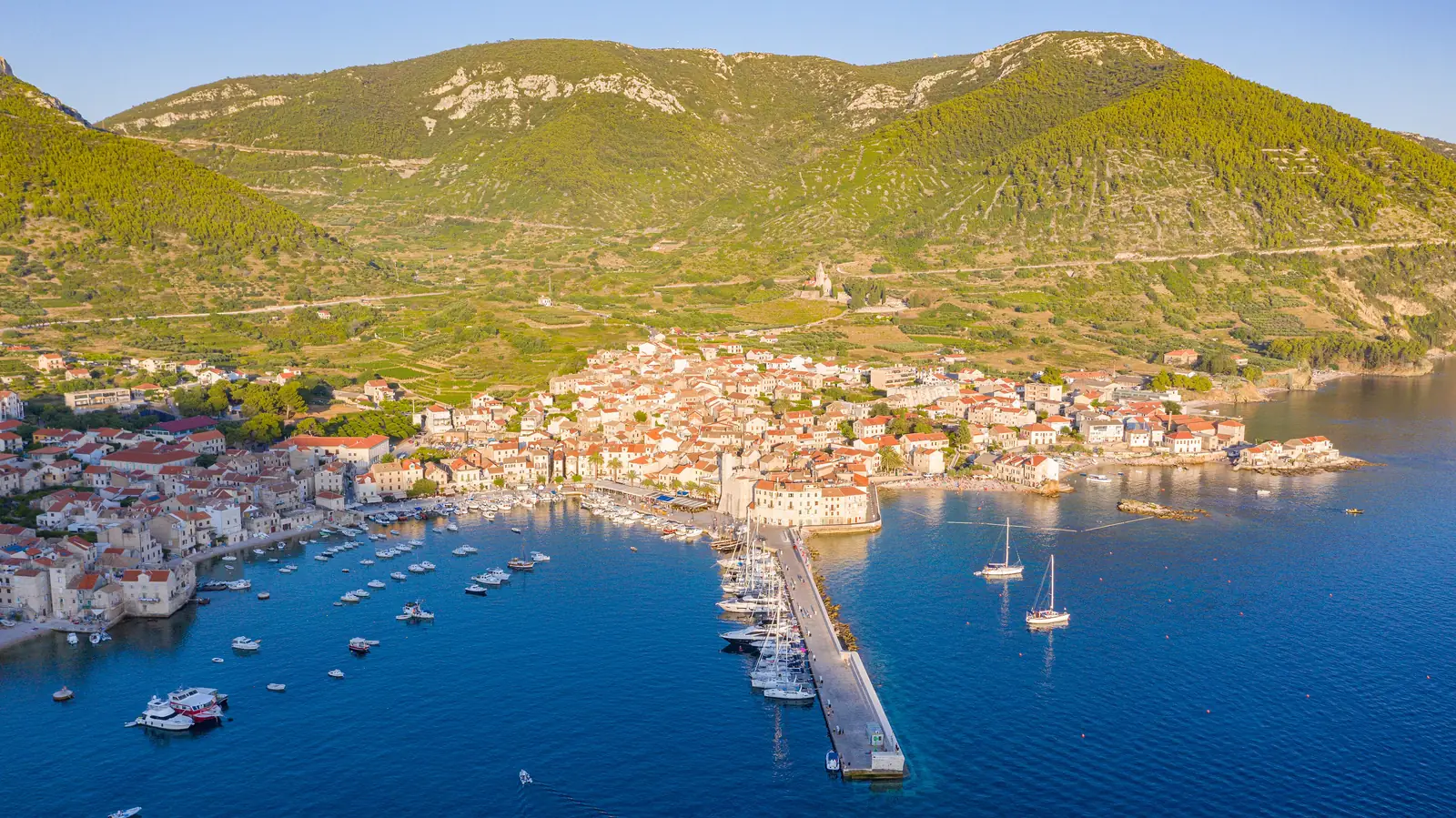
On the far side of the island sits Komiza, a fishing town stacked up a steep hillside above a small harbor. It’s smaller and rougher around the edges than Vis Town in the best way, and it still runs on the rhythm of the sea.
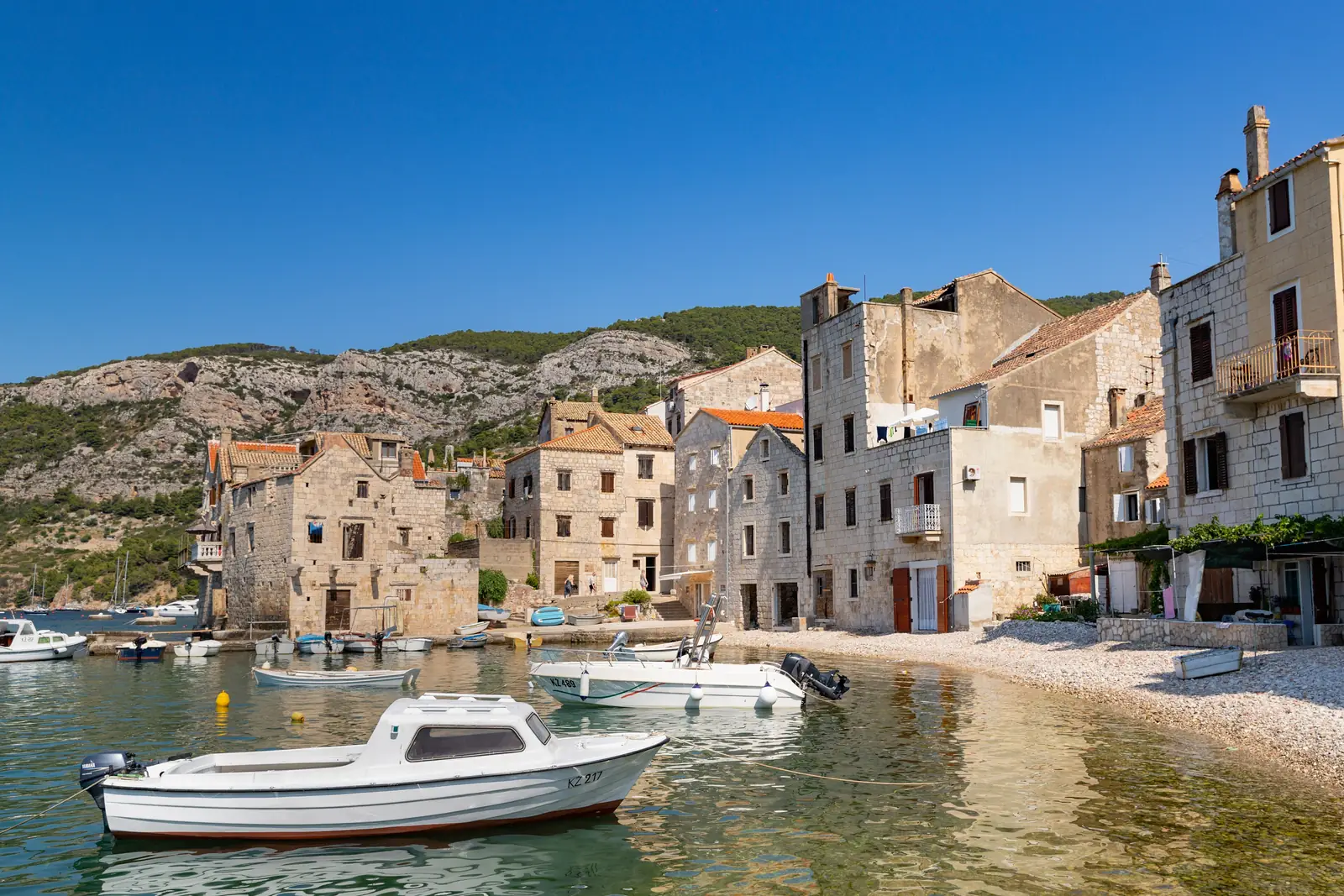
Komiza is the launch point for Blue Cave trips, but it’s worth time on its own. A stone tower guards the harbor, narrow lanes climb away from the water, and the sunsets here are some of the best on the island because the town faces due west.
This is also the heart of the island’s fishing culture. Komiza has been catching and salting fish for generations, and you can taste that history on nearly every menu.
The Food and Wine Are the Real Secret
Plenty of people come to Vis for the beaches and stay for the food. The island grows two grapes worth knowing: a crisp white called Vugava and a bold red called Plavac Mali. Both have been made here for a very long time, and a glass of either tastes like the place it came from.
The dish to try is viska pogaca, a savory flatbread packed with onions, tomatoes, and salted anchovies. It’s simple island food, and it’s fantastic. For something bigger, look for peka, meat or octopus cooked slowly under a metal bell buried in hot coals.
The best meals happen in konobas, small family run taverns where the menu depends on what came off the boat and out of the garden. Eating this way is one of the most memorable things to do in Vis, and it costs a fraction of what you’d pay on the flashier islands.
The Island Was a Military Secret for Decades
Vis wears its odd history out in the open. Because it was a closed military island, the hills are full of old army tunnels, gun positions, and a submarine pen cut into the rock right at the shoreline. Local guides run jeep tours that string these sites together, and it makes for a fascinating half day.
There’s a cave up in the hills that once served as a wartime headquarters, and standing inside it drives home how important this little rock in the sea used to be. It’s a different kind of sightseeing, and a welcome change of pace from beaches and boats.
If any of this looks familiar, there’s a reason. Vis stood in for a sunny Greek island in the second Mamma Mia film, with scenes shot around the island in 2017. Fans still track down the spots.
Getting to Vis
Getting to Vis is part of what keeps it quiet, and it’s easier than it sounds. Ferries run from Split, the big coastal city with the nearest airport, straight to Vis Town. The car ferry takes a little over two hours, and a faster passenger catamaran cuts that down when you don’t need a car.
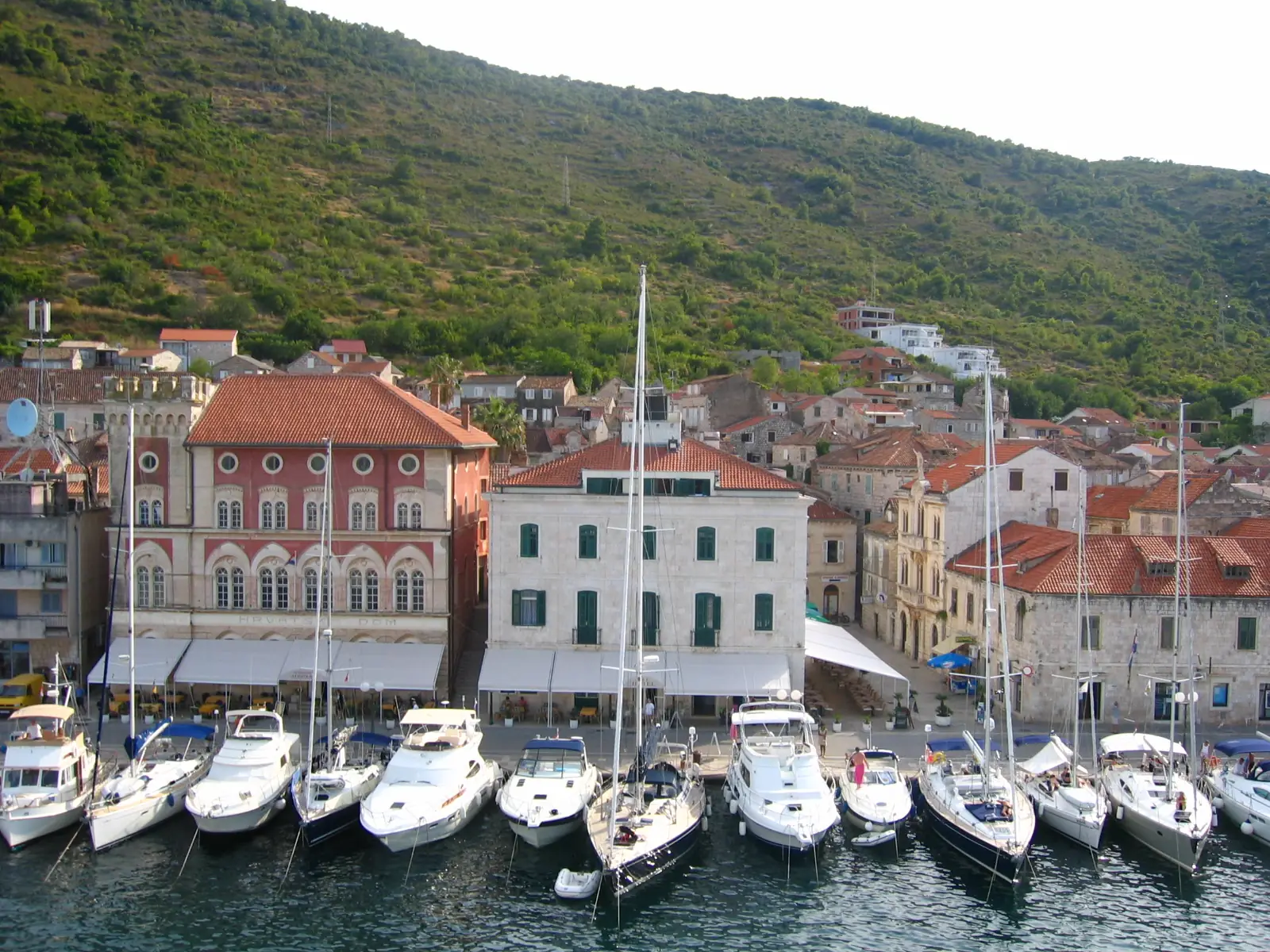
Book ahead in summer, especially with a car, because the popular sailings sell out. Once you land, the island is small enough to get around by car, scooter, or the local bus, and plenty of visitors rent a little boat for a day to reach the coves.
You don’t need a car to enjoy Vis, but having wheels makes the hidden beaches and inland vineyards a lot easier to reach.
The Best Time to Visit Vis
The sweet spot for visiting Vis is late spring and early fall. May, June, and September bring warm water, sunny days, and far smaller crowds than the peak. Prices are gentler then too.
July and August are the busiest and hottest stretch, and while Vis never gets as crammed as Hvar, the boats and beaches do fill in. If you want the island at its quietest, aim for the shoulder months on either side of high summer.
Outside of summer, many restaurants and boat tours wind down, so spring through early autumn is the window that gives you the full island without the crush.
Final Thoughts
Vis asks a little more of you than the easy islands. You have to want it, plan around the ferry, and give up the idea of a quick day trip. That small barrier is the best thing about it.
What waits on the other side is a Croatian island that still feels like a secret, with a knockout hidden beach, a glowing sea cave, two lovely old towns, and food and wine that punch well above the island’s size. Everyone else is skipping Vis. Now you know why you shouldn’t.