 Rebecca Engel
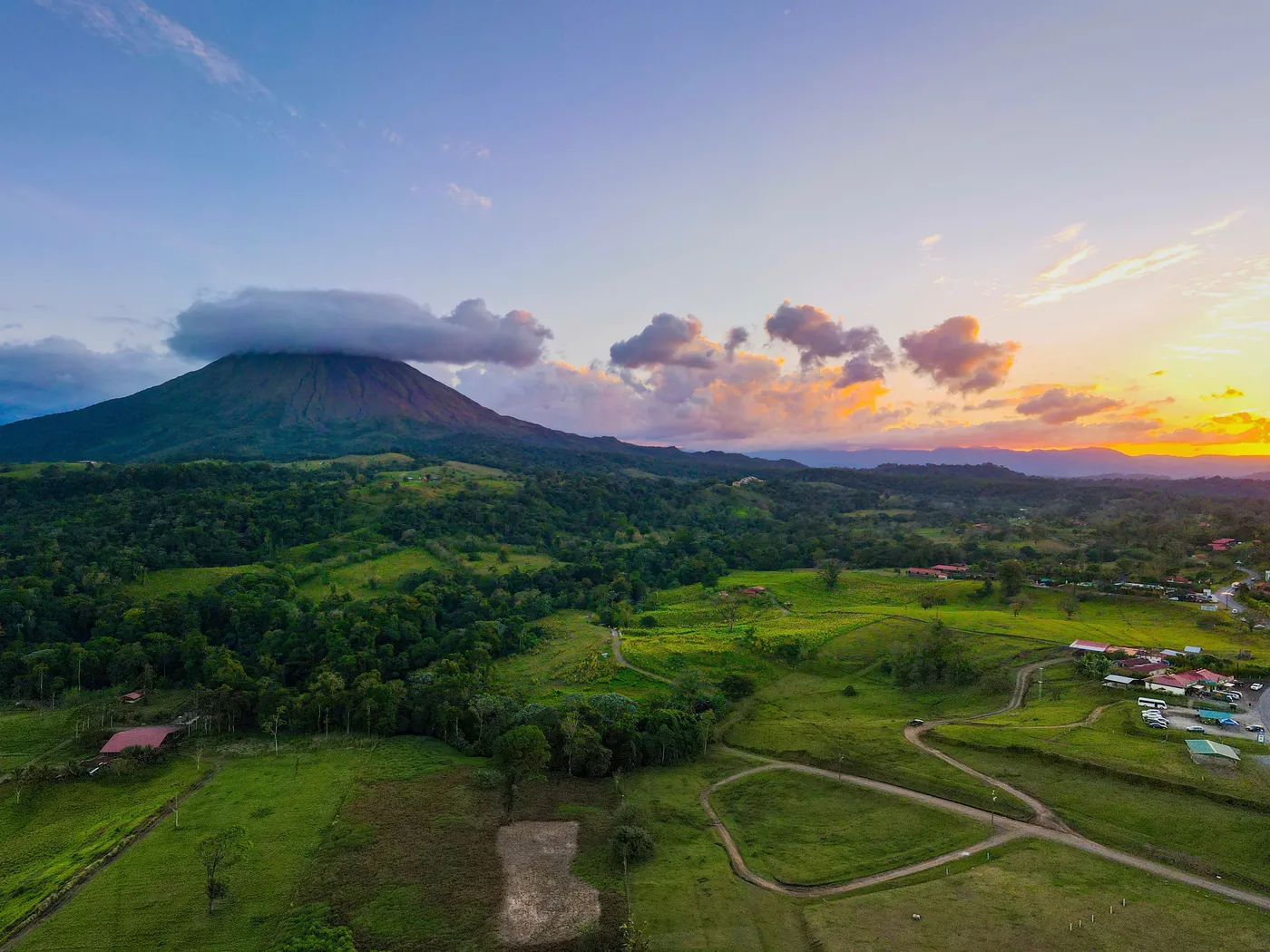
Costa Rica packs a lot into a small country. In one week you can soak in hot springs under a volcano, walk through a forest that sits inside the clouds and watch monkeys swing over a Pacific beach. The hard part isn’t finding things to do. It’s choosing a route that doesn’t spend half the trip in the car.
This 7 day Costa Rica itinerary is the classic first timer’s loop: Arenal Volcano, the Monteverde cloud forest and Manuel Antonio, starting and ending at the airport in San Jose. It gives each place two nights so you’re not packing up every morning, and it’s built around what most people come for, which is volcanoes, wildlife and beaches. If this is your first Costa Rica itinerary and you’ve only got a week in Costa Rica, this is the one to copy.
How The Week Fits Together
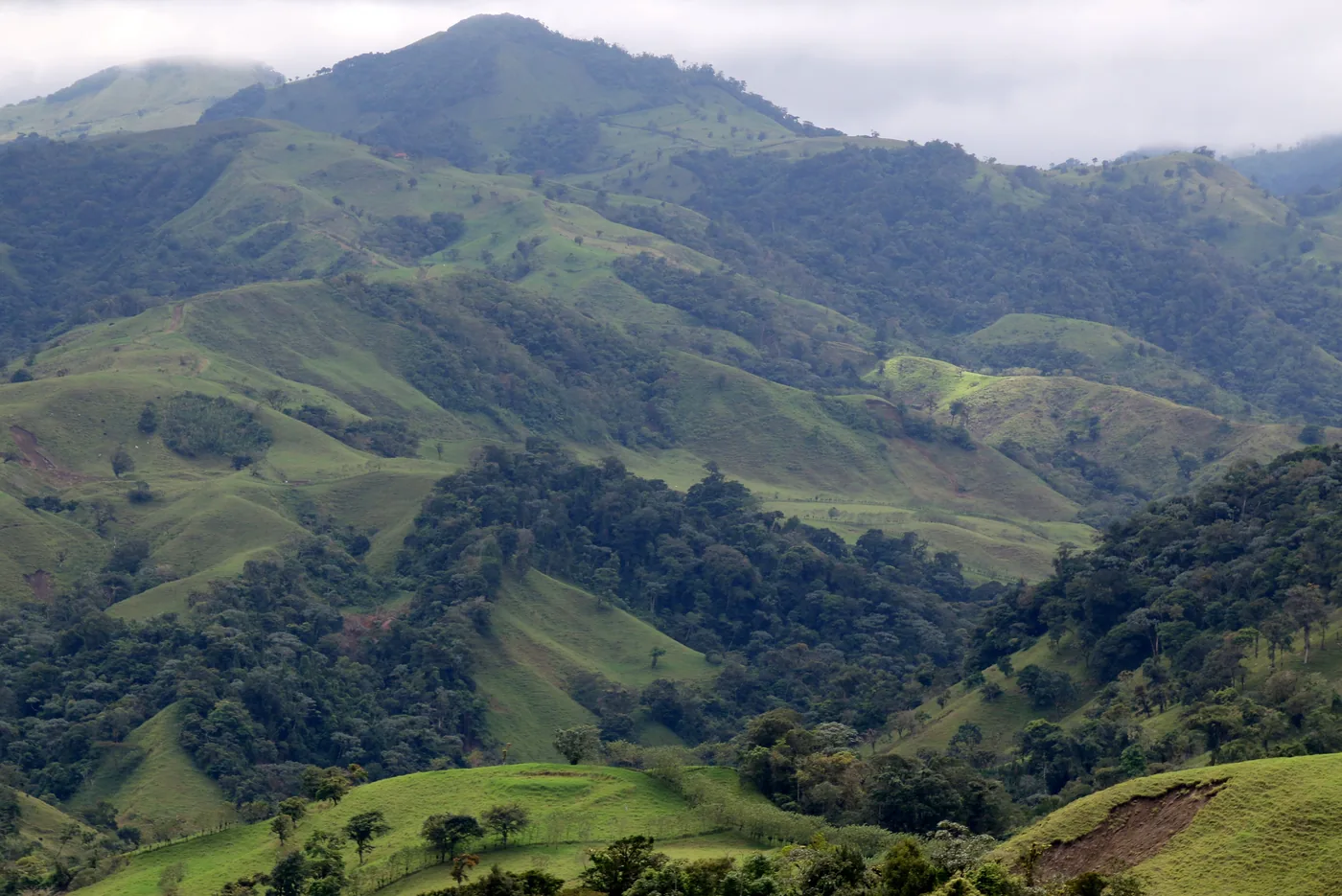
The route is a loop. You fly into San Jose, head north to La Fortuna and Arenal Volcano, cross over to Monteverde, then drive down to the Pacific coast at Manuel Antonio before heading back to the airport. Flying in and out of the same airport keeps flights simple and avoids the extra fee most rental companies charge to drop a car somewhere else.
You’ll spend two nights in each of the three places. That’s nights 1 and 2 in La Fortuna, nights 3 and 4 in Monteverde and nights 5 and 6 in Manuel Antonio. The three drives between them each take about three to four hours, so days 1, 3, 5 and 7 all have some time on the road built in.
Two things are worth planning around before you book. Manuel Antonio National Park is closed on Tuesdays, so pick a start day that keeps day 6 off a Tuesday. And the first day only works if you land by early afternoon, since driving after dark in Costa Rica isn’t a good idea. If your flight gets in later, spend the first night near the airport in Alajuela and head north in the morning.
Entry rules for visitors can change, so check the current passport and entry requirements for your country before you book.
Day 1: Fly Into San Jose And Drive To La Fortuna
The main international airport is actually in Alajuela, a short drive from San Jose itself. Most rental car companies pick you up just outside arrivals and shuttle you to their lots nearby.
Skip the capital for now. This Costa Rica itinerary heads straight north, and the city is easy to see another time.
The Drive North Into The Mountains
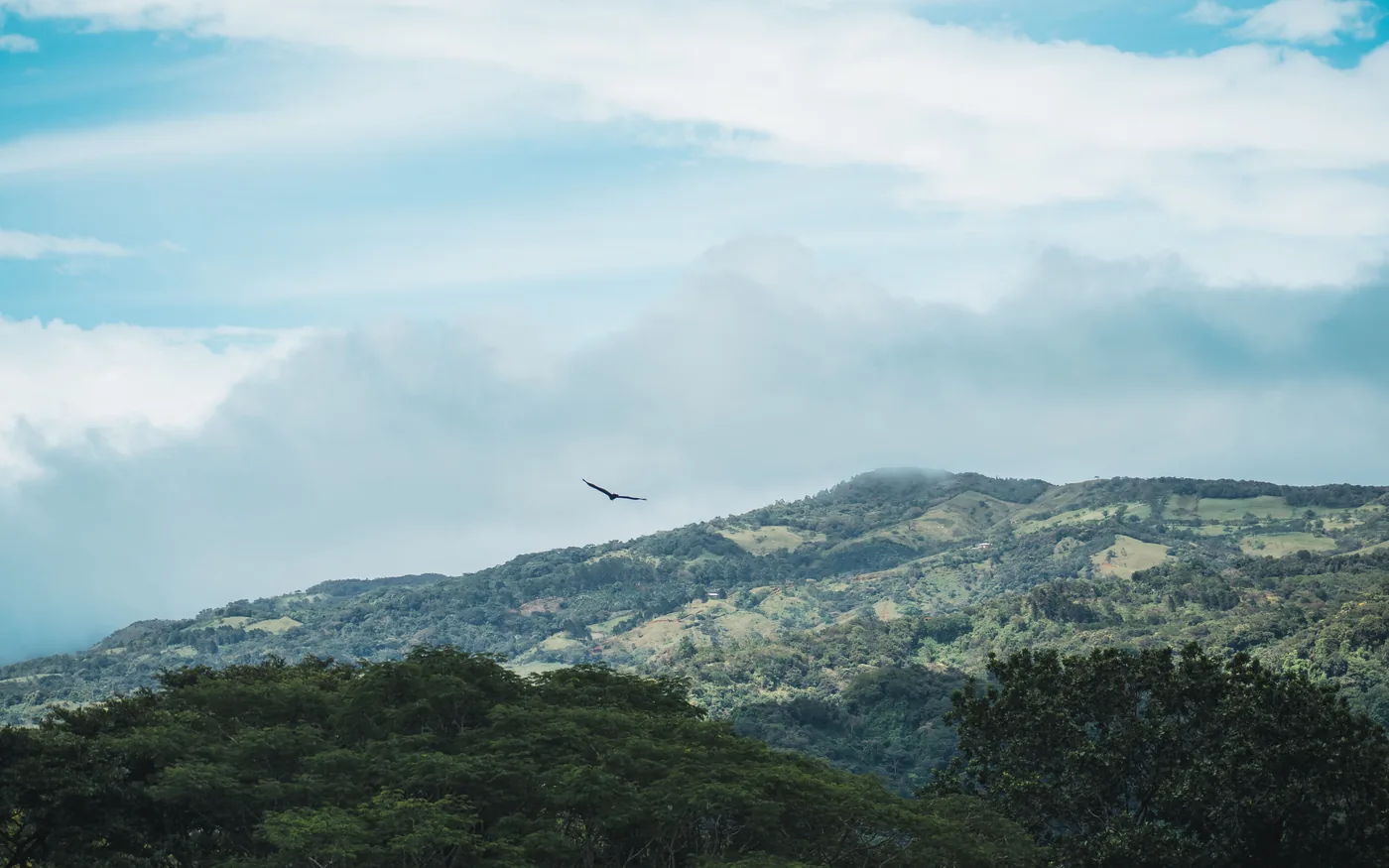
The drive to La Fortuna takes about three hours. It climbs out of the Central Valley and winds through green hills, coffee farms and small mountain towns before dropping down into the lowlands on the other side.
The roads are narrow and curvy in places, so don’t count on going fast. Stop for lunch at one of the roadside sodas along the way. These small family run restaurants serve a casado, a plate of rice, beans, salad, plantains and a choice of meat, and it’s the most Costa Rican meal you can order.
Your First Look At Arenal Volcano
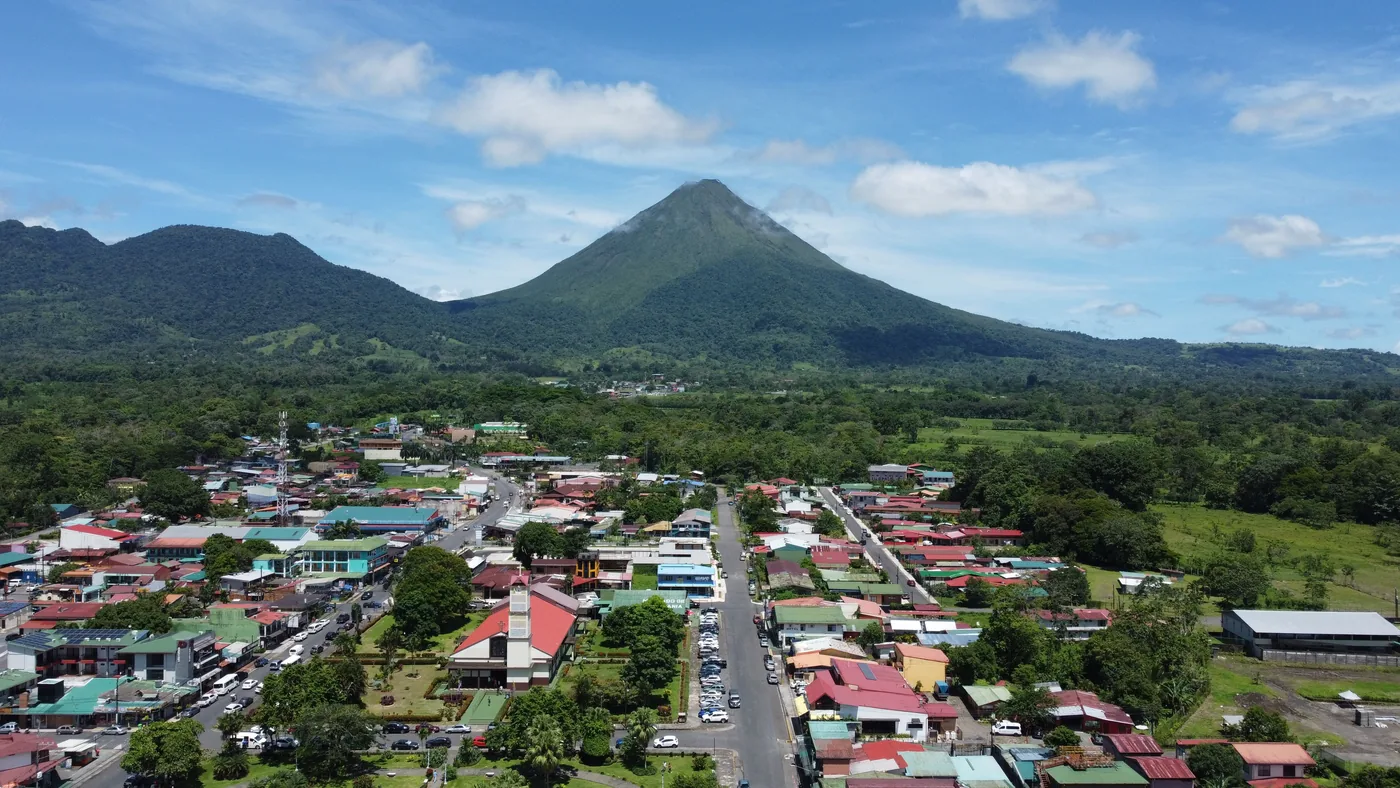
Arenal Volcano rises right behind the town of La Fortuna, and on a clear afternoon its almost perfect cone fills the whole sky. Clouds often wrap around the top, so take a good look whenever it shows itself.
Arenal hasn’t erupted in years and is now considered dormant, so don’t expect to see lava. It was very active for decades after a big eruption in 1968, though, and the lava fields and black rock it left behind are still easy to see around the base.
Spend the evening settling in. La Fortuna is a small, easy town with plenty of places to eat, and an early night will set you up well for tomorrow.
Day 2: Arenal Volcano, La Fortuna Waterfall And Hot Springs
This is the busiest day of the week, and it’s a good one. Hike in the morning while it’s cool, cool off at the waterfall around midday and finish in warm water at night.
If it’s raining in the morning, flip the order around. The hot springs work in any weather, and the volcano trails are better once things dry out a little.
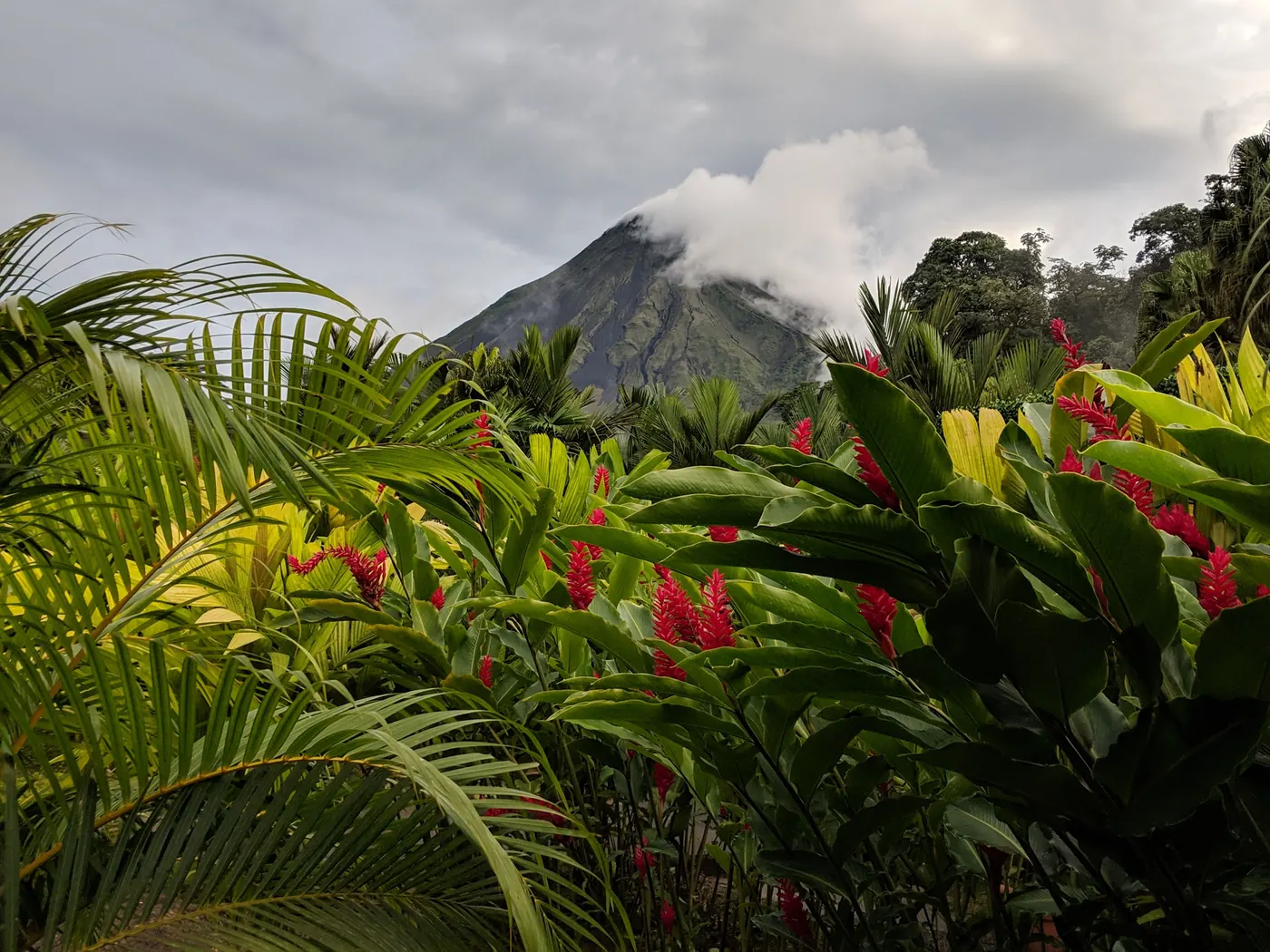
Hike Over Old Lava Flows In Arenal Volcano National Park
Arenal Volcano National Park has a few short, easy trails near its entrance. The best known one crosses an old lava flow, a jumble of black rock now half covered by plants, with the volcano rising right above you.
Another good option is Arenal 1968, a private reserve next to the park with longer trails across the lava from that famous eruption and wide views over Lake Arenal. Either way, go early. Wildlife is more active in the morning, and the clouds usually roll in by the afternoon.
A local guide is worth the money here. Guides carry spotting scopes and know where to look, and they’ll point out toucans, coatis and monkeys you’d walk straight past on your own.
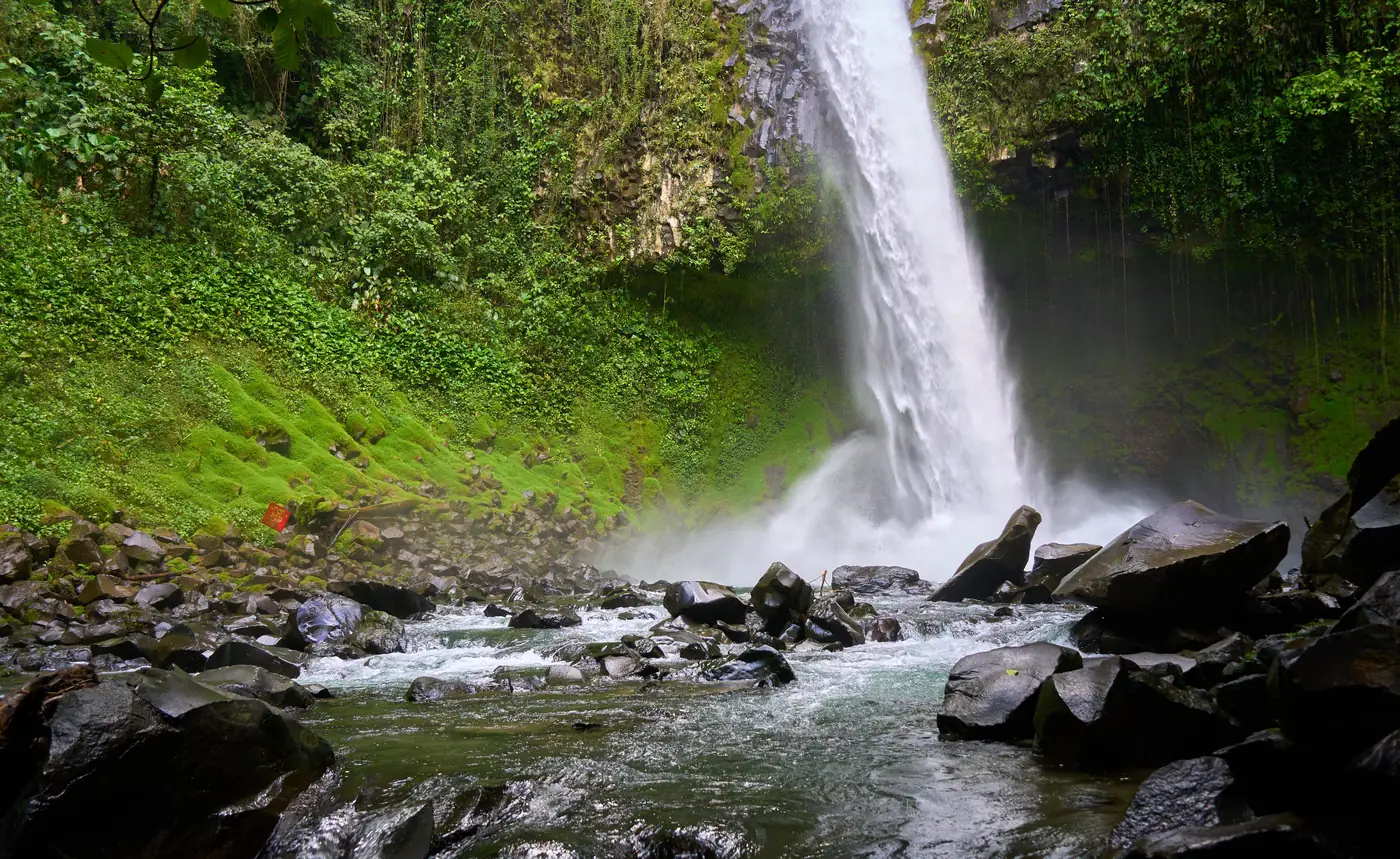
Climb Down To La Fortuna Waterfall
La Fortuna Waterfall drops more than 200 feet out of the rainforest into a deep green pool. It’s run by a local community group, and the entrance is just a short drive from town.
Getting to the bottom means about 500 steps down a steep staircase, and every one of them has to be climbed again on the way back up. Wear shoes with good grip and take your time.
The pool right under the falls has a strong current, so most people swim in the calmer water a little way downstream. It’s cold, clear and exactly what you’ll want after a morning on the volcano trails.
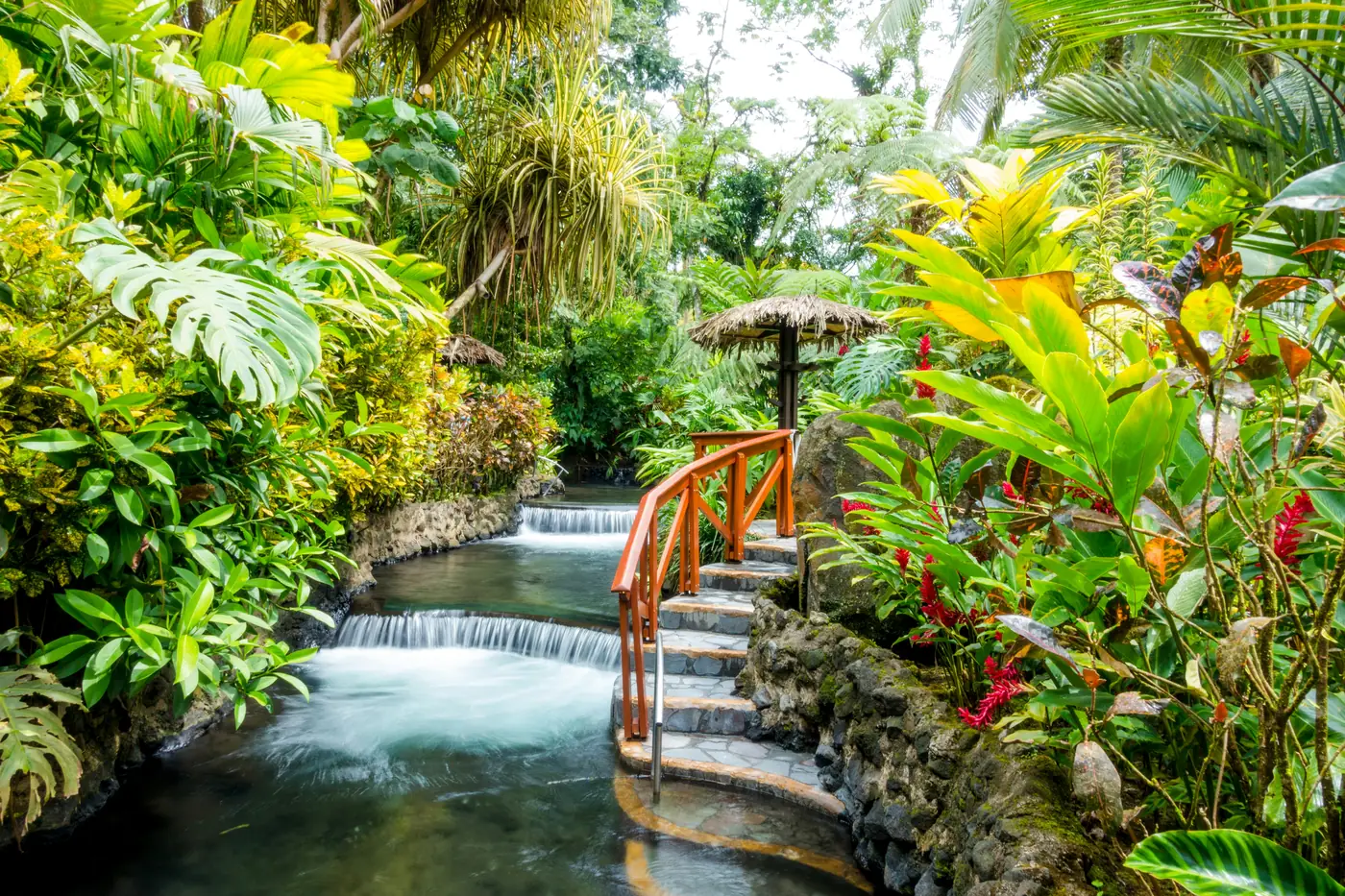
Spend The Evening In The Hot Springs
The same volcanic heat that built Arenal warms the rivers around it, and soaking in a hot spring is one of the best things to do in the area. It’s the perfect way to end your first full day in Costa Rica.
The big resorts, like Tabacon and Baldi, sell day and evening passes with pools of different temperatures, swim up bars and gardens lit up after dark. Book ahead in the busy season.
For something simpler, there’s a free spot along a warm river near Tabacon where locals and travelers sit in the water by the bridge. It has no facilities at all, so bring a towel and keep your valuables with you.
Day 3: Across Lake Arenal To Monteverde
Monteverde is less than 20 miles from La Fortuna as the bird flies, but Lake Arenal sits in the way. Either way you go, plan on about three to four hours.
Leave in the morning so you arrive with time to settle in before tonight’s walk.

Cross The Lake Or Drive Around It
Without a car, the classic way over is what everyone calls the jeep boat jeep. A van takes you from your hotel to the edge of Lake Arenal, a boat carries you across the water with the volcano behind you, and another van drives you up the last stretch into Monteverde. It’s the most scenic travel day of the week.
With a rental car, you’ll drive around the lake instead. The road along the shore is beautiful, with wind farms on the hills and plenty of spots to pull over for photos.
The last part of that drive up to Monteverde is rough, unpaved road in places. A 4×4 or a small SUV with good clearance makes it a lot more comfortable, especially in the rainy months.

Take A Night Walk In The Cloud Forest
Monteverde sits high up on the mountains, and it’s noticeably cooler than La Fortuna. Bring a jacket, because evenings up here can feel chilly after the heat of the lowlands.
A guided night walk is the best way to spend your first evening. A lot of the forest’s animals only come out after dark, and a guide with a flashlight will find tree frogs, tarantulas, stick insects and sleeping birds, plus the odd sloth if you’re lucky.
The Monteverde Cloud Forest Reserve runs its own night walks, and several private reserves around town do too. Book a spot during the day, since groups are small and they fill up.
Day 4: Monteverde’s Cloud Forest And Hanging Bridges
Today is all about the forest. Monteverde is one of the most famous cloud forests in the world, where mist drifts through trees covered in moss, ferns and orchids.
Spend the morning on the ground and the afternoon up in the treetops, and you’ll see it from both sides.

Walk Through The Monteverde Cloud Forest Reserve
The Monteverde Cloud Forest Reserve is the big name here, with a network of trails through dripping green forest. Get there when it opens. The trails are quieter, the light through the mist is beautiful and the birds are most active early.
This is the place to hire a naturalist guide if you only do it once on the trip. Monteverde is one of the best places in Costa Rica to see the resplendent quetzal, a bright green bird with long tail feathers, and a guide’s scope is often the only way to spot one high up in the branches.
Keep an eye out for hummingbirds too. Monteverde is home to dozens of kinds, and they zip past at eye level all along the trails.
If the main reserve feels too busy, the Santa Elena Reserve nearby is smaller and quieter, with the same misty forest.
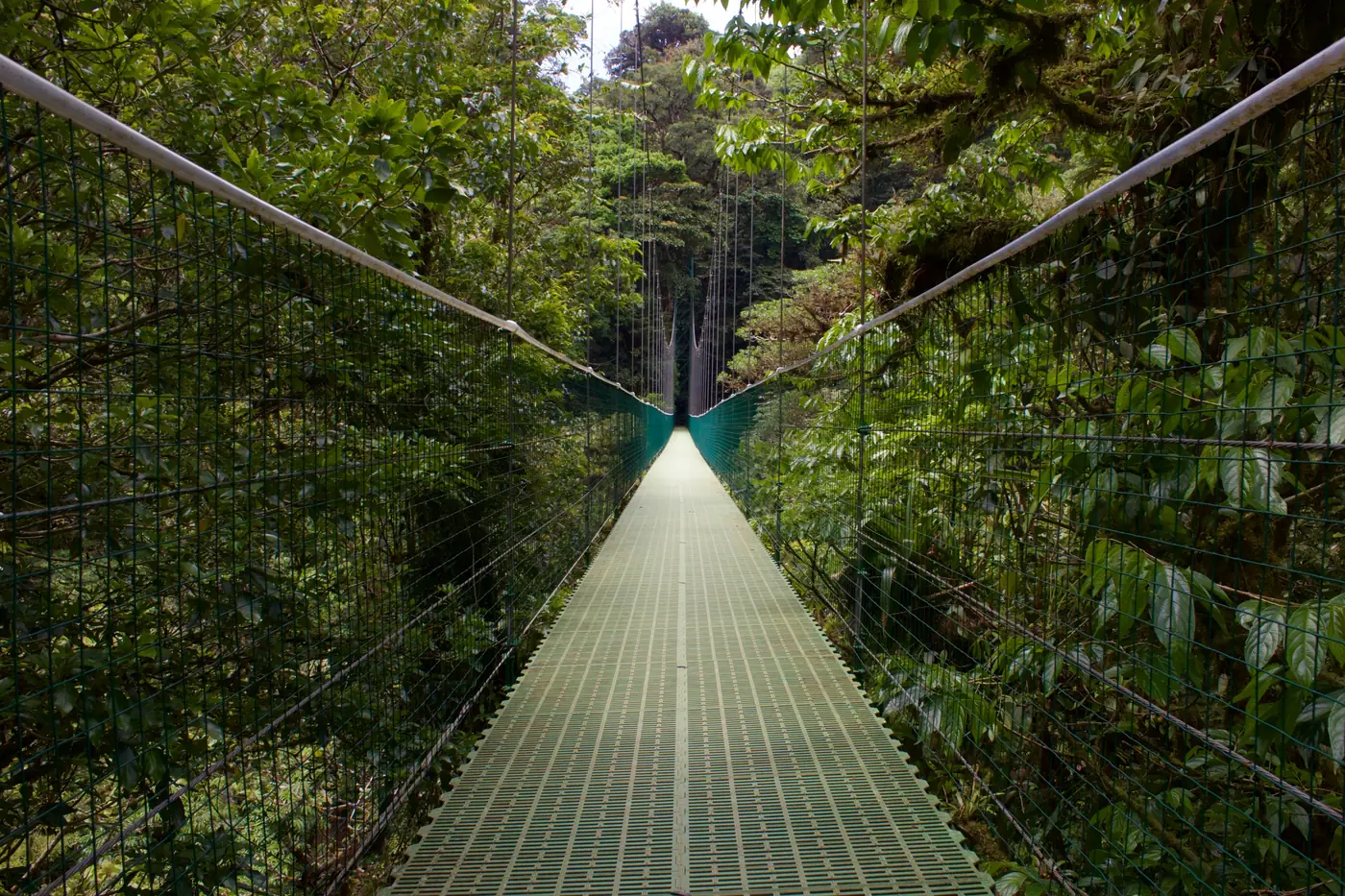
Cross The Selvatura Hanging Bridges
In the afternoon, head up into the canopy. Selvatura Park has a loop of trail with long suspension bridges strung between the treetops, so you walk at the same height as the birds and the flowers growing on the branches.
The bridges sway a little, but they’re very solid and easy for most people to walk. They give you a completely different view of the forest from the one you had this morning.
Monteverde is also one of the best places in the country to go zip lining. Selvatura and other parks in the area run long lines over the canopy if you want something faster than a walk.
Day 5: Down To The Pacific At Manuel Antonio
Today you trade the cool mountains for the beach. The drive down to Manuel Antonio takes about three and a half to four hours, mostly on good paved roads once you leave Monteverde.
Get going after breakfast so you reach the coast with the whole afternoon ahead of you.

Stop At Crocodile Bridge On The Way
On the highway south you’ll cross the Tarcoles River, and it’s worth pulling over. The bridge has a walkway on each side, and down on the riverbanks below there are usually huge crocodiles lying in the sun.
It’s a free stop that only takes a few minutes, and it breaks up the drive nicely. Use the parking lots by the bridge and don’t leave anything in sight in the car.
Catch The Sunset On Playa Espadilla
Manuel Antonio is the area between the small town of Quepos and the national park. Most hotels sit along the hilly road that connects them, tucked into the jungle with views out over the ocean.
Check in, then head down to Playa Espadilla, the long public beach just outside the park entrance. It’s a great spot for a swim, a cold drink and the sunset over the Pacific.
Keep an eye out on the walk down. Monkeys and sloths show up in the trees around the hotels and along the road, so you might see your first ones before you even reach the park.
Day 6: Manuel Antonio National Park
Manuel Antonio National Park packs rainforest, wildlife and beaches into one small park on the coast. It’s a highlight of any Costa Rica itinerary, and it’s the reason to save a full day here.
Tickets are only sold online through the national park system, and there’s a daily limit that often sells out, so buy yours as soon as you know your dates. The park is closed on Tuesdays, opens early in the morning and closes in the afternoon. Food isn’t allowed inside, so eat a big breakfast.

Spot Sloths And Monkeys With A Guide
Be at the gate when it opens. The animals are most active in the cool of the morning, and the trails fill up as the day goes on.
A guide makes a huge difference here. Sloths spend most of the day curled up high in the trees and are very hard to spot on your own, but guides know where they tend to hang out and will set up a scope so you can see them up close.
You’ll likely also see white faced monkeys, howler monkeys, iguanas and colorful crabs. With some luck you’ll see the tiny squirrel monkeys too, which live only along the Pacific coast of Costa Rica and Panama.
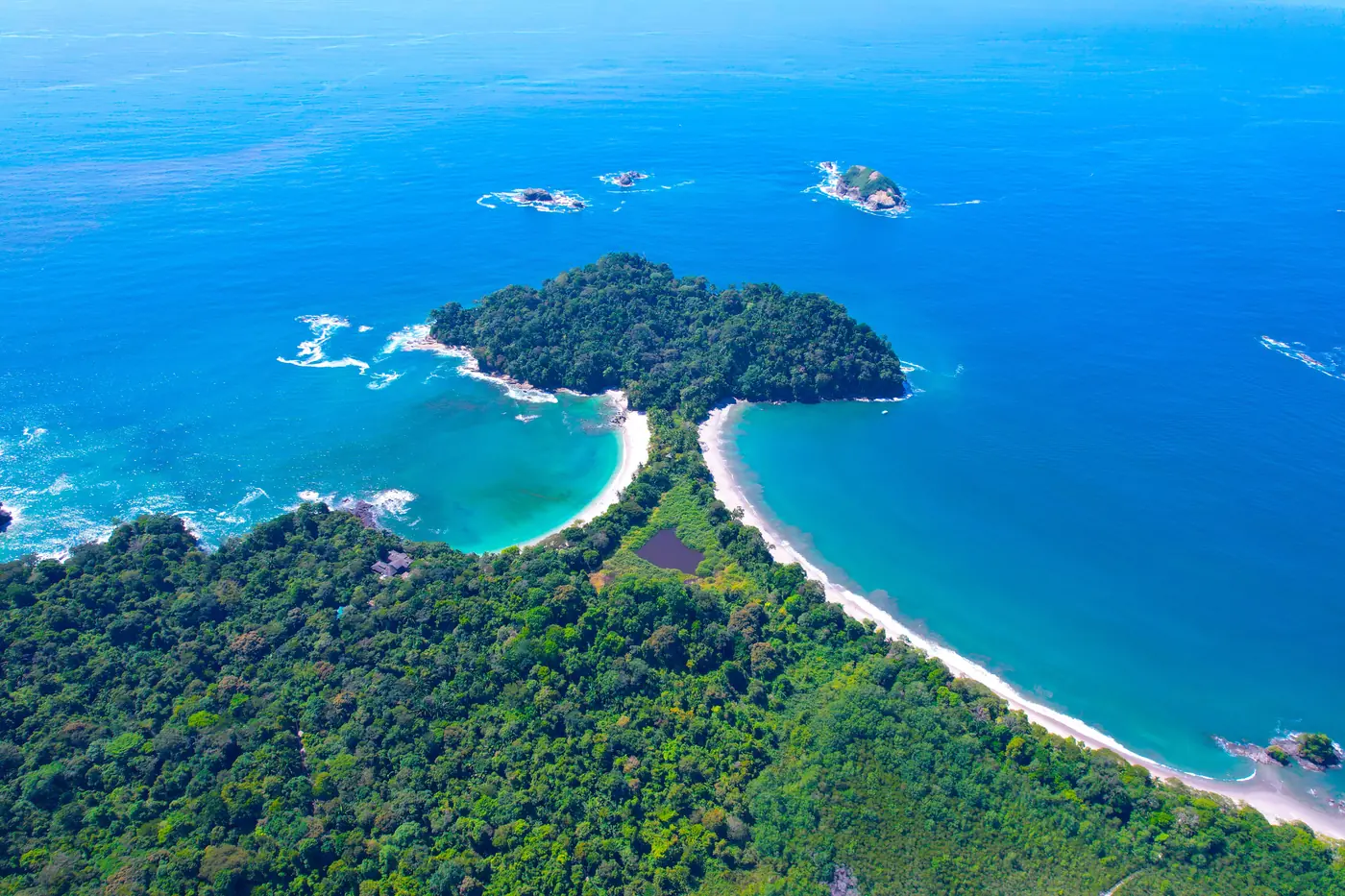
Swim At The Beaches Inside The Park
Once you’ve done the trails, head for the beaches inside the park. Playa Manuel Antonio is a calm, curved cove of white sand with clear water and rainforest right down to the edge.
It’s the kind of beach most people picture when they think of Costa Rica, and it’s a perfect place to spend the rest of the morning. Keep your bag zipped, since the monkeys and raccoons here know exactly what a backpack is for.
After the park, spend your last evening back on Playa Espadilla or at one of the restaurants up on the hill with a view of the sunset.
Day 7: Back To San Jose For Your Flight
The drive back to the airport takes about three hours, though traffic around San Jose can stretch that out. Give yourself plenty of extra time, especially if you need to return a rental car first.
With an evening flight, you can squeeze in one last morning on the beach before you go. If day 6 fell on a Tuesday, this is your backup for the national park: be at the gate when it opens and leave for the airport by late morning.
If your flight is early, think about driving back on day 6 instead and spending your last night near the airport in Alajuela.
Where To Stay On A 7 Day Costa Rica Itinerary
Nights 1 and 2 are in La Fortuna. Staying in town puts you close to restaurants and tours, while the lodges on the road toward the volcano and the hot springs trade that for big views of Arenal from your room.
Nights 3 and 4 are in Monteverde. The little town of Santa Elena is the easiest base, with places to eat and tours that pick up right outside. The lodges along the road to the reserve are quieter and closer to the forest.
Nights 5 and 6 are in Manuel Antonio. The hotels along the hill road between Quepos and the park have the best ocean views. If you’d like to walk to the park gate in the morning, stay near the bottom of the hill close to Playa Espadilla.
Getting Around Costa Rica
A rental car gives you the most freedom on this Costa Rica itinerary, and it’s how a lot of first timers do it. A 4×4 or small SUV is the smart choice, mainly for the rough road up to Monteverde and for the rainy months. Download a map app before you go, since it’s how most people get around.
The one firm rule is not to drive after dark. Costa Rica is close to the equator, so the sun sets around 6pm all year, and the country roads have few lights, sharp curves and the occasional pothole. Plan every drive to finish by late afternoon.
If you’d rather not drive at all, shared shuttle vans run between La Fortuna, Monteverde, Manuel Antonio and the airport and will pick you up from your hotel. They take a little longer because of the stops, but you can sit back and enjoy the view.
When To Go
Costa Rica has two seasons. The dry season runs from about mid December to late April, and it’s the sunniest, busiest and most expensive time to go. Book hotels and tours early if you’re traveling around Christmas, New Year or Easter.
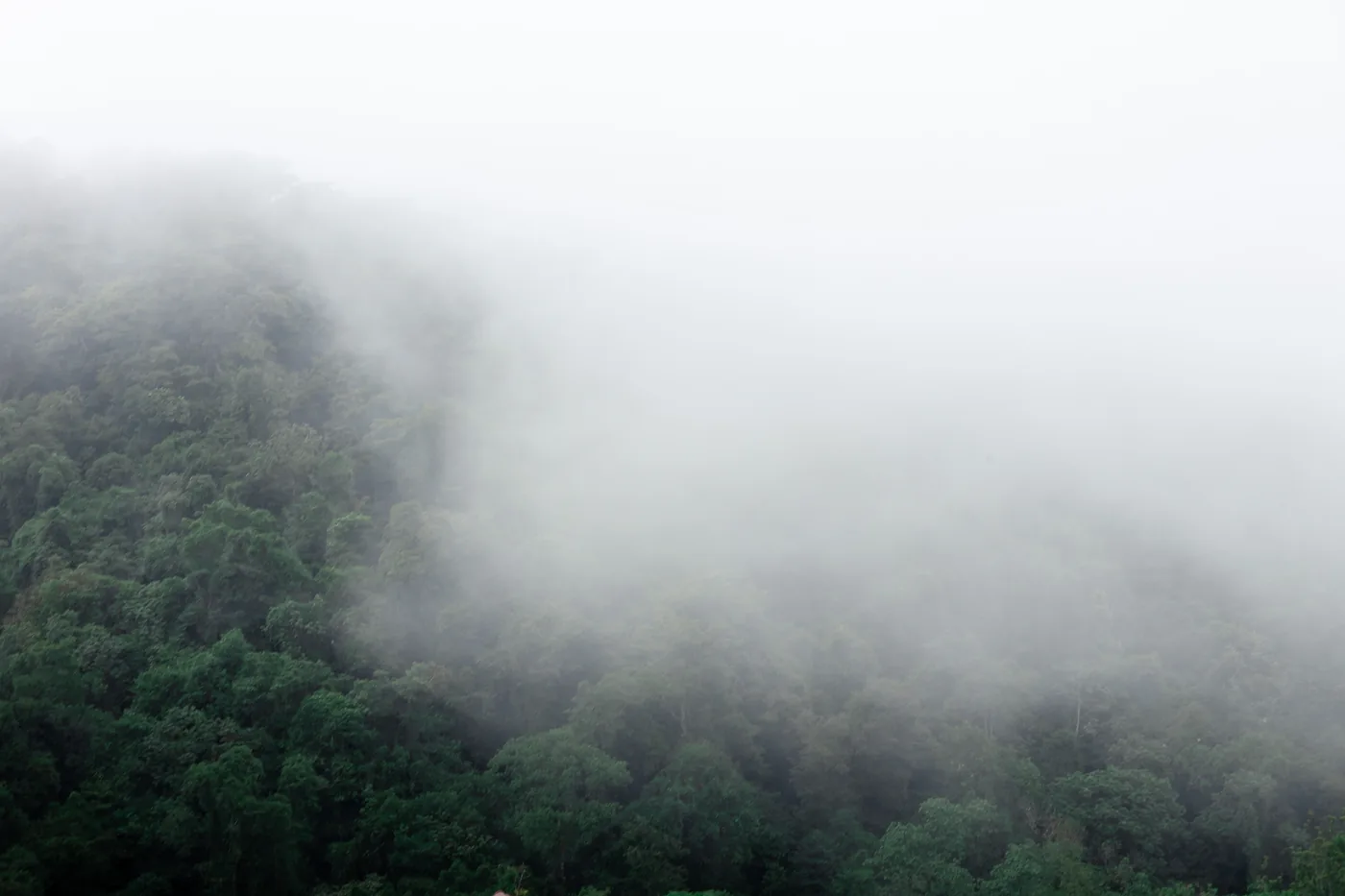
The rest of the year is the green season. Mornings are often sunny, with rain showing up in the afternoon, which suits this itinerary well since the big hikes and the national park all happen early. The forests are at their greenest, prices drop and the trails are quieter. The heaviest rain usually comes in September and October.
Monteverde stays cool and misty all year, so pack a light rain jacket and a warm layer no matter when you go.
If You Have More Time
A week covers the classic loop, but there’s a lot more of Costa Rica to see. These are the easiest places to add with a few extra days.
The beaches of Guanacaste in the northwest are the sunniest part of the country, with towns like Tamarindo for surfing and sunsets. Fly home from Liberia, the airport up there, to fit them in without backtracking.
Rio Celeste is a river that runs an unreal shade of bright blue, about two hours from La Fortuna, and it makes a great day trip if you add a night there. On the Caribbean side, Tortuguero is a maze of jungle canals where sea turtles nest in summer and fall, and Puerto Viejo is a laid back beach town with a completely different feel from the Pacific coast.
Final Thoughts
A week in Costa Rica goes fast, but this loop fits in the three things most people come for: a volcano, a cloud forest and a beach full of wildlife. Two nights in each place gives you time to enjoy them instead of rushing between them.
Book the Manuel Antonio tickets early, finish every drive before dark and say yes to a guide at least once. Do that, and this 7 day Costa Rica itinerary will give you a first trip that makes you want to come right back.