 Rebecca Engel
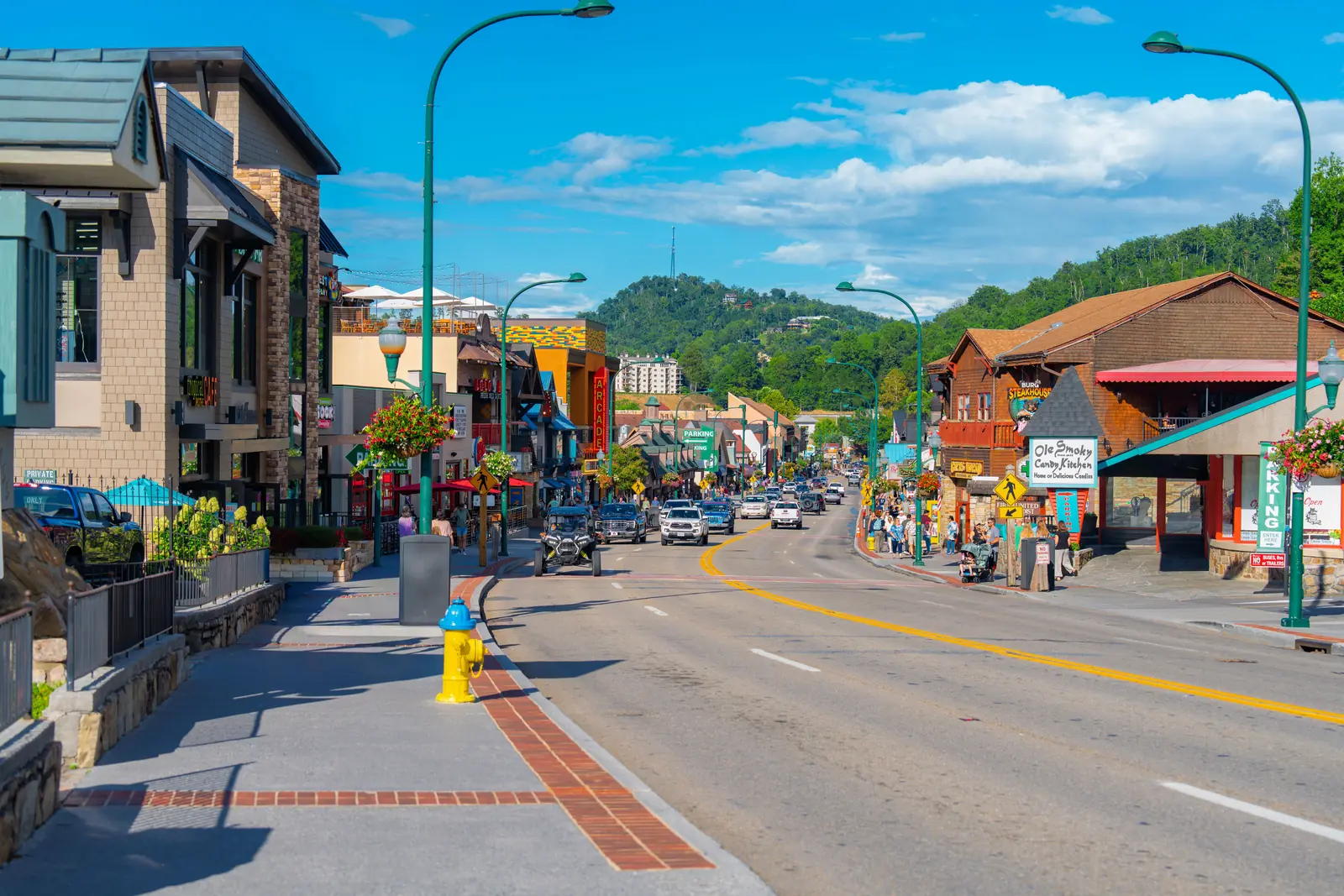
Gatlinburg is really two places stacked on top of each other. One is a half mile of pancake houses, moonshine bars, and neon packed along the Parkway. The other starts about two minutes later, where the last shop ends and Great Smoky Mountains National Park begins.
That combination is the whole reason to come. The best things to do in Gatlinburg Tennessee run from a glass bridge strung across a mountainside to a waterfall you can walk behind, and you can do both before dinner. Here’s what’s actually worth the time, plus a few things that are closed right now so you don’t burn a morning finding out the hard way.
1. Walk The Gatlinburg SkyBridge
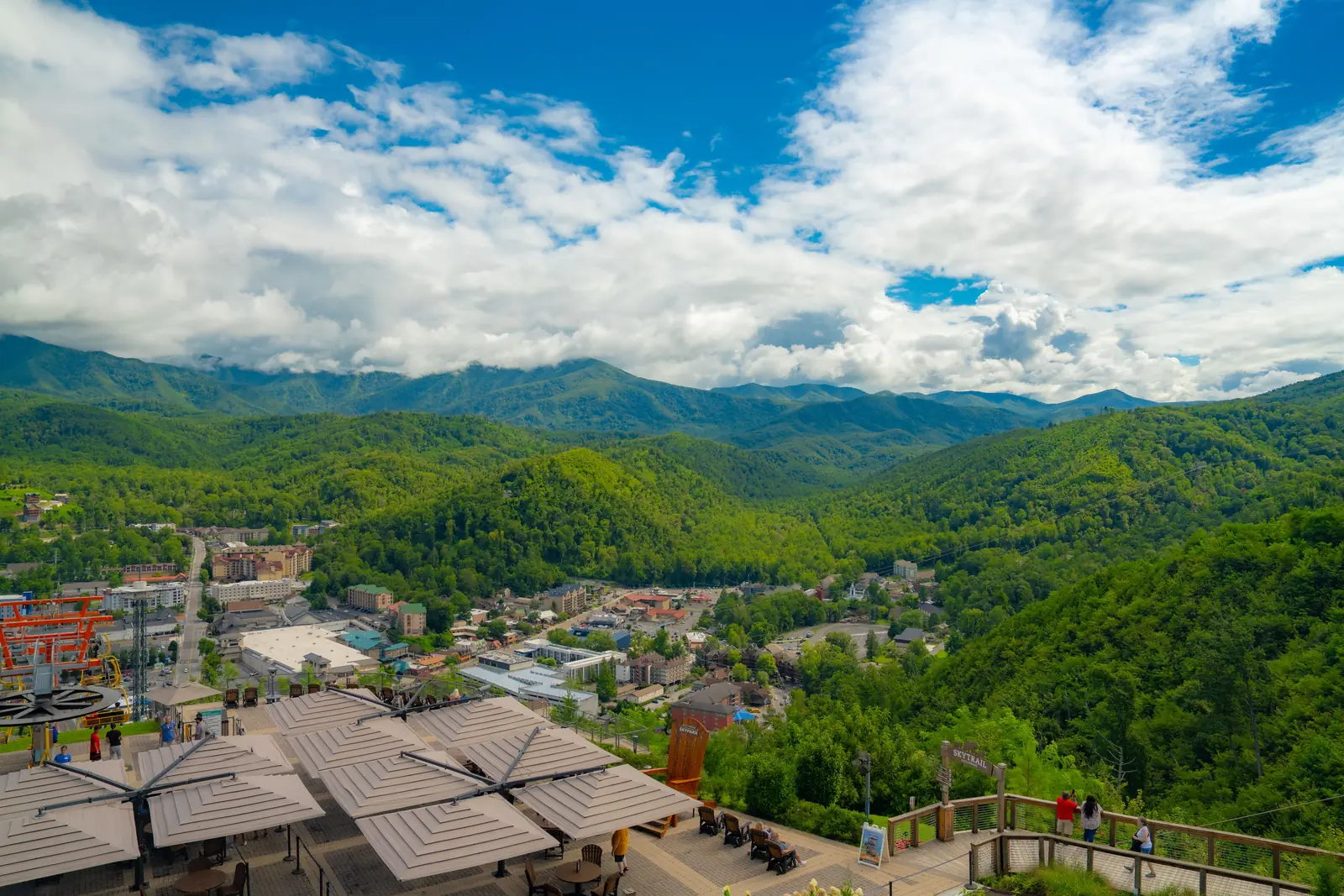
The SkyLift carries you off the Parkway and up Crockett Mountain on an open chairlift, which is worth the ticket on its own. At the top is the SkyBridge, the longest pedestrian cable bridge in North America at about 680 feet.
The part everyone talks about is the middle. A few panels of the walkway are glass, so you’re looking straight down into the treetops while the whole thing sways under you.
There’s more up there now than there used to be. A walking trail loops through the woods behind the bridge, and a tower with rope bridges sits at the far end. Go late in the day if you can, because the light over the valley is much better and the midday line can be brutal.
2. Spend A Day At Anakeesta
Anakeesta gets called a viewpoint, and that undersells it. It’s a mountaintop park you reach by gondola from downtown, and it’s easily a half day once you’re up there.
The Treetop Skywalk strings a run of suspension bridges through the canopy well above the forest floor. There’s also a mountain coaster, ziplines, a garden trail, and an observation tower with a clean view back toward the park.
A big expansion just wrapped, including a new all glass gondola and a rebuilt village area. Come back after dark if you can, because the lights are set up to imitate the synchronous fireflies the Smokies are famous for.
3. Ride The Tramway Up To Ober Gatlinburg
The aerial tramway leaves from downtown and runs a little over two miles up the mountain, which makes it one of the largest tram systems in the country. Most people ride it just for the trip.
At the top there’s a ski area in winter and a full amusement park the rest of the year. An alpine slide, ice bumper cars, a year round skating rink, and a wildlife area with black bears and otters keep kids busy for hours.
One note if you’re checking an older guide. The place spent a few years operating as Ober Mountain and went back to the Ober Gatlinburg name in 2026, so both names still float around online.
4. Drive The Roaring Fork Motor Nature Trail
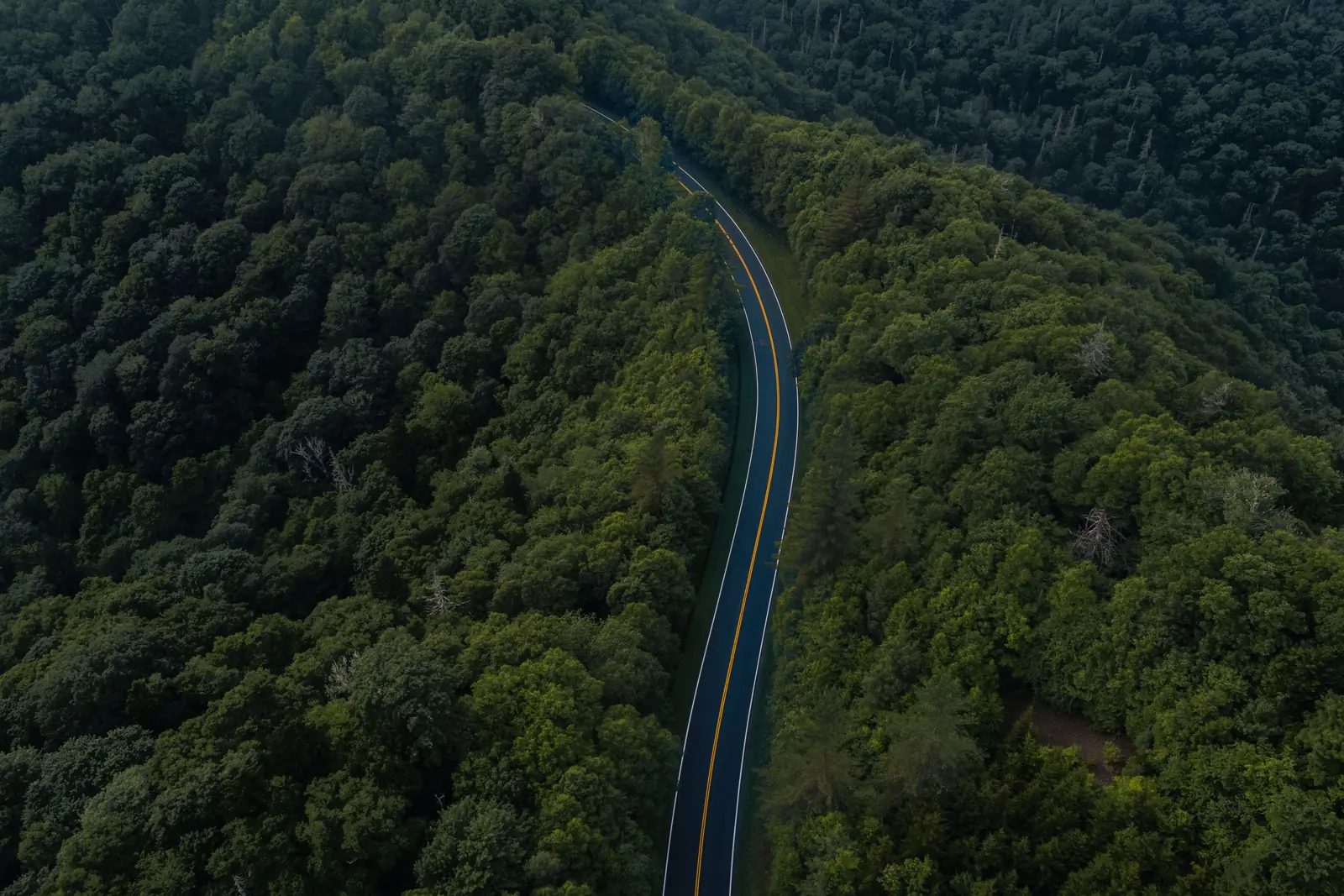
This is the best hour you can spend in a car anywhere near town. The Roaring Fork Motor Nature Trail is a 5.5 mile one way loop that starts at the edge of Gatlinburg and winds through dense old forest along a creek.
You pass log cabins, a grist mill, and a wall of water called the Place of a Thousand Drips that runs right beside the road. Several of the best waterfall trailheads sit along it too.
Two things to know. It’s closed from December through March, and no RVs, buses, or trailers are allowed. Budget an hour to drive it straight through, or two to three if you stop at everything.
5. Hike To Grotto Falls And Walk Behind It
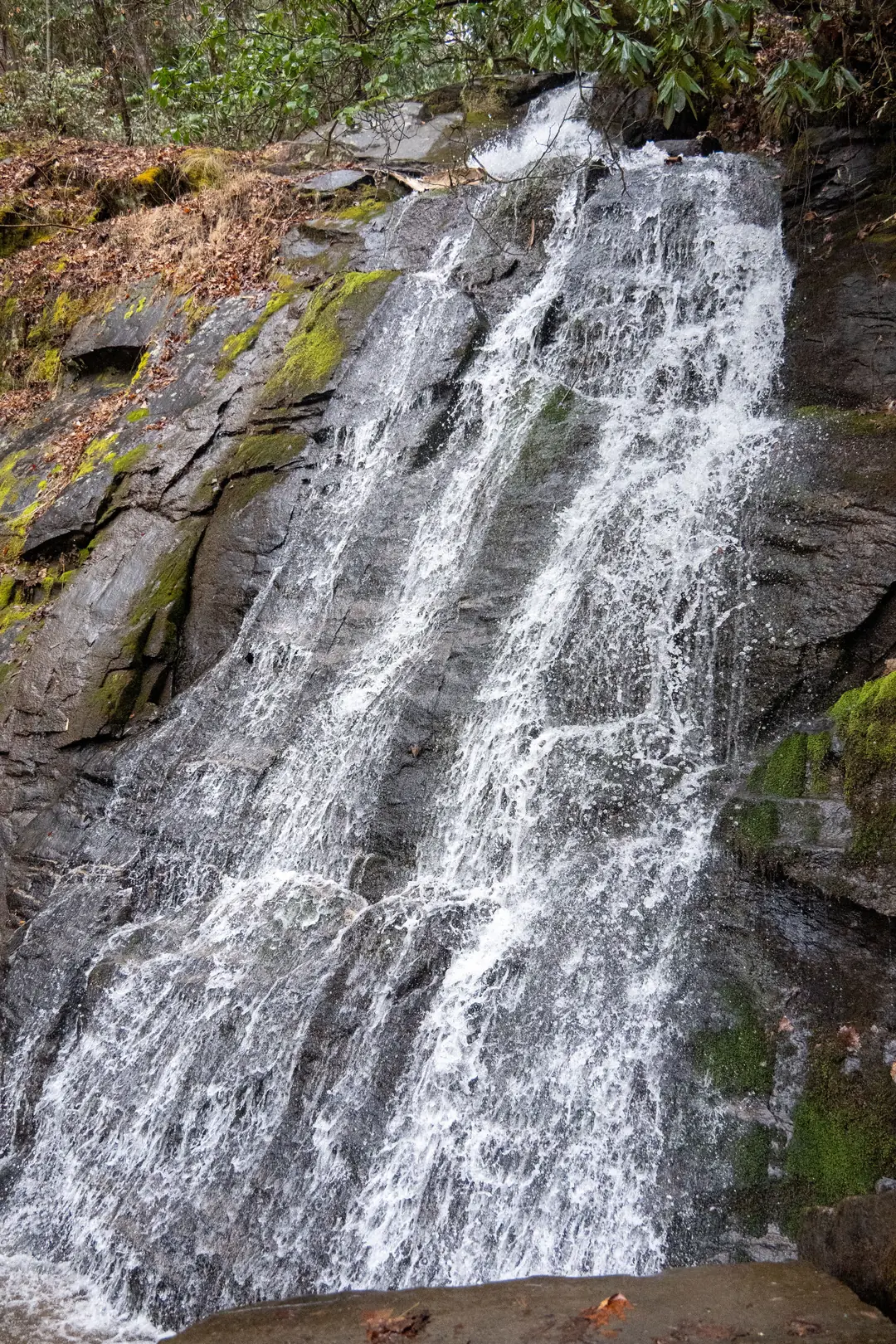
Grotto Falls is the only waterfall in the park you can walk behind, and that’s exactly as good as it sounds. The trail leaves from a pullout on Roaring Fork and runs 2.6 miles round trip with a gentle climb.
The falls themselves are about 25 feet, dropping into a cool little hollow full of hemlock and moss. The path continues right behind the curtain of water and out the other side.
Look for llamas on the trail. This is the supply route for the lodge on top of Mount LeConte, and a pack train comes through a few mornings a week. Parking is tiny, so get there early.
6. Climb To Rainbow Falls
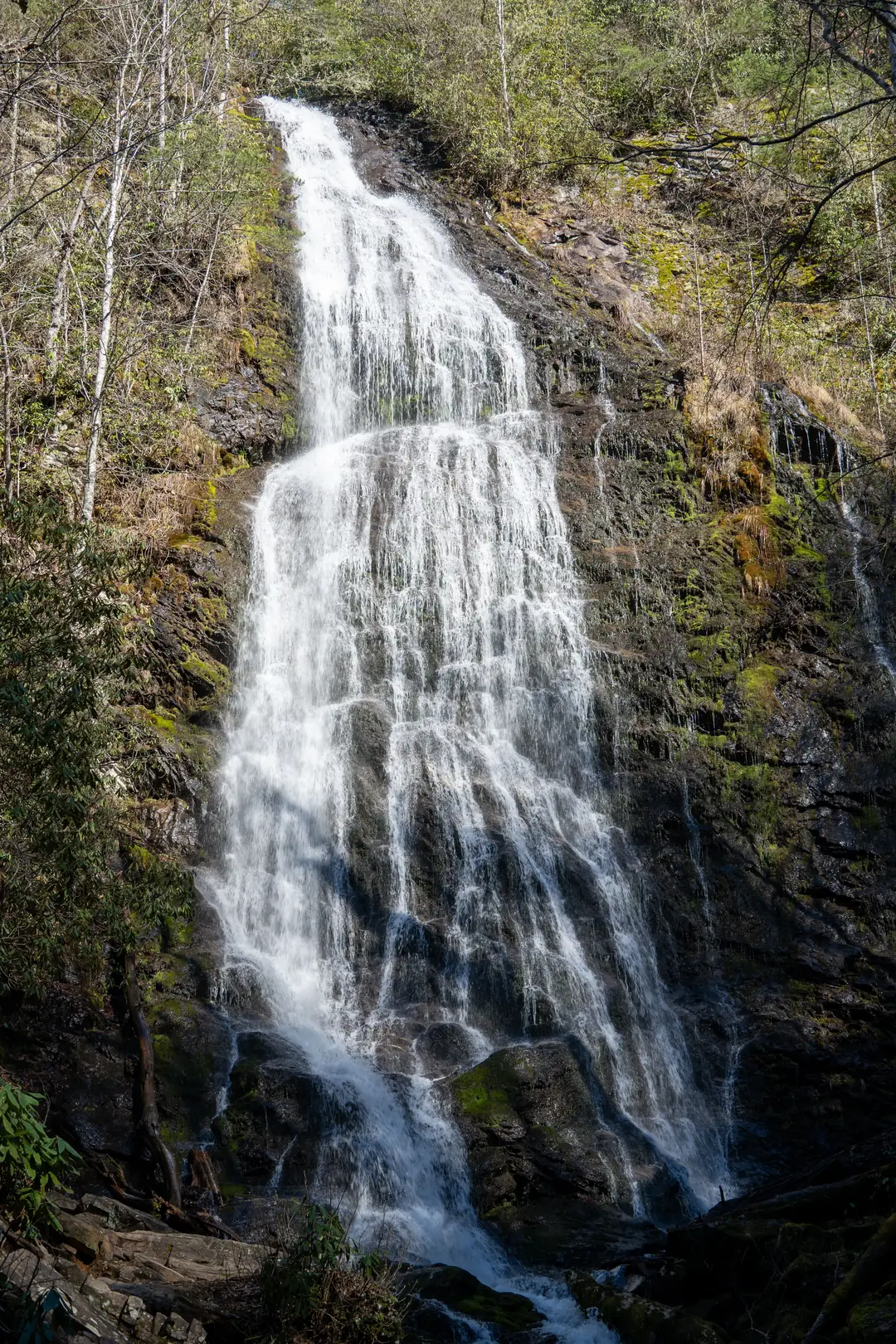
At 80 feet, Rainbow Falls is the tallest single drop waterfall in the Smokies. The name comes from the rainbow that shows up in the mist on sunny afternoons, and it’s real if your timing is right.
Getting there is a genuine hike. It’s 5.4 miles round trip with about 1,500 feet of climbing, over rock and roots most of the way, so it’s harder than the mileage makes it sound.
Wear real shoes and leave the dog at home, because pets aren’t allowed on this one. The rocks around the base stay slick year round and people get hurt on them constantly.
7. Walk The Gatlinburg Trail Straight Out Of Town
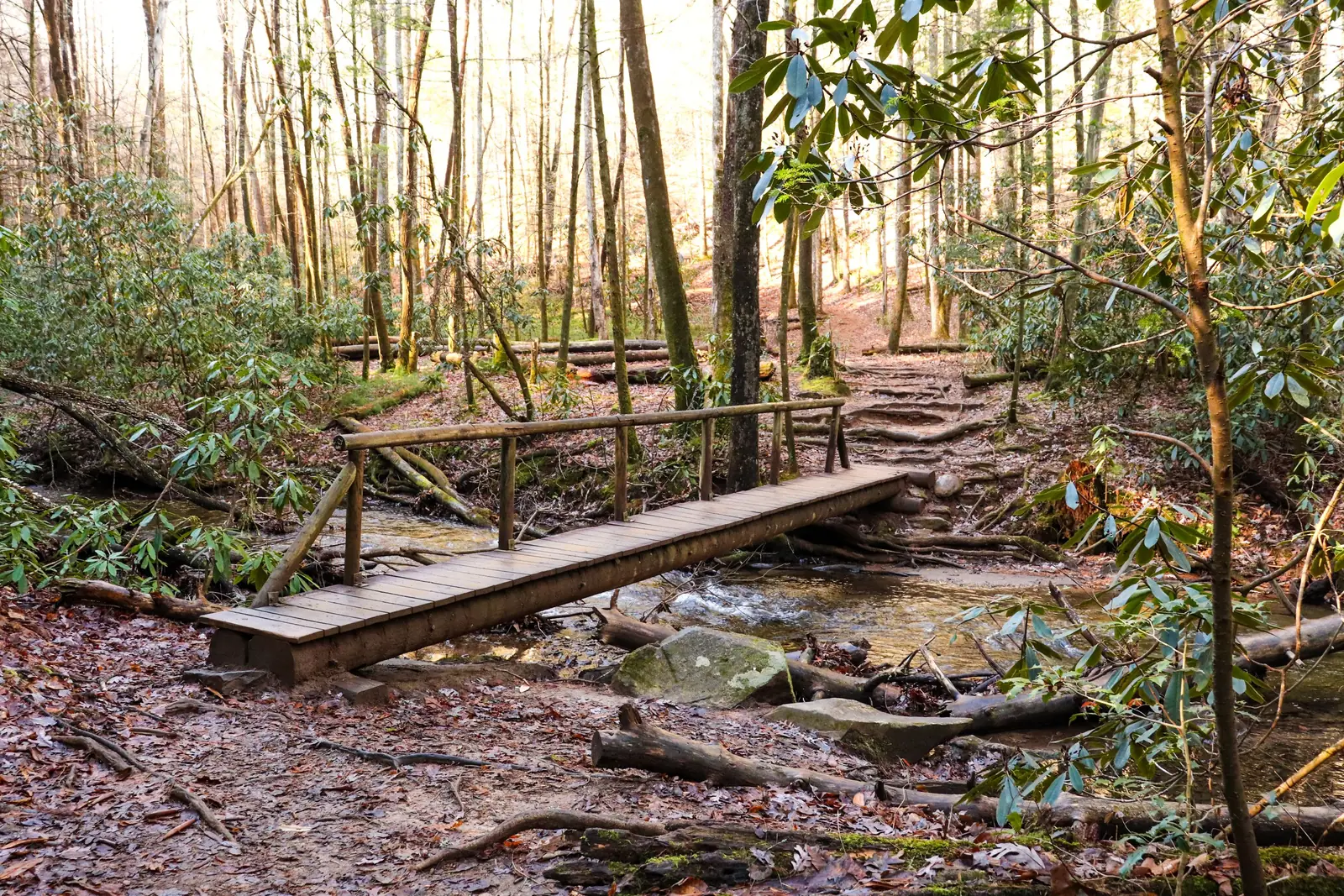
Almost nobody realizes you can walk out of downtown and into the national park without driving anywhere. The Gatlinburg Trail runs 3.8 miles round trip between the edge of town and the Sugarlands Visitor Center, following the river the whole way.
It’s nearly flat and passes old homesites where stone chimneys are still standing in the woods. That makes it a good option for a first morning, or for anyone who isn’t up for a climb.
It’s also one of only two trails in the entire park where dogs are allowed, and bikes are fine on it too. If you’re traveling with either one, this is your trail.
8. Hike The Alum Cave Trail
If you only do one serious hike near Gatlinburg, this is the one. The Alum Cave Trail climbs past a tunnel worn through the rock, along a ridge with cables bolted in for handholds, and up to a huge overhanging bluff.
The bluffs are about 4.6 miles round trip and make a satisfying turnaround. Keep going and you reach the top of Mount LeConte at roughly 11 miles round trip, which is a long but very doable day.
The trailhead sits on Newfound Gap Road and the lot fills by early morning in season. Start at sunrise or plan on circling.
9. Start At Sugarlands And Walk To Cataract Falls
Sugarlands Visitor Center is two miles from downtown and it’s the right first stop in the park. Rangers there will tell you what’s open, what’s closed, and where the bears have been, which changes constantly.
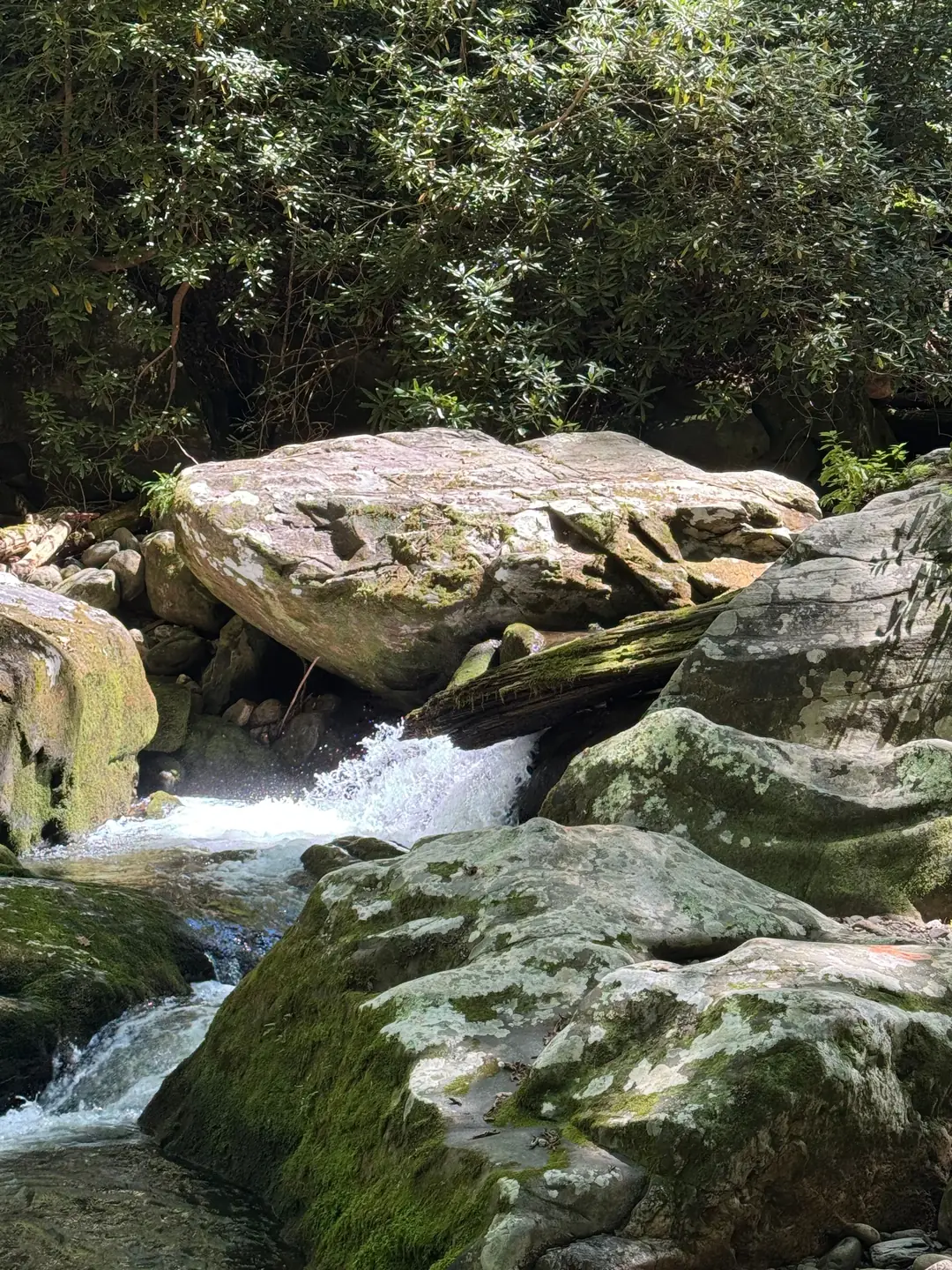
Behind the building is Cataract Falls, an easy 1.1 mile round trip on a flat path. It takes about half an hour and delivers a real waterfall at the end of it.
This pairs well with a rainy morning or a day when you’ve only got an hour. The exhibits and the park film are free, and the walk is short enough to do in whatever shoes you showed up in.
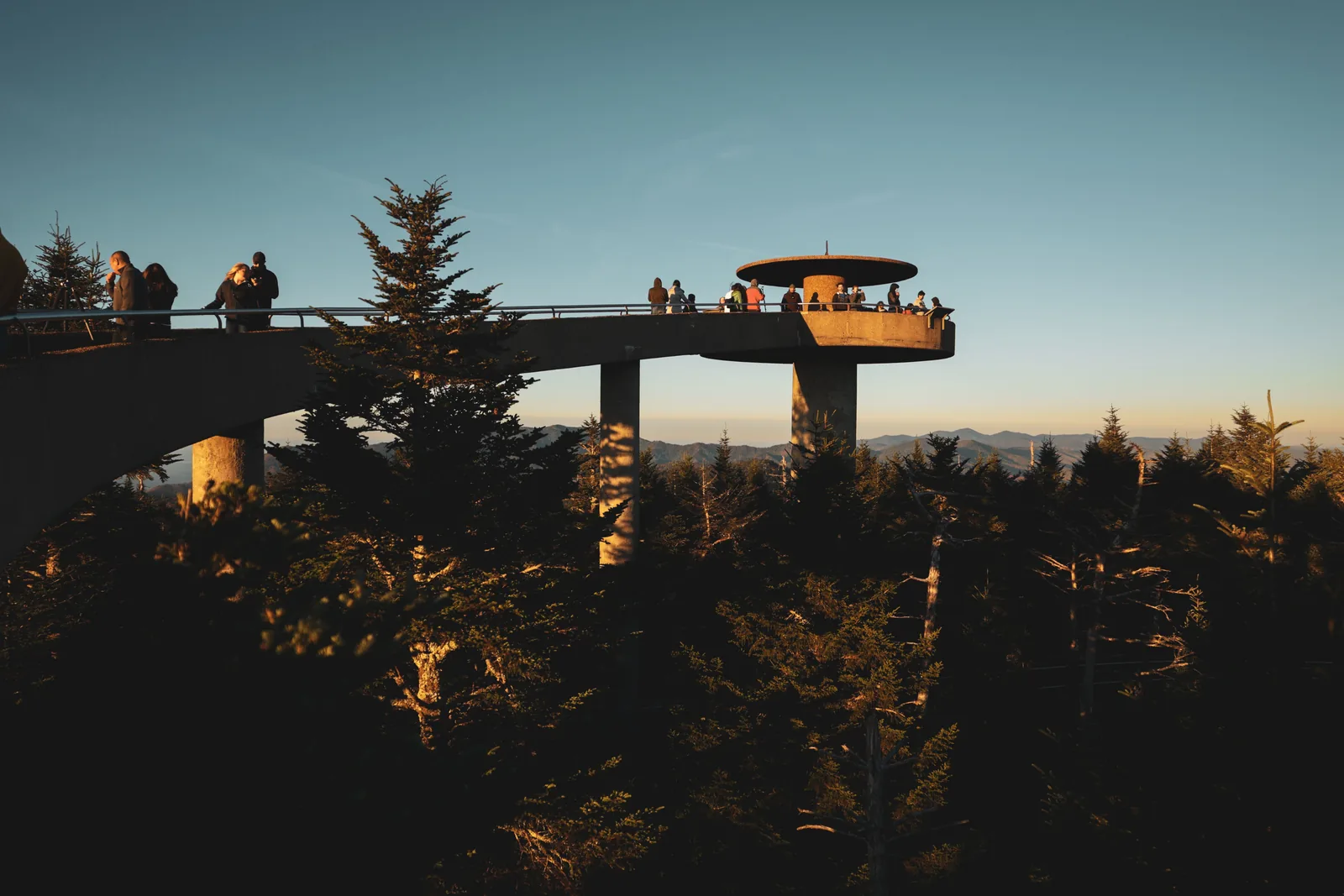
10. Drive Up To Kuwohi
Kuwohi is the highest point in the park and the highest in all of Tennessee at 6,643 feet. You may know it as Clingmans Dome, which was its name until 2024, when the Cherokee name was restored. It means mulberry place.
A paved half mile trail runs from the parking area to a spiral ramp that lifts you above the trees. It’s short but steep enough that most people stop at least once on the way up.
Dress for it. The summit runs a good fifteen or twenty degrees colder than town and sits inside a cloud a lot of the time. The access road is closed from December 1 through March 31 every year.
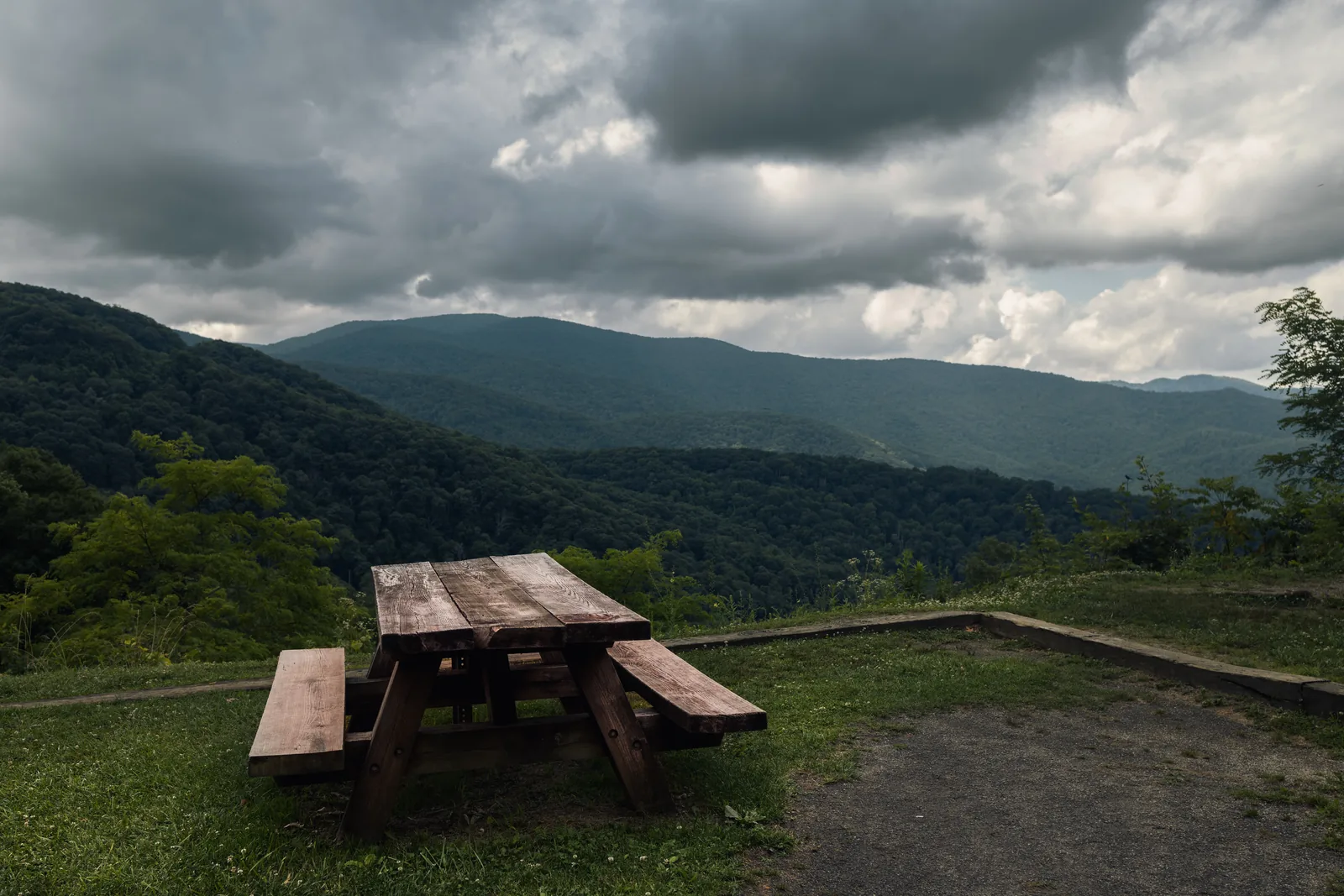
11. Stand On The Appalachian Trail At Newfound Gap
Newfound Gap sits at 5,046 feet, right on the line between Tennessee and North Carolina, and you can drive straight to it. The overlook takes in ridge after ridge fading off into the haze the mountains got their name from.
The Appalachian Trail crosses the parking area here. Walking a stretch of it takes no planning at all, and even ten minutes in gets you the feel of it.
There’s also a stone platform where Franklin Roosevelt formally dedicated the park in 1940. Straddling the state line for a photo is a bit of a cliche, and everyone does it anyway.
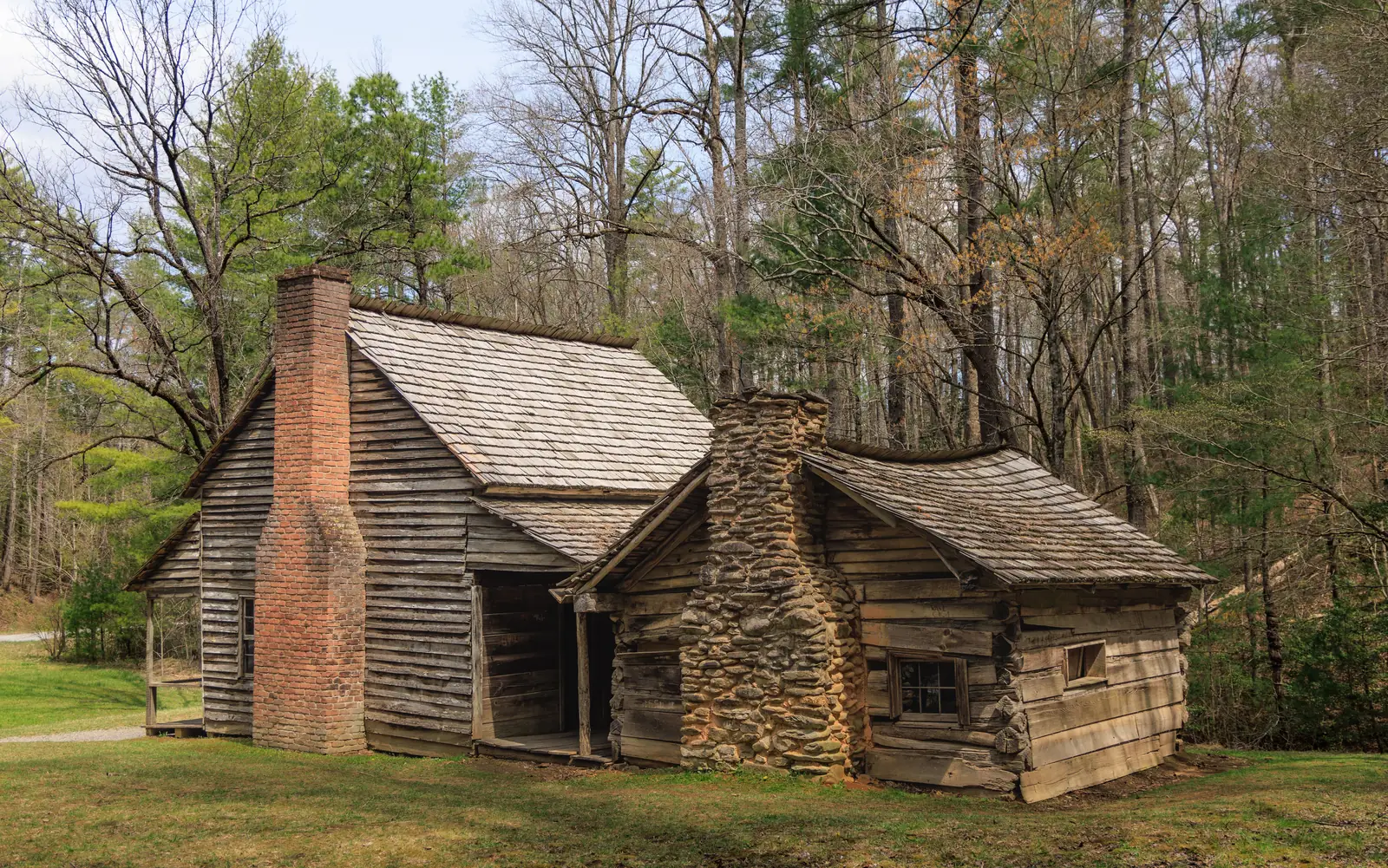
12. Do The Cades Cove Loop Early
Cades Cove is a wide green valley ringed by mountains, with an 11 mile one way road looping around it. Scattered along it are homesteads, three churches, a cemetery, and a working grist mill left from the community that farmed here before the park.
It’s also the best wildlife watching in the Smokies. Deer and turkeys are close to guaranteed, and black bear sightings are common in the meadows and apple trees.
The catch is traffic. The loop is about an hour from Gatlinburg and can take four hours to drive on a busy afternoon, so go at sunrise. On Wednesdays in summer the road closes to cars entirely, which is the best day to bring bikes.
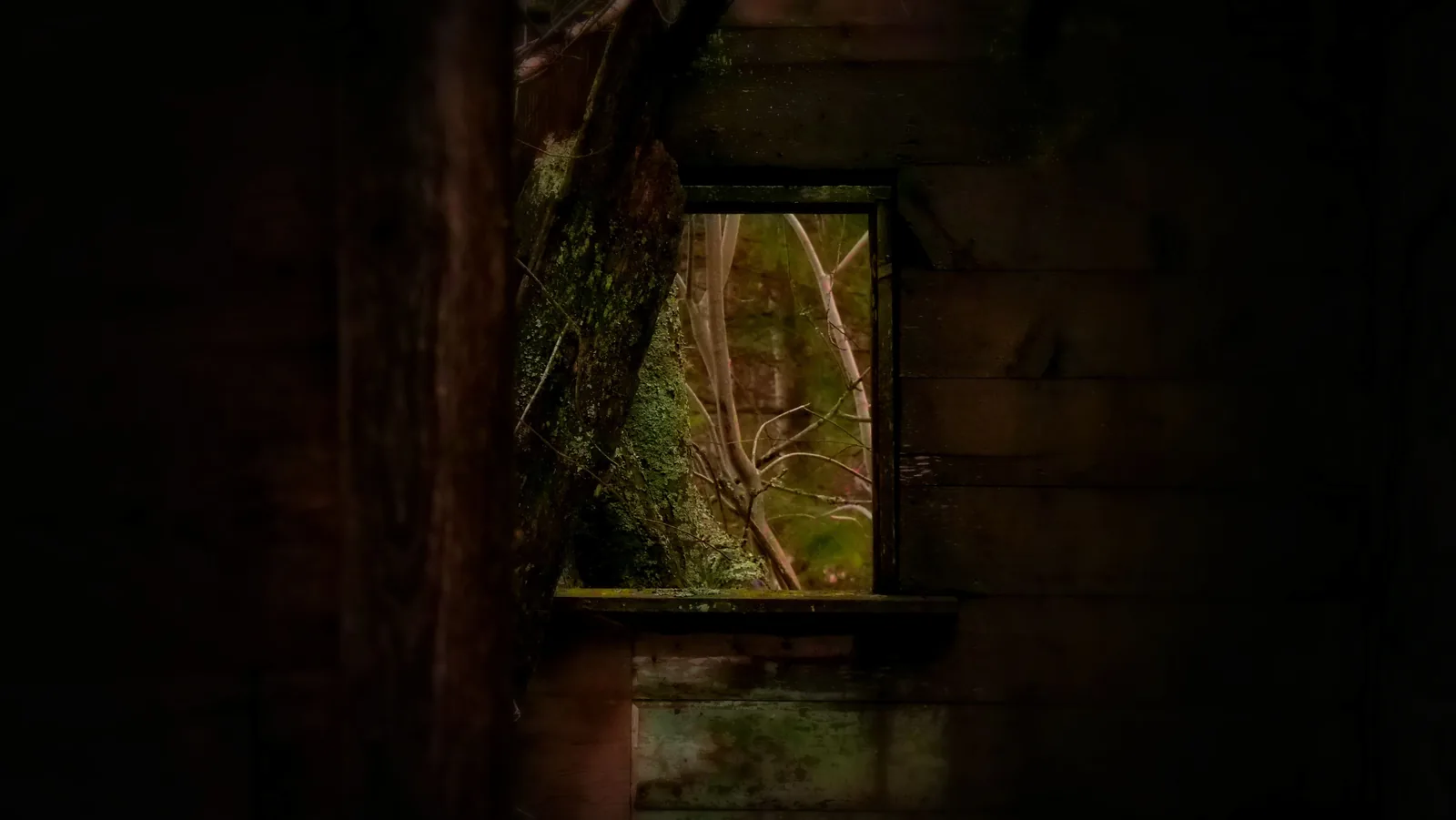
13. Walk Through The Abandoned Cabins At Elkmont
Elkmont was a summer resort community, a row of vacation cabins built by Knoxville families back when this was private land. When the park took over, the leases eventually ran out and everyone left.
What’s there now is a quiet street of empty houses with the forest pushing in. Some have been restored and you can walk right through them, and others have been left to come apart on their own.
Elkmont is also where the synchronous fireflies put on their show for about two weeks in late spring, when thousands of them flash in unison. Access during that window runs on a lottery and it’s very hard to get, but the cabins are open all year and hardly anyone is there.
14. Hike Chimney Tops To The Viewpoint
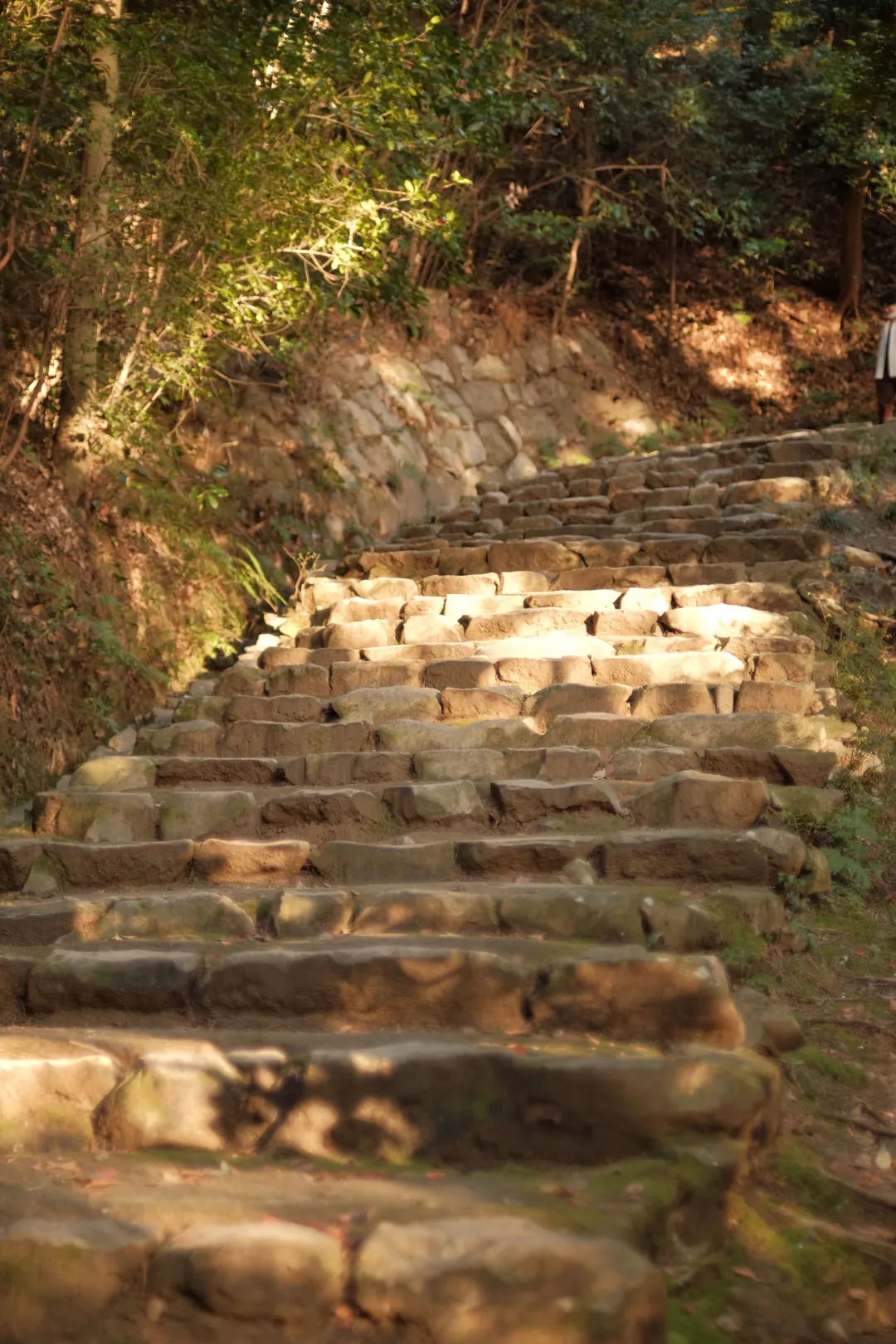
Chimney Tops is short, brutally steep, and one of the most rewarding climbs in the park. It’s a bit over three miles round trip with around 1,400 feet of gain, packed into very little distance.
The trail was rebuilt after the 2016 wildfires and it’s in good shape now, with long sections of stone steps. The burn scar is still visible from the top, which makes for a sobering view.
Be clear on where it ends. The last quarter mile up to the bare rock pinnacles has been permanently closed for safety, so the hike now finishes at an overlook just below them.

15. Drive The Arts And Crafts Community Loop
Eight miles east of the Parkway there’s a loop road lined with more than 100 working studios. Potters, weavers, leather workers, broom makers, quilters, and woodcarvers all sell out of the buildings where they make things.
It started in 1937 and is billed as the largest group of independent artisans in North America. What makes it worth the drive is that these are real workshops, not a shopping center dressed up like one, so you’ll often catch someone mid project.
Give it two or three hours and stop wherever looks good. The town trolley runs out this way, which saves you the parking hassle.
16. Taste Moonshine On The Parkway
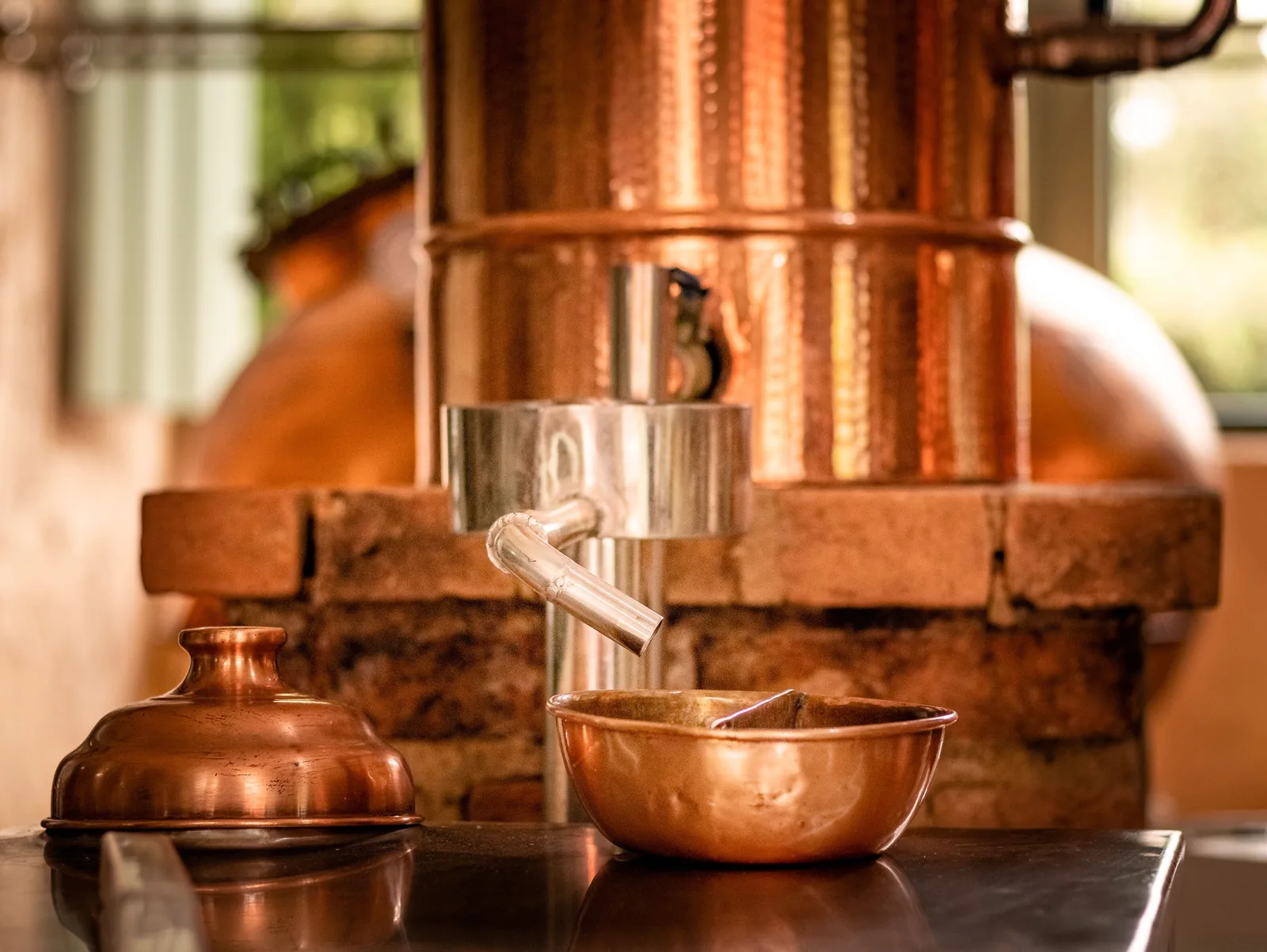
Moonshine went legal in Tennessee in 2009, and Ole Smoky opened on the Parkway the next year as the first federally licensed distillery in the history of East Tennessee. It turned into one of the busiest attractions in town almost immediately.
A tasting runs you through a long line of flavors in tiny sample cups, from apple pie to things that taste like candy and absolutely are not. There’s usually a bluegrass band playing on the porch while you go.
Sugarlands Distilling is a short walk down the street if you want to compare. Pace yourself, because those little cups add up faster than people expect.

17. See Ripley’s Aquarium Of The Smokies
An aquarium in the mountains sounds like a gimmick, and this one is genuinely good. There are more than 10,000 animals across 350 species, and it’s consistently the most visited attraction on the Parkway.
The highlight is a moving walkway that carries you through a glass tunnel under a lagoon full of sharks and rays. The penguin exhibit has crawl tunnels that put kids right in the middle of the colony.
This is the single best rainy day plan in Gatlinburg, which means everyone else has the same idea when the weather turns. Buy tickets for a set time ahead of a wet afternoon.
18. Ride A Mountain Coaster
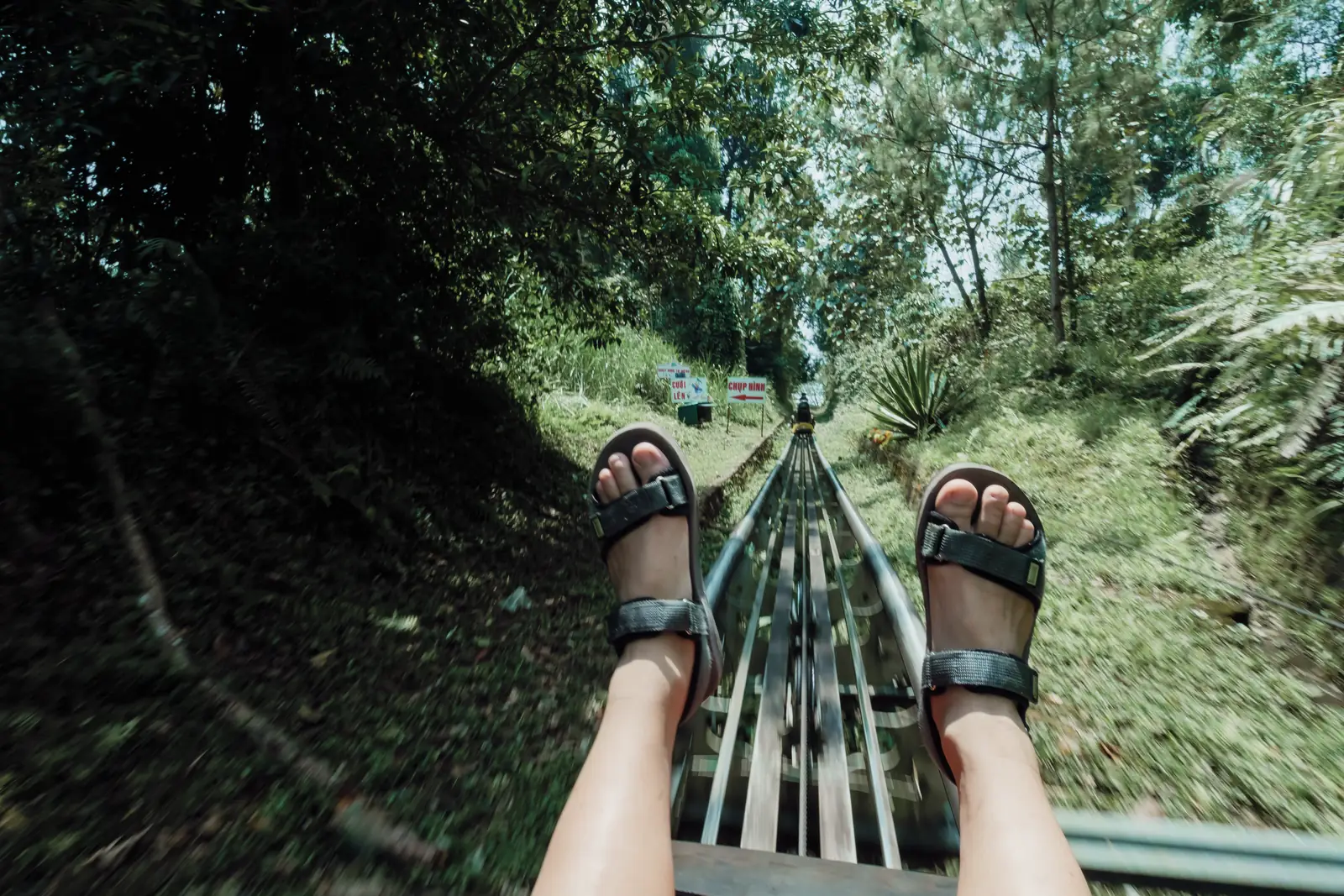
Mountain coasters are gravity sleds on a steel rail that runs down the mountainside through the trees. You sit in the cart, control your own brake, and decide how fast you want it to be.
Gatlinburg has several, and there are more up at Anakeesta and Ober. They’re all a variation on the same idea, so pick whichever is closest to where you already are.
Rides only take a few minutes, so it’s an easy thing to slot into a gap in the day. Going after dark, when the track is lit and you can’t see far ahead, is a different experience entirely.
19. Go Up The Gatlinburg Space Needle
The Space Needle is a 407 foot tower right in the middle of the Parkway, with glass elevators running up the outside. The top is an open air deck with a full circle view over town and out into the park.
Come after dark. In daylight the mountain attractions have better views, but at night this one is looking down at all the lights strung along the valley, and nothing else in town gives you that.
There’s a large arcade at the base that’s free to walk into. It’s a reliable place to park teenagers for an hour.
20. Raft The Pigeon River
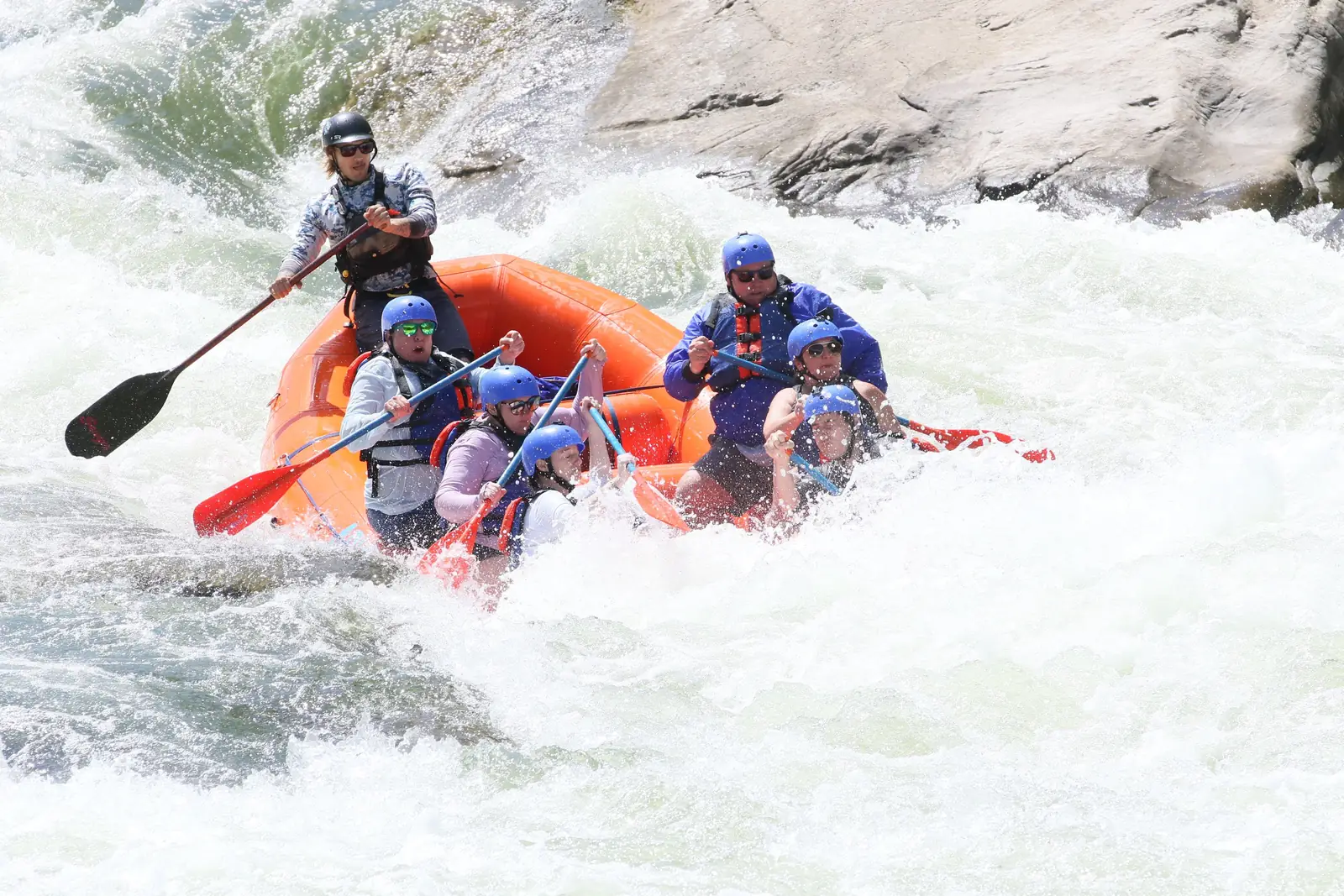
The Pigeon River runs about forty minutes northeast of town and it’s the closest real whitewater to Gatlinburg. The upper section is class three and four, which is enough to throw people out of the boat.
The water comes from a dam release, so the rapids run on a schedule and don’t dry up in late summer the way free flowing rivers do. That makes it one of the more dependable things to do in Gatlinburg Tennessee in August.
There’s a lower section too, much calmer, that’s built for families with young kids. Book ahead either way, because trips are timed to the releases and they fill.

21. Get In Line At The Pancake Pantry
The Pancake Pantry opened on the Parkway in 1960 as the first pancake house in Tennessee. It did so well that competitors kept opening, and the area now has more than twenty pancake restaurants, which is a strange thing for a town of about 3,500 people.
The Pantry is still the one with a line down the sidewalk before the doors open. Batter is made from scratch and the menu runs well past plain buttermilk into things like sweet potato and Austrian style with peaches.
There are no reservations, so either show up early or accept the wait. If you’re around in February, the town runs a whole Pancake Week built on this.
What To Know Before Visiting Gatlinburg Tennessee
You need a parking tag for the national park. Entry itself is still free, but any vehicle parked more than 15 minutes has to display a tag, sold by the day, week, or year. Pick one up at a visitor center or online before you go.
Laurel Falls is closed. It’s the most searched hike in the park and plenty of older articles still lead with it, but the trail has been shut for rehab work since early 2025 and the reopening has slipped to 2027. Grotto Falls and Cataract Falls are the substitutes.
Some roads close for the season. Kuwohi Road is shut from December 1 through March 31, and the Roaring Fork loop closes December through March, so a winter trip looks different from a summer one.
The Parkway backs up badly, especially on fall weekends. Park once and use the trolley, which runs through town and out to the crafts loop for very little money.
October is peak. Leaf season packs the town and cabins book months out, so lock in lodging early or come in late spring instead, when the wildflowers are out and the crowds are thinner.
Bears live here and they’re used to people. Never leave food in a cooler on a porch, keep your distance, and take the trailhead signs seriously. Cell service also disappears the moment you drive into the park, so download maps before you lose it.
Final Thoughts
What makes this town work is how short the distance is between the two halves of it. You can ride a glass gondola over the treetops in the morning, be standing under an 80 foot waterfall by lunch, and end up eating pancakes at nine at night.
Pick a few things from the Parkway and a few from inside the park and you’ll have a much better trip than people who only do one or the other. That balance is really the point of everything on this list.