 Rebecca Engel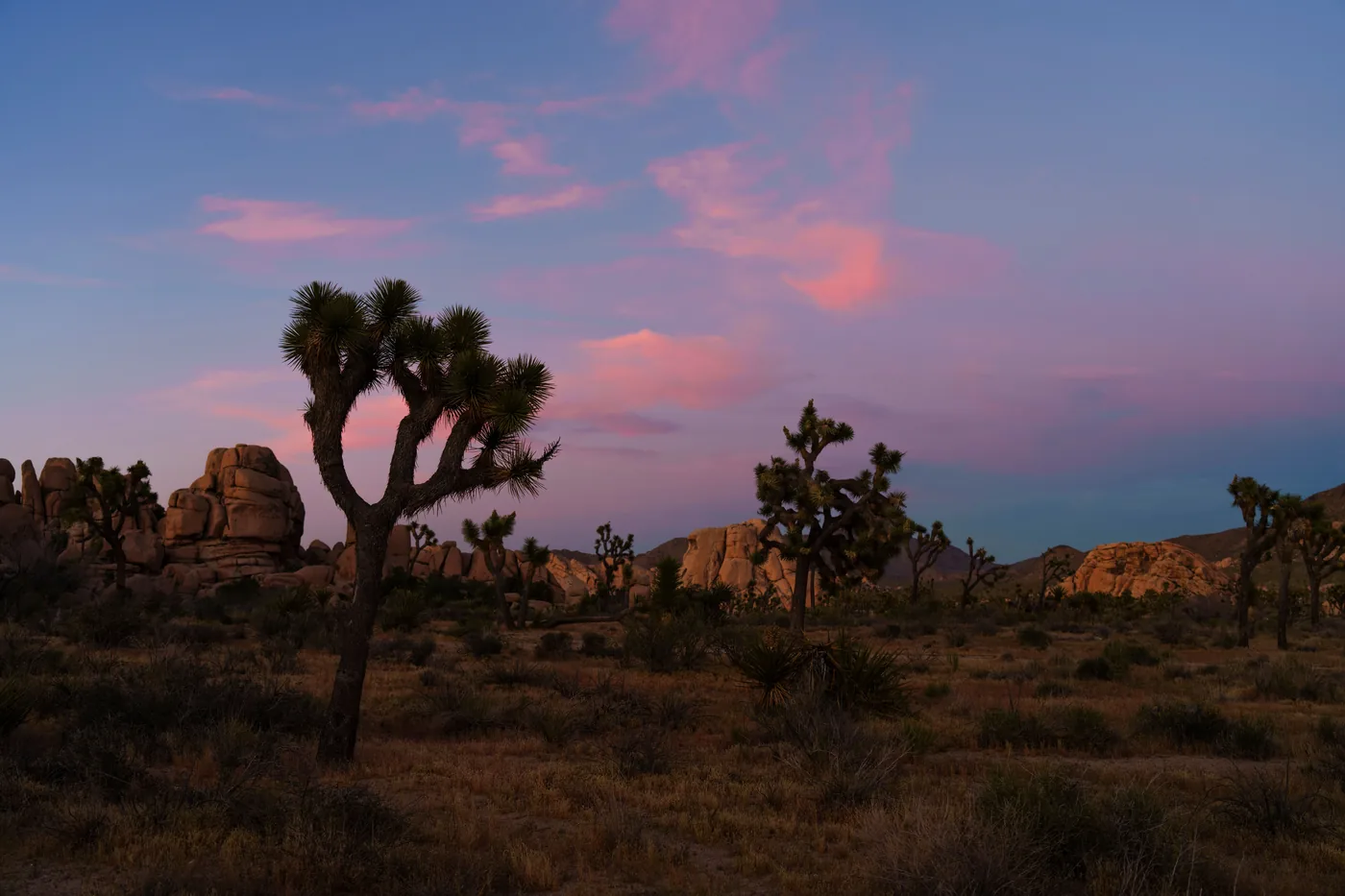
Joshua Tree National Park sits where two deserts meet, and the whole place runs on light. At sunrise the boulder piles go orange and the air is cold enough for a jacket. By two in the afternoon the same rocks are blinding and everyone has gone quiet.
Then the sun drops and something else happens. This is a certified dark sky park, which means that once the last light goes you can stand in a parking lot and see the Milky Way with no effort at all. The best things to do in Joshua Tree follow that arc, so this list runs the same way, from the first drive of the morning to the stars.
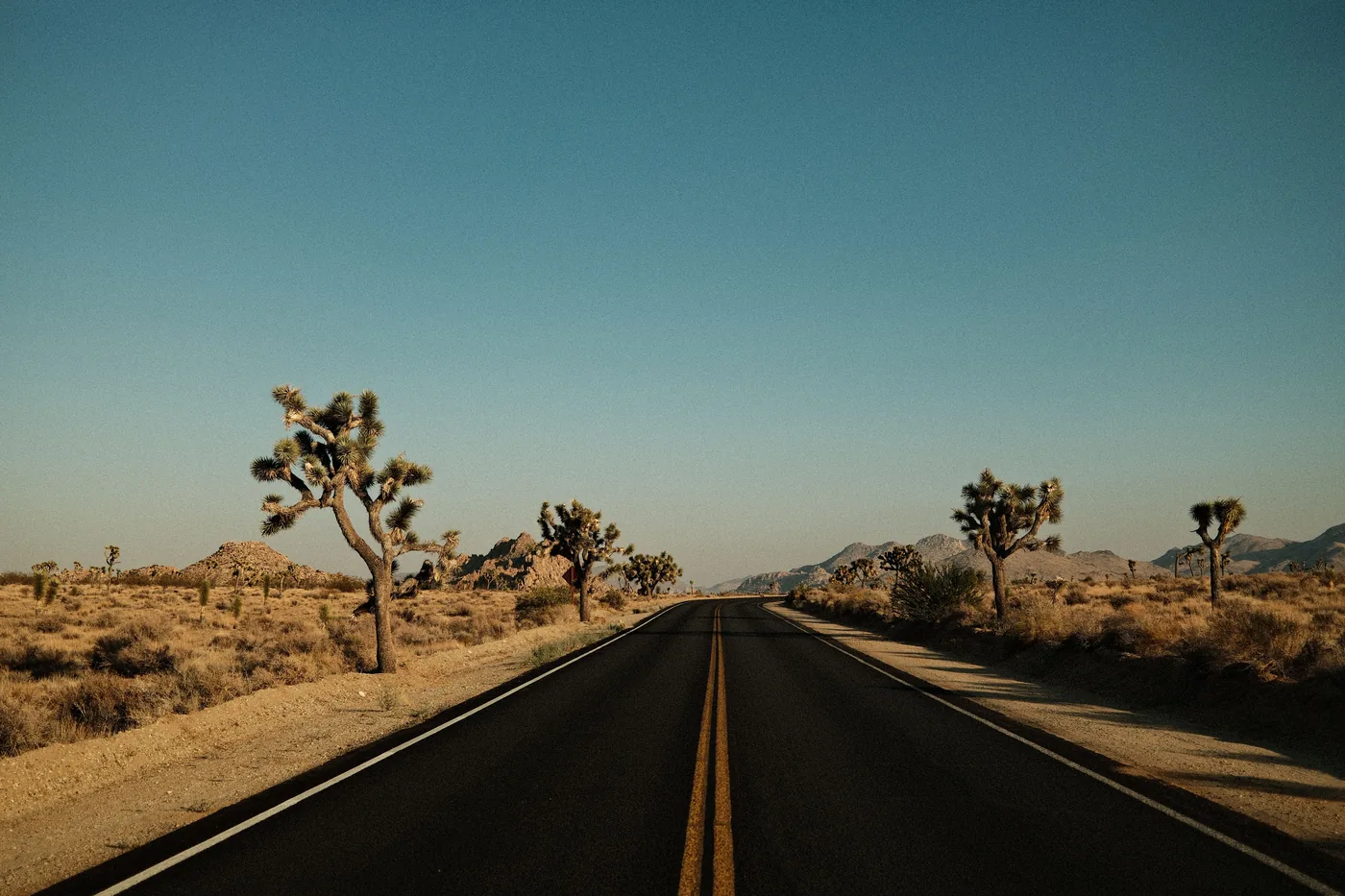
1. Drive Park Boulevard At First Light
The road from the west entrance through to Twentynine Palms is the spine of the park, and doing it early is the single best decision you can make here. The light is low, the rocks throw long shadows and most of the pullouts are empty.
It’s roughly an hour of driving end to end without stopping, which nobody does. Plan on half a day if you’re pulling over whenever something looks good, which will be often.
There’s no fuel, no food and very little cell signal inside the park. Fill up and download your map in town before you go in.
2. Walk The Hidden Valley Nature Trail
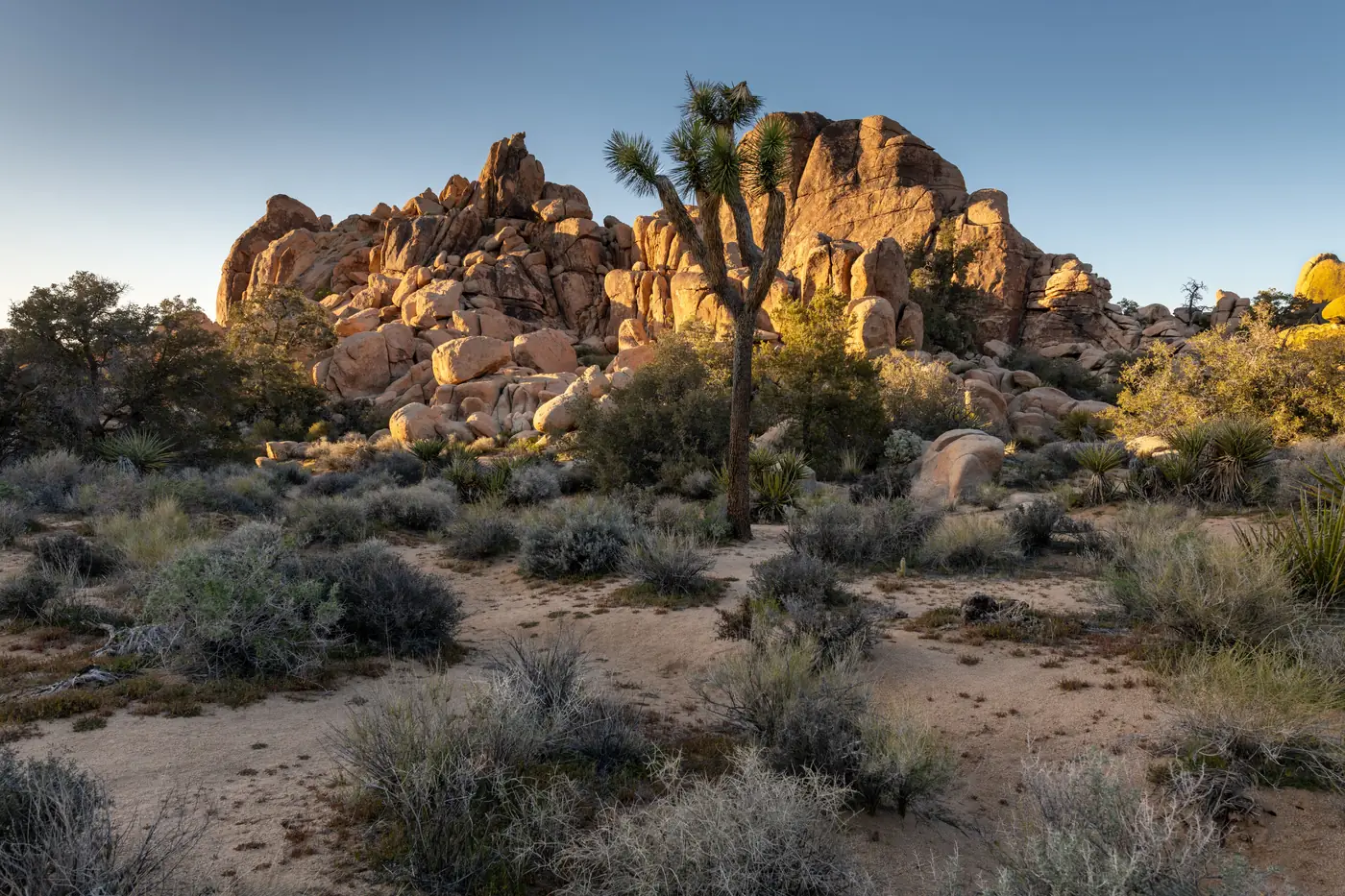
Hidden Valley is a one mile loop that drops into a bowl completely ringed by rock. Cattle rustlers are said to have used it to hide stolen herds, which tells you how enclosed it feels once you’re inside.
The trail is flat, well marked and doable by almost anyone. Joshua trees stand in loose groups across the valley floor with walls rising on every side.
It’s the best first stop in the park if you only do one short walk. Go early, because the small car park fills fast.
3. Hike To Barker Dam And The Petroglyphs
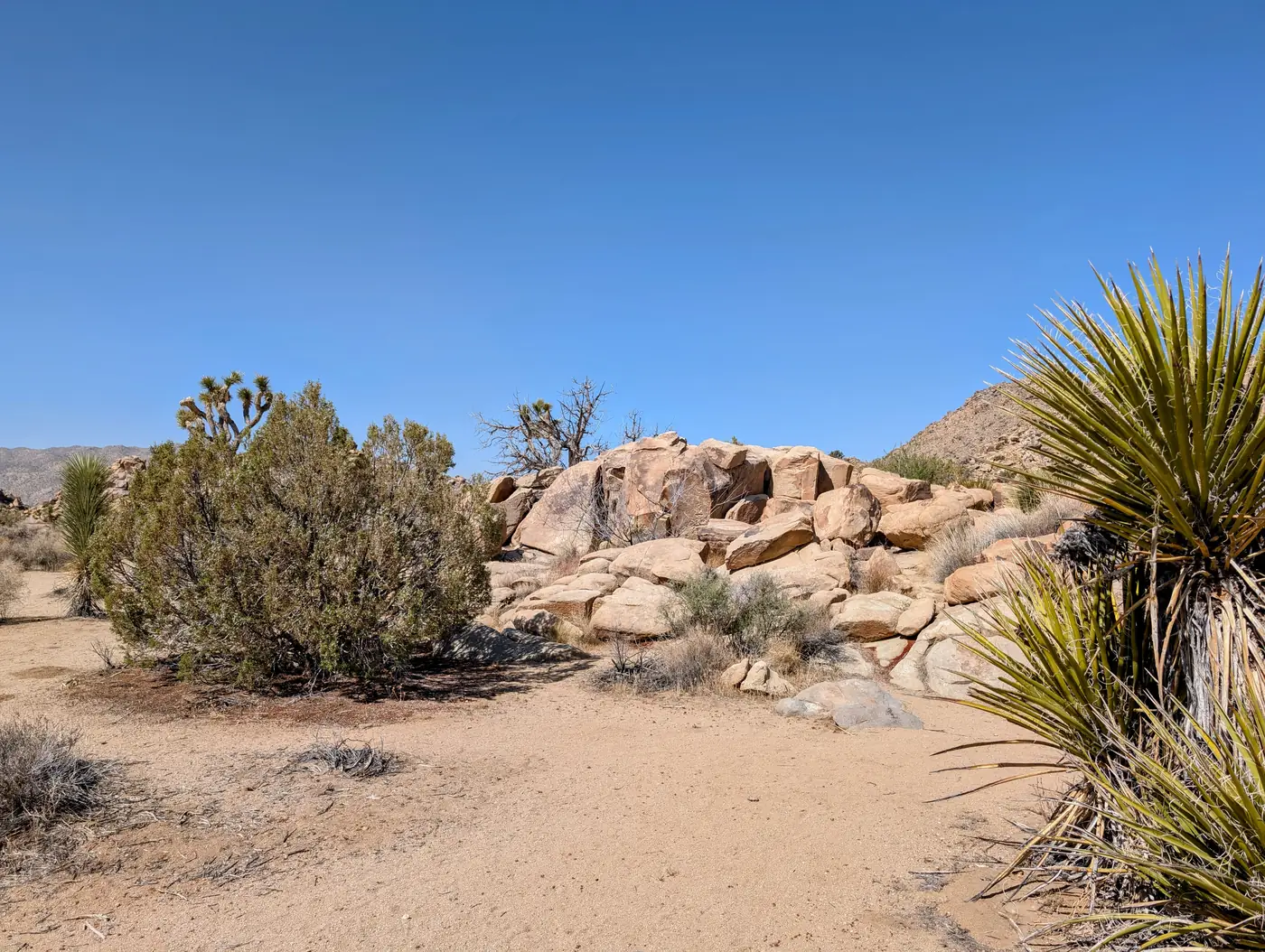
Barker Dam is a 1.3 mile loop out to a small dam built by ranchers to water cattle. When there’s been rain you get an actual pool of water sitting in the middle of the desert, with rock reflected in it.
In dry months there’s no water at all, and the walk is still worth it. The loop passes a panel of petroglyphs, some of which were unfortunately painted over decades ago for a film shoot.
Bighorn sheep come down to the water when it’s there. Keep your eyes on the ridgelines.
4. Climb Ryan Mountain Before The Heat
Ryan Mountain is three miles round trip with about a thousand feet of climbing, and it’s the hardest thing most visitors do here. The trail goes up steadily on rock steps with no shade whatsoever.
The summit gives you the best view in the park, a full turn over the boulder fields and the valleys on either side. It takes somewhere between an hour and a half and three hours depending on your pace.
Start it early. This is the one hike in the park that genuinely hurts people who set off at noon in summer, so carry more water than feels necessary.
5. Walk Out To The 49 Palms Oasis
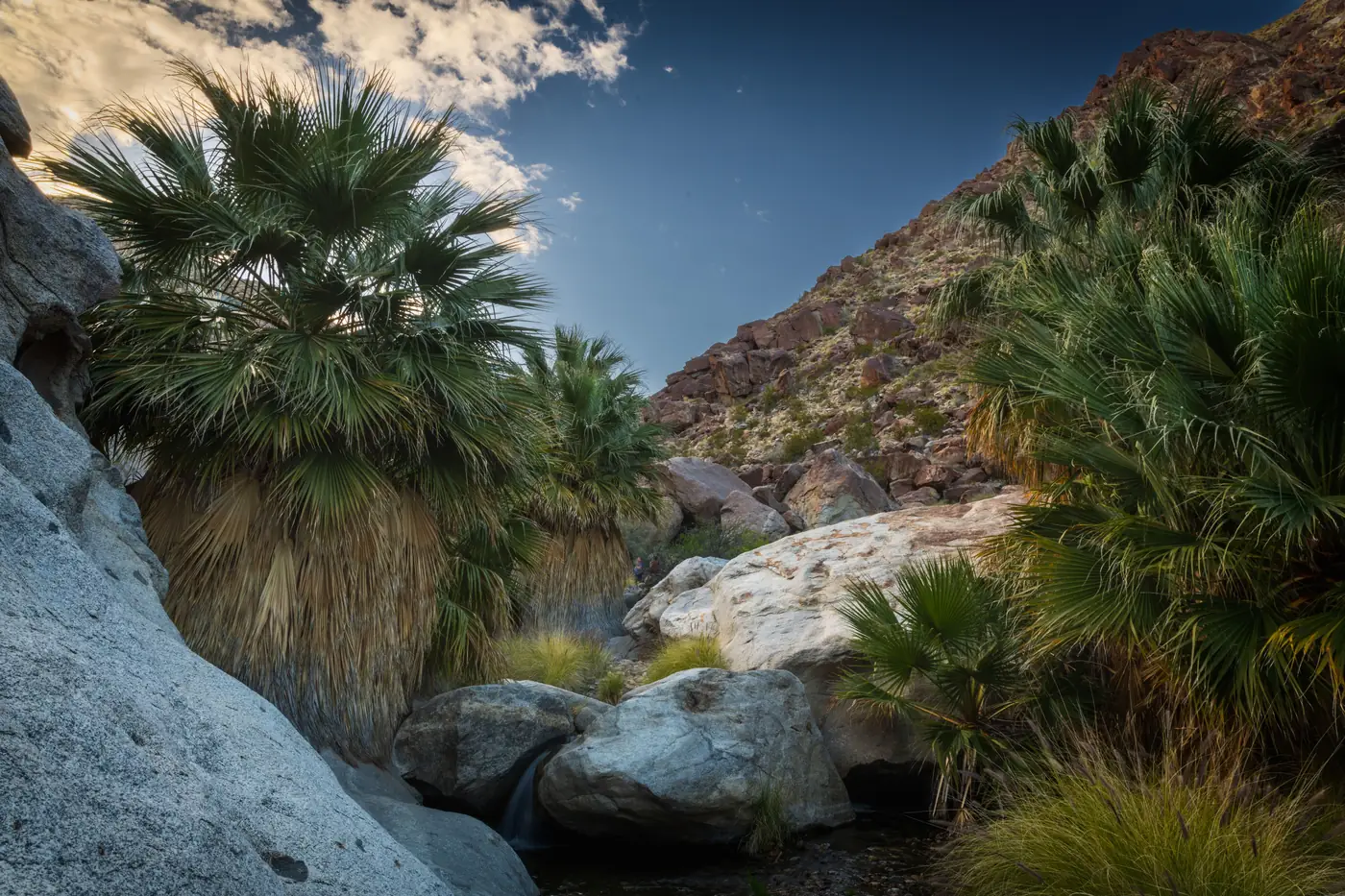
The 49 Palms Oasis trail runs three miles round trip from a separate trailhead near Twentynine Palms. It climbs over a ridge and then drops into a canyon full of native fan palms.
The contrast is the point. You spend the first half on bare rock and creosote, then come around a corner into deep green shade with water at your feet in the wetter months.
It sees far fewer people than the trails on the main park road. There’s no shade at all on the approach, so the same early start rule applies.
6. Tour Keys Ranch With A Ranger
Keys Ranch is a homestead the Keys family worked for 60 years, left more or less as it stood. There’s a house, a schoolhouse, a store and a yard full of rusting machinery and abandoned cars.
You can only see it on a guided ranger tour, which runs on a schedule and usually needs booking ahead. Tours don’t run year round.
It’s the best window into what living out here actually meant, which is easy to forget when you’re treating the place as scenery.
7. Find Skull Rock Beside The Road
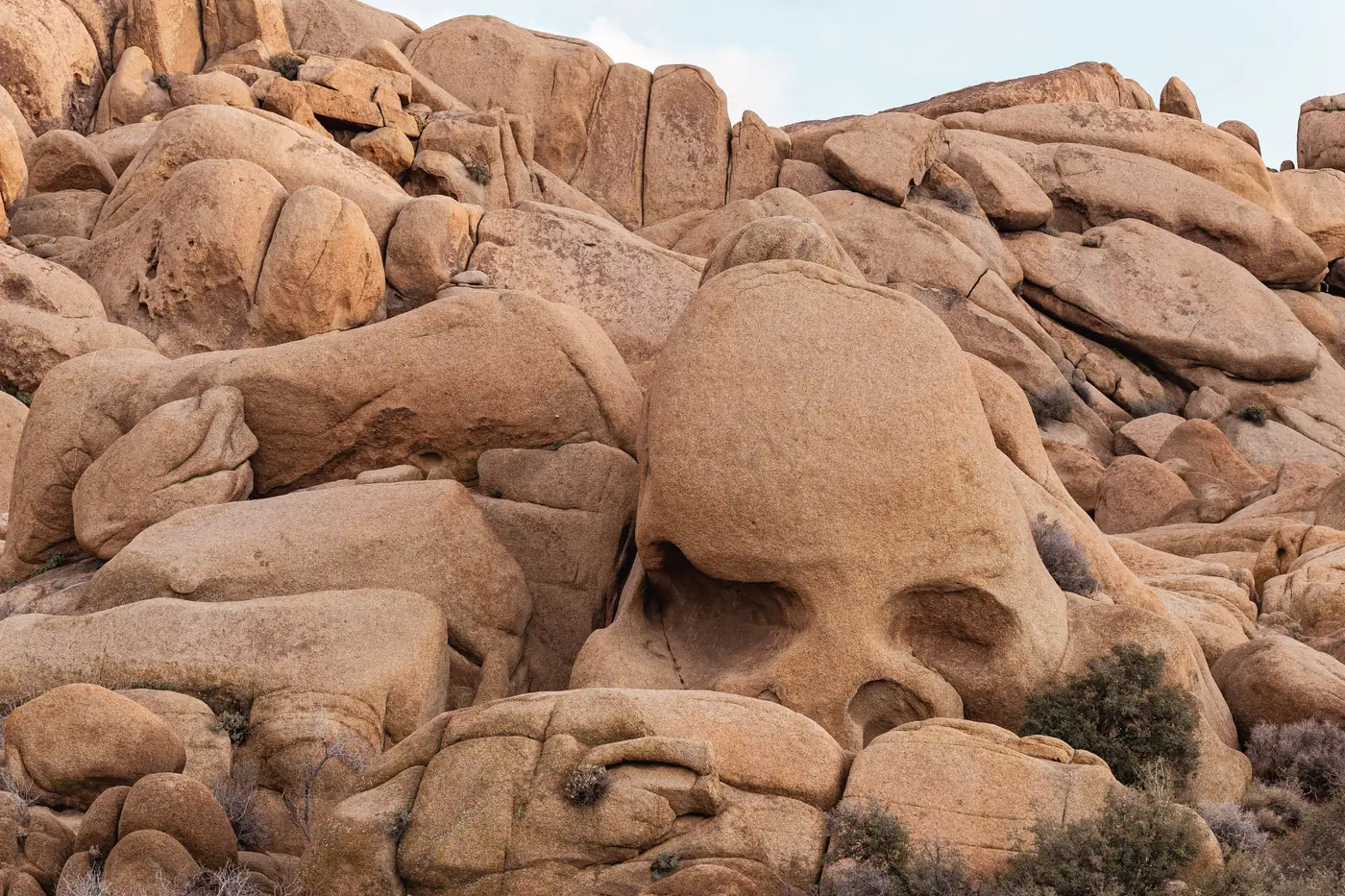
Skull Rock sits directly beside Park Boulevard and it looks exactly like the name suggests, with two deep hollows worn into the granite where the eyes would be. You can park and be standing at it in a minute.
Because it’s that easy, it’s busy most of the day. Early morning or late afternoon gives you a version without a queue of people taking the same photo.
A 1.7 mile nature trail loops from here through the boulders if you want more than the roadside stop.
8. Wander Into The Jumbo Rocks
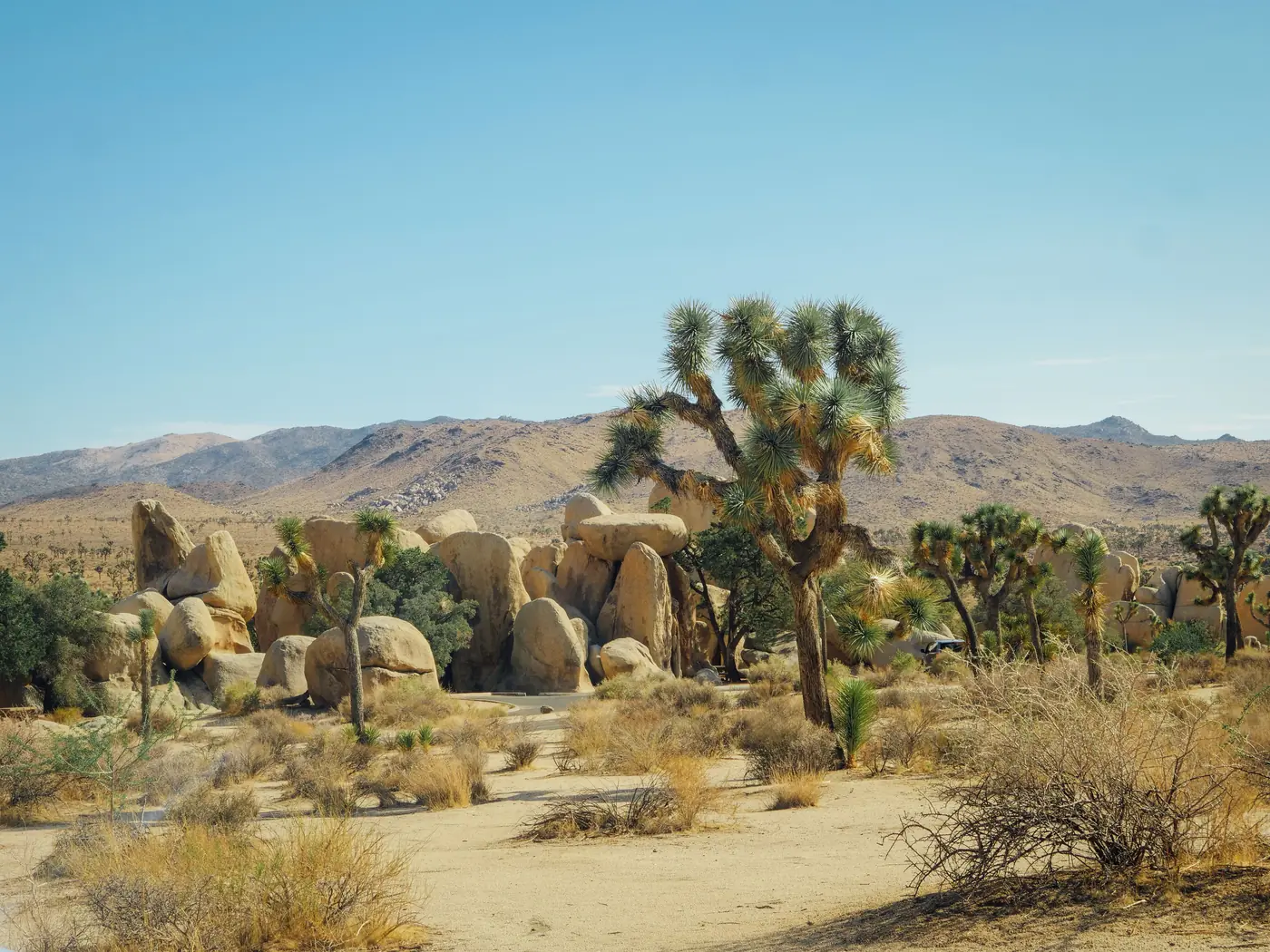
Jumbo Rocks is exactly what the name promises, a huge field of rounded granite piles with a campground tucked inside it. The boulders are stacked in ways that look deliberate and are not.
Scrambling around them is half the fun and there’s no fixed route. People disappear into gaps between rocks and come out somewhere else entirely.
The campground here is one of the most popular in the park, and it books out months in advance for good reason.
9. Follow The Trail To Arch Rock
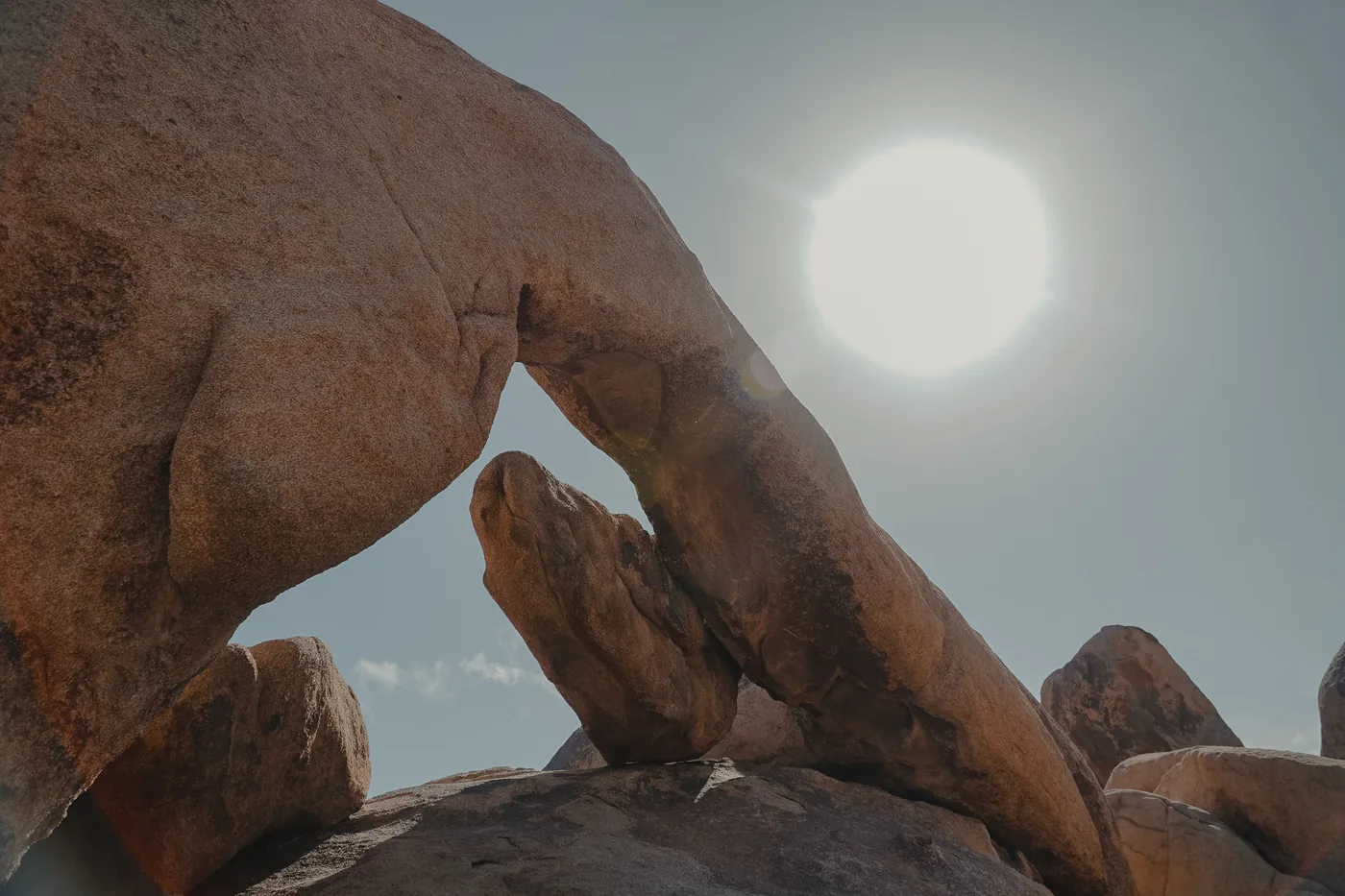
Arch Rock is a 1.8 mile easy trail from the Twin Tanks car park, out to a granite arch worn thin by weather. Heart Rock sits on the same walk, a boulder split into a shape that reads as a heart from the right angle.
The trail is sandy and flat and works for most people. It’s one of the better short walks for anyone traveling with kids.
It’s also a popular spot after dark for photographers shooting the arch against the stars.
10. Get On The Rock, Even Badly
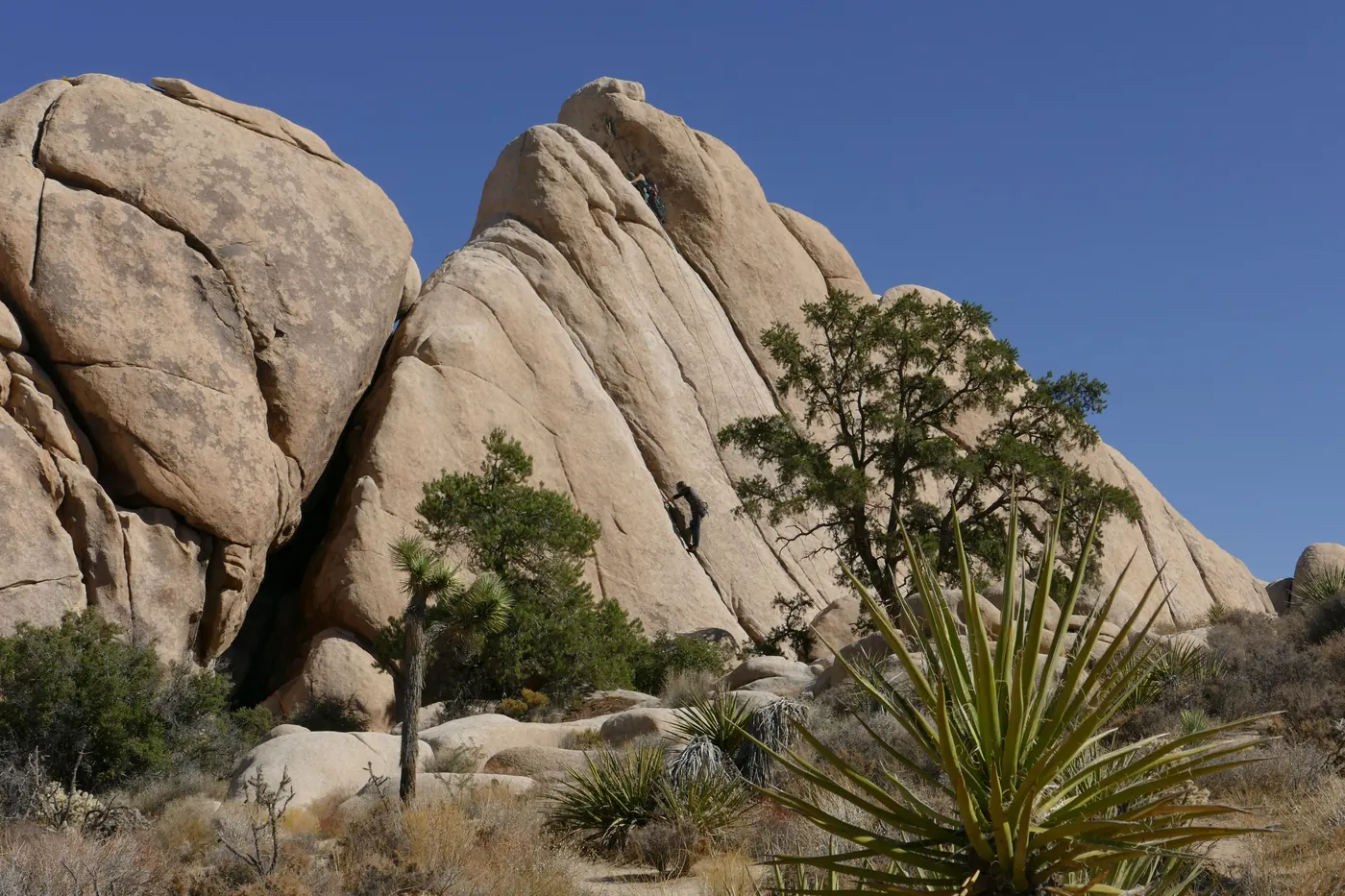
Joshua Tree is one of the great climbing areas in the world, with something like 8,000 established routes and 2,000 bouldering problems packed into the park. On any given morning you’ll see ropes going up beside the road.
You don’t need to be a climber to take part. Guiding outfits in the gateway towns run half day beginner sessions that put people with no experience on real rock.
Even if you never leave the ground, watching it happen at Hidden Valley or the Hall of Horrors is a decent way to spend twenty minutes.
11. Time The Cholla Cactus Garden For Low Sun
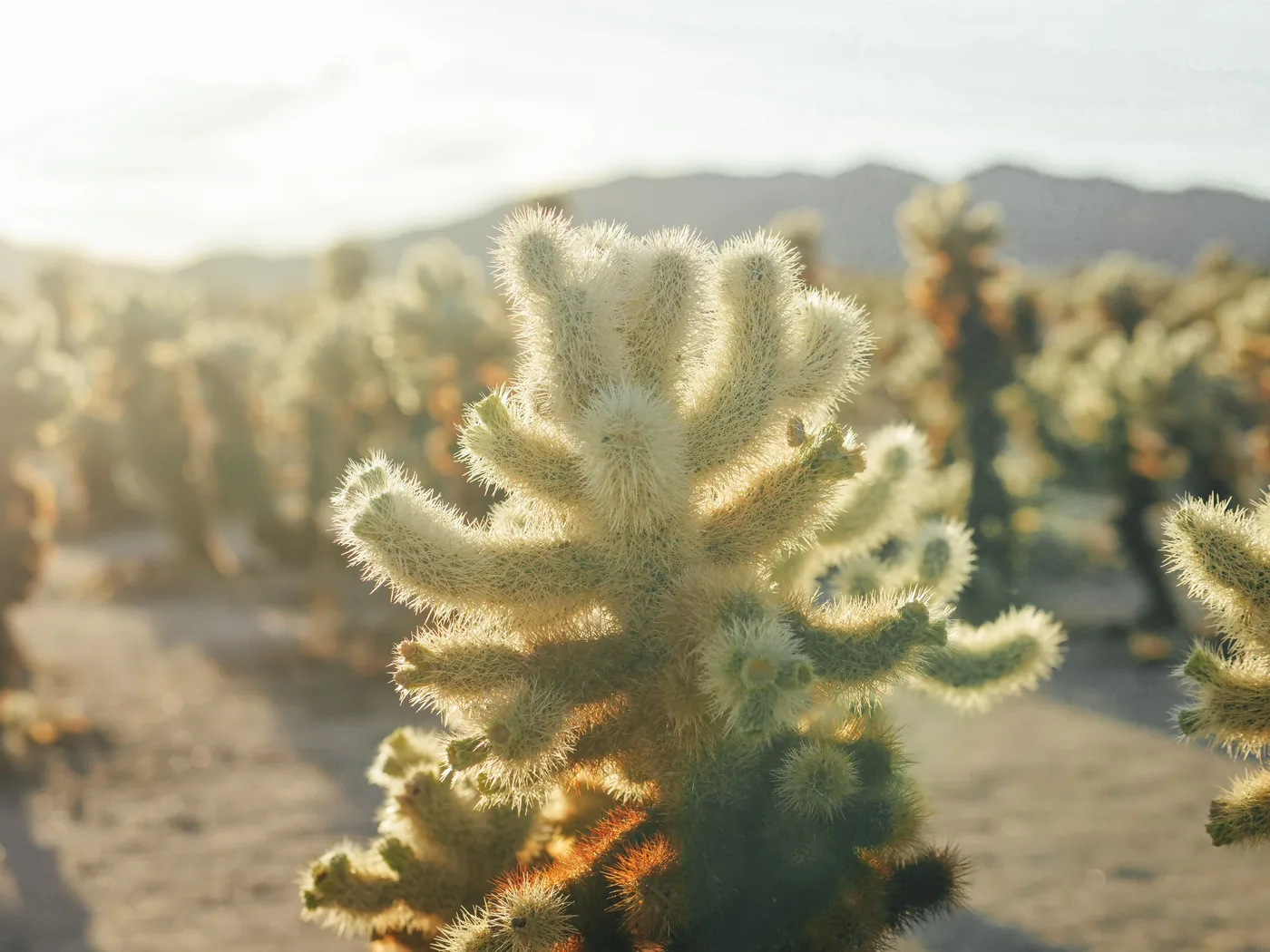
The Cholla Cactus Garden is a quarter mile boardwalk loop through a dense stand of teddybear cholla, thousands of them growing close together. When the sun is low behind them the spines light up and the whole field glows.
That is the entire reason to time this one. In flat midday light it’s just a cactus patch. In the last hour of the day it’s the strangest thing in the park.
Do not touch them. The segments detach at the slightest contact and they are genuinely difficult to get out of skin.
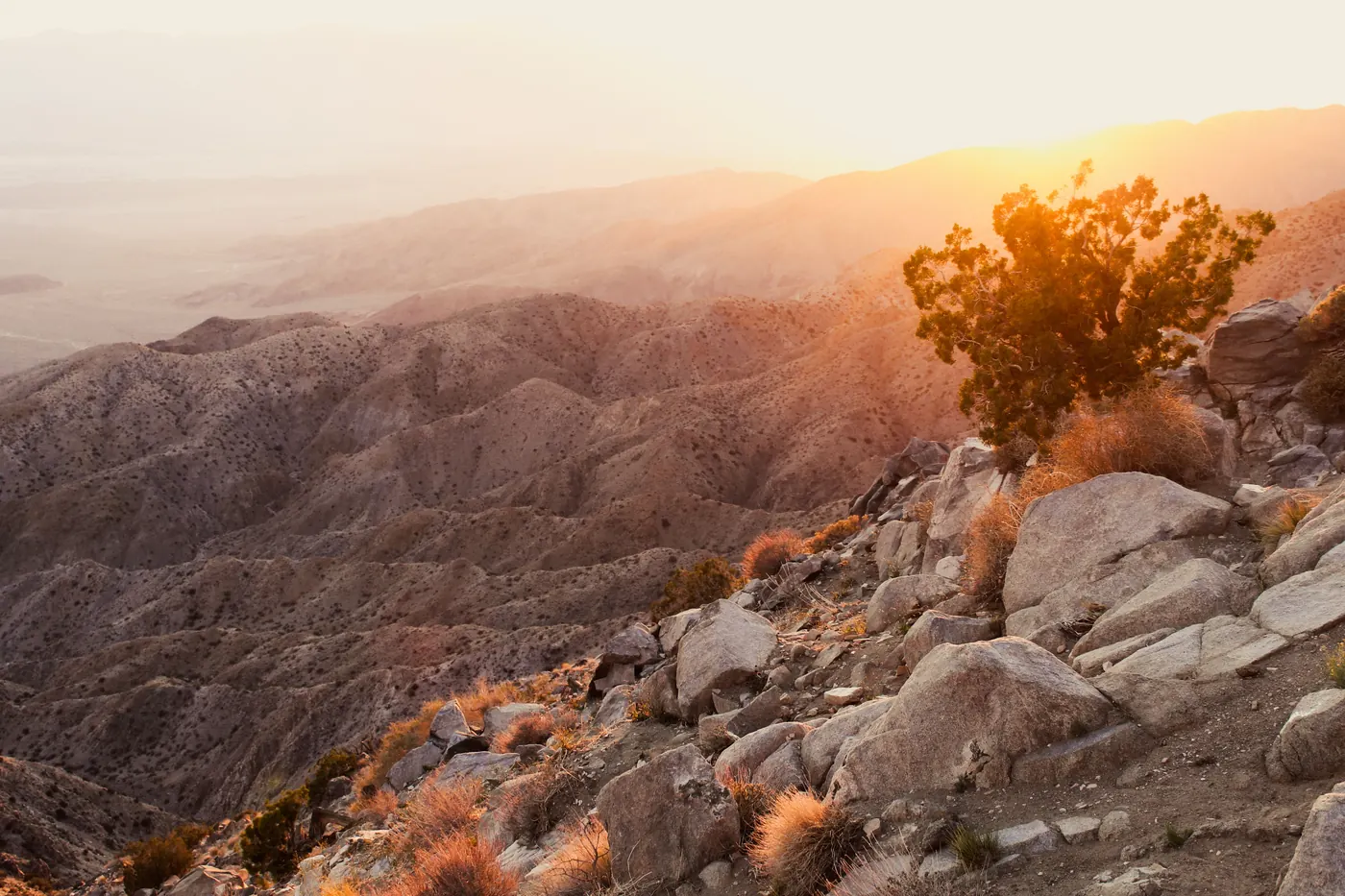
12. Watch The Sun Go Down From Keys View
Keys View sits at the end of a spur road at about 5,000 feet, looking out over the Coachella Valley. On a clear day you can pick out the San Andreas Fault running across the valley floor, plus the Salton Sea and sometimes the mountains in Mexico.
It’s a five minute walk from the car park to the overlook. Sunset is the obvious time and it draws a crowd, so arrive with time to spare.
It’s noticeably colder and windier up here than in the park below. Bring a layer even if you’ve been hot all day.
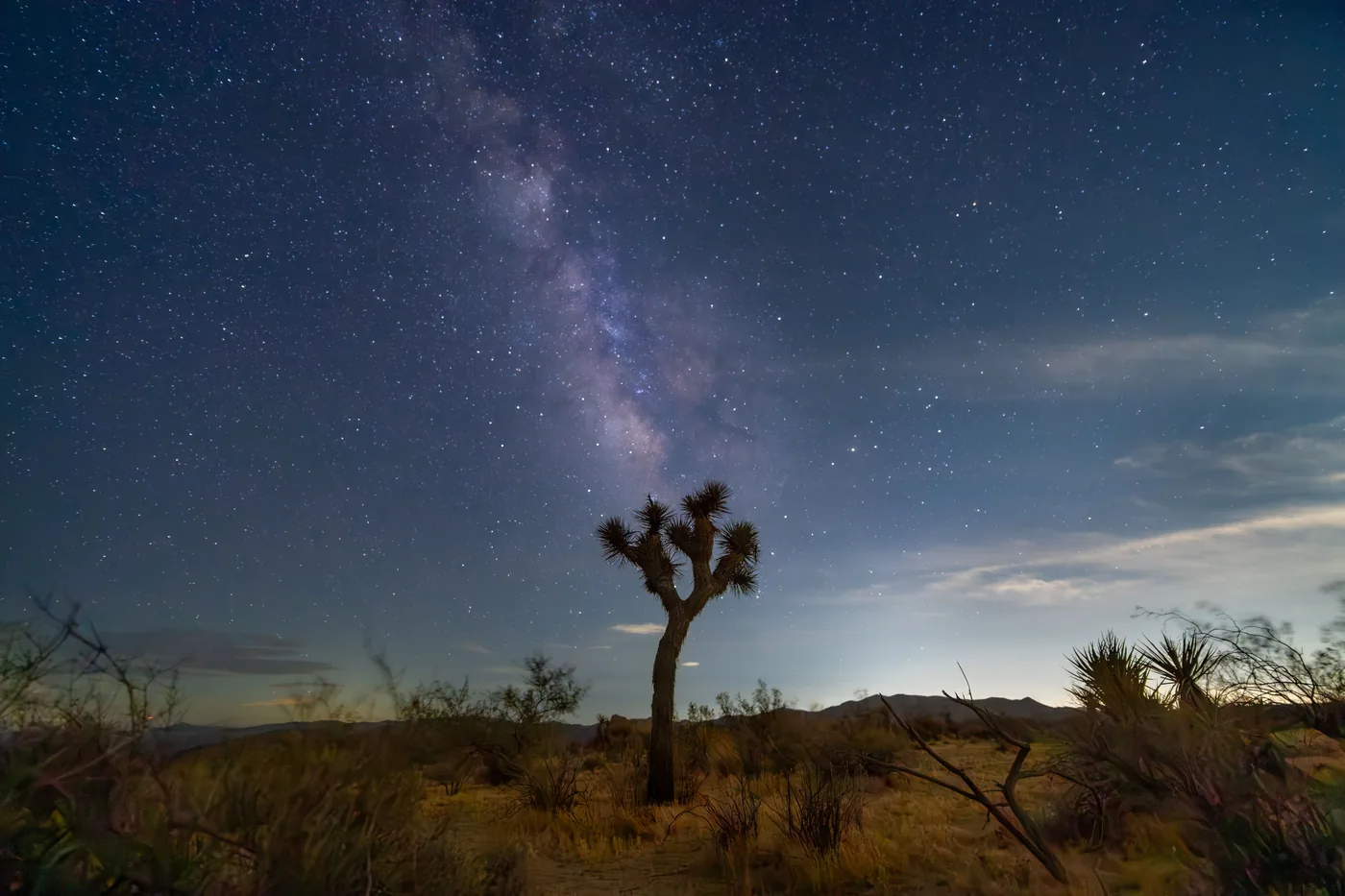
13. Stay Out For The Stars
Joshua Tree is a certified International Dark Sky Park, and on a moonless night the difference is not subtle. The Milky Way is plainly visible to the naked eye from most of the park road.
Pull into any of the bigger car parks, turn the headlights off and give your eyes twenty minutes to adjust. Bring a red light rather than a white torch if you have one.
Check the moon phase before picking your night. A full moon washes out most of what you came for, and the park is open 24 hours so there’s no rush to leave.
More Things To Do In Joshua Tree Just Outside The Park
Some of the strangest stuff around here sits beyond the park boundary. Noah Purifoy’s outdoor desert art museum is ten acres of sculpture built from salvage, sitting in open desert with nobody watching it.
Pioneertown was built in the 1940s as a working film set and never stopped being a town. Pappy and Harriet’s, the saloon at the end of its dirt main street, books bands far bigger than the room should get.
The Integratron in Landers runs sound baths inside a wooden dome that a man built after saying he’d been given the plans by visitors from Venus. It books out weeks ahead and it’s worth it.
Final Thoughts
The mistake here is treating this as a half day stop on the way somewhere else. The park is big, the drives between stops are long, and the two hours at either end of the day are worth more than the six in the middle.
Start before sunrise, take the middle of the day slowly, and stay after dark at least once. Do that and it’s a completely different park from the one most people see.